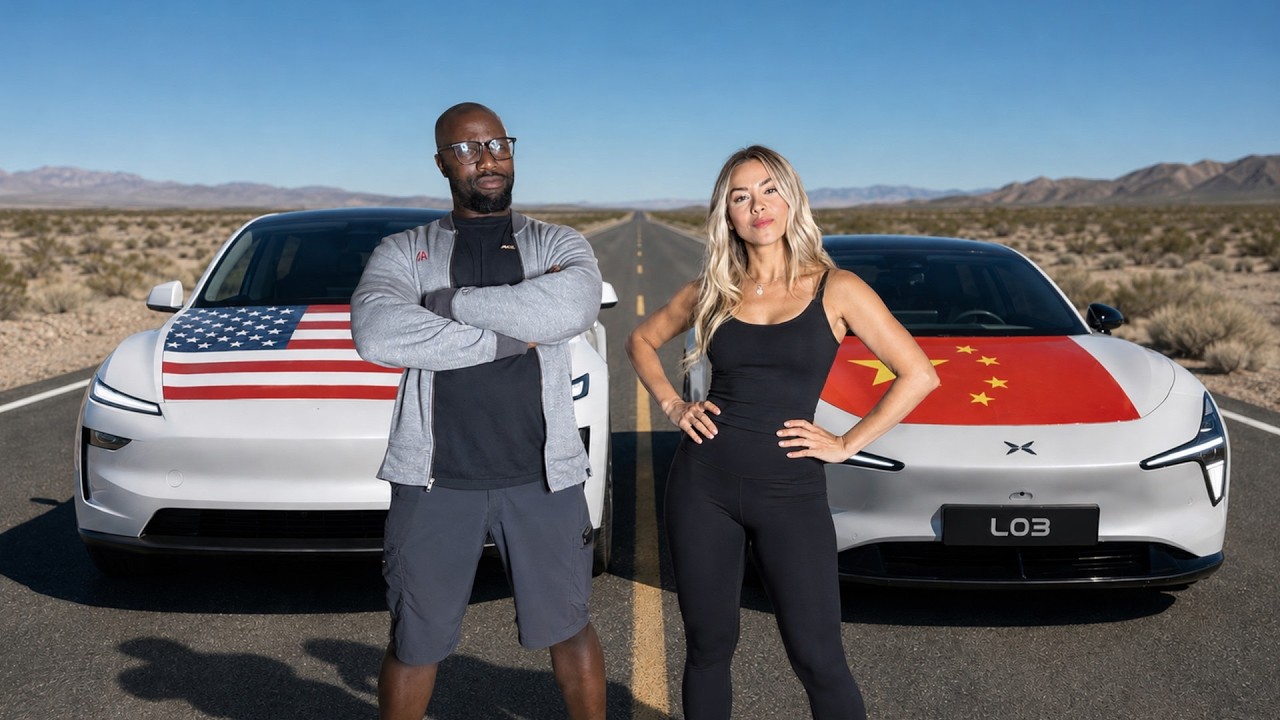
Cotxes elèctrics xinesos: què va sorprendre Rich Rebuilds
Una prova d’XPeng i una visita a CATL mostren l’escala del vehicle elèctric xinès. Contrastem impressions, promeses i dades independents.
Rich Rebuilds viatja a Guangzhou amb una pregunta senzilla: els cotxes elèctrics xinesos continuen sent còpies barates o ja competeixen en tecnologia, escala i experiència d’ús? La resposta del vídeo és contundent, però neix d’una visita guiada, una prova breu i demostracions de fabricants. Per això convé separar allò que l’autor experimenta de primera mà, les xifres comercials de CATL i les dades independents del sector.
El recorregut combina tres capes: la infraestructura urbana, la conducció assistida d’un XPeng i les noves bateries de CATL. El resultat no demostra que qualsevol vehicle xinès sigui millor ni que els Estats Units hagin quedat fora de joc. Sí que mostra que la indústria xinesa ja no es pot analitzar només a través del preu.
1. Arribar a Guangzhou i descobrir un ecosistema elèctric
A 00:00, Rich recorda que havia provat un XPeng P7 cinc anys abans. Vol comprovar si la mala fama de qualitat que encara acompanya alguns productes xinesos encaixa amb la realitat actual. L’experiment no és una comparativa de laboratori: és un diari de viatge amb humor, impressions i accés facilitat per empreses del sector.
La primera sorpresa apareix cap a 01:36. El vehicle rep el compte enrere dels semàfors, les motos elèctriques omplen els carrers i una cruïlla transitada resulta molt més silenciosa del que l’autor esperava. Aquesta escena ajuda a entendre un avantatge estructural: un cotxe connectat no funciona aïllat, sinó dins d’una ciutat amb infraestructura, cartografia, xarxes de càrrega i una gran flota que permet acumular experiència.
No tot el que es veu és exportable. Les normes, les dades disponibles, els hàbits de conducció i la densitat de vehicles canvien segons el país. Però la visita sí que desfà una simplificació: la Xina no només fabrica automòbils; ha construït al seu voltant un ecosistema d’ús quotidià.
2. L’XPeng sorprèn en un trànsit difícil
A 04:27, l’equip puja a un XPeng i activa la conducció assistida en carrers plens d’escúters, vianants, autobusos i canvis de carril poc previsibles. El cotxe redueix la velocitat, cedeix el pas i evita obstacles sense les frenades brusques que Rich temia. Cap a 10:30, conclou que el sistema s’ha adaptat al comportament local millor del que esperava.
Després prova un Tesla en una ruta semblant. En les imatges del vídeo, el vehicle dubta, s’equivoca d’orientació i el conductor acaba prenent el control. És una seqüència il·lustrativa, no una prova controlada: desconeixem les versions exactes de programari, la configuració, l’itinerari complet i quantes intervencions hi va haver fora del muntatge. No permet declarar un guanyador general entre marques.
La lliçó més sòlida és una altra. Entrenar i validar assistents de conducció en trànsit xinès pot donar als fabricants locals una especialització molt valuosa. També obliga a recordar que aquests sistemes continuen sent assistència: el conductor n’ha de mantenir la supervisió i una demostració reeixida no substitueix les dades de seguretat a gran escala.
3. El lideratge industrial va més enllà d’una prova
La visita adquireix context amb el Global EV Outlook 2026 de l’Agència Internacional de l’Energia. El 2025, la Xina concentrava més del 80% de la capacitat mundial de fabricació de bateries i també més del 80% de la producció real. Els fabricants xinesos aportaven gairebé el 75% de les bateries instal·lades en cotxes elèctrics arreu del món.
Aquest domini no significa que totes les cel·les siguin xineses ni que les marques occidentals no innovin. La mateixa AIE assenyala que Tesla combina proveïdors com Panasonic, LG Energy Solution i CATL. El punt important és la concentració de fàbriques, materials, equipament, coneixement tècnic i escala de producció a la Xina.
Els costos també pesen. Segons l’AIE, el 2025 els paquets de bateries costaven de mitjana un 30% menys a la Xina que a l’Amèrica del Nord i un 35% menys que a Europa. Una part de l’avantatge prové de l’eficiència i l’automatització; una altra, de la cadena local de components i de la química LFP. Alhora, els marges molt baixos en alguns materials indiquen que els preus actuals no són necessàriament sostenibles.
4. Canviar la bateria o carregar-la en sis minuts
A 14:19, Rich entra en una estació de CATL i observa com el sistema retira el paquet del vehicle, l’inspecciona i n’instal·la un altre en uns noranta segons. La demostració resol el temps d’espera, però obre altres preguntes: estandardització entre marques, inversió de la xarxa, propietat de la bateria i disponibilitat de paquets en hores punta.
L’empresa afirmava l’abril de 2026 que la seva xarxa Choco-Swap ja tenia 1.470 estacions en 99 ciutats. Les mostres de bateries de taxis i autobusos amb centenars de milers de quilòmetres que apareixen al vídeo són informació exhibida per CATL; sense historial independent, no s’han d’interpretar com una auditoria de durabilitat.
A 16:30, l’atenció passa a la Qilin Condensed. CATL anuncia una densitat de 350 Wh/kg i autonomies de fins a 1.500 quilòmetres en berlina. Són xifres del fabricant, lligades a configuracions i cicles d’homologació que encara s’han de contrastar en vehicles de producció.
La tercera generació Shenxing promet passar del 10% al 98% en 6 minuts i 27 segons, i del 20% al 98% en uns nou minuts a −30 °C. El vídeo ho resumeix com una càrrega gairebé completa en sis minuts. La precisió importa: no és de zero a cent, el carregador ha de poder lliurar una potència enorme i el rendiment real dependrà del cotxe, la temperatura i la xarxa.
5. El sodi, la seguretat i el bloqueig nord-americà
A 19:30, CATL presenta Naxtra, una bateria de ions de sodi pensada per rendir millor amb fred i reduir la dependència del liti. L’AIE confirma que aquesta química està entrant en fase d’escalat i que conserva millor el rendiment a baixa temperatura, però encara té menys densitat energètica. Això la fa especialment interessant per a cotxes urbans, vehicles comercials lleugers i emmagatzematge estacionari, no necessàriament per a qualsevol automòbil.
El títol del vídeo diu que els Estats Units estan bloquejant els elèctrics xinesos, tot i que el reportatge gairebé no examina aquesta política. La mesura no és una prohibició genèrica de tota bateria o de qualsevol component xinès. La regla final del Departament de Comerç restringeix vehicles connectats i sistemes de connectivitat o conducció automatitzada vinculats a la Xina o Rússia per riscos de dades i control remot. Les prohibicions de programari i de venda per fabricants afectats entren amb l’any model 2027; les de maquinari, amb el 2030.
Aquest conflicte combina seguretat nacional, protecció industrial i dependència tecnològica. La concentració descrita per l’AIE explica per què Occident vol diversificar la cadena. També explica per què substituir-la serà lent i car.
Conclusions
A 21:00, Rich resumeix el canvi de perspectiva: no afirma que Tesla hagi mort ni que tots els cotxes xinesos siguin perfectes; sosté que la Xina ja ha atrapat els competidors. La seva prova no basta per demostrar aquesta tesi en qualitat, fiabilitat o seguretat, però les dades industrials sí que confirmen un lideratge extraordinari en escala i bateries.
El més valuós del vídeo és veure juntes peces que sovint s’analitzen per separat: carrers electrificats, assistència adaptada al trànsit local, intercanvi de paquets, càrrega ultraràpida i noves químiques. El límit és que moltes prestacions provenen d’una visita corporativa i encara són promeses.
La pregunta útil ja no és si la Xina sap fabricar un elèctric competitiu. És quines tecnologies arribaran a producció massiva, amb quina durabilitat i seguretat, i com respondran els altres mercats sense substituir una dependència per una indústria permanentment més cara.
Contrast i context
Fonts consultades
- 01
-
02
Agència Internacional de l’Energia Global EV Outlook 2026: electric vehicle batteries
- 03
-
04
U.S. Bureau of Industry and Security Final rule on connected vehicle supply chains
Font de treball
Transcripció amb marques de temps
Consulta la transcripció
-
0:00
, obre el vídeo en una pestanya nova
Hello. Hello. Hello. Hello. Hello. >> James, James. Wow. >> About 5 years ago, I tested one of the first available electric cars in the United States. It was called the XPong P7. And honestly, it was pretty good. But ever since then, I've been hearing the same thing over and over again. Chinese cars are cheap. They're throwaway cars. And they won't pass safety tests. And to be fair, I did buy a cheap set of Chinese shocks off Alibaba and they failed before I even took them out of the box. So, I understand where everyone's coming from. But at the same time, China builds most of the world's EV batteries, and they're building EVs faster than anyone else. So, I wanted to see this stuff in its natural environment for myself. Are they actually ahead of us? What does Chinese self-driving look like? How good is the battery technology? And honestly, what is China like in general? Because as an American, I realized I had no idea. So, I decided to fly 8,000 miles to China to see for myself. Let's get into it. So, here I am after 20 miserable hours on a plane landing in Guangzo, China, on my way to get my Chinese driver's license. And the very first thing I noticed, we had to call a diddy. No, not that diddy. It's basically China's version of Uber. And somehow a 45minute ride cost about $7. And then I started noticing something else. China loves comfortable transportation. Minivans are everywhere here. And not the depressing American rental car minivans. These things are nice.
-
1:36
, obre el vídeo en una pestanya nova
>> Habibi. Habibi. Habibi. >> Oh yeah. I got >> Oh, this is nice. This is very nice. Ain't >> bad. >> Got another sunroof right there. This is Look at the little phone. I don't know what any of this means. Tells you how long the lights are going to be red or green for. And see the countdown in seconds. >> Oh yeah. >> So as we were approaching it, it said like 5 seconds left until green and then it turned green. So it counts down there and there. >> Where's the second countdown? >> On the light itself. >> Oh, >> you don't have such things, right? >> No. Now the infrastructure is connected to the cars in ways I've never seen before. It seems pretty complex like the structure behind me, but the stop light literally tells the car how many seconds are left until it turns green. In America, you sit at the light wondering if the sensor even knows you're there. And once I got out of the van, the second thing hit me. It was the sound, or should I say the lack of sound. I'm standing at a busy intersection during rush hour and you hear nothing. No engines, no exhaust, just thousands of electric cars driving in complete silence. I didn't know that Tesla >> the wrong way. >> You don't hear anything. >> Also, why do they go the wrong way down the wrong way? >> And that's when it really hit me. If
-
2:59
, obre el vídeo en una pestanya nova
this many electric cars exist here, something really big must be happening. So, now we finally made it to the DMV in China where I'm apparently getting a Chinese driver's license. And honestly, the process was surprisingly easy. I had to sit through a mandatory safety video that was entirely in Chinese, so I understood absolutely nothing. Then they took my license photo, which made me look two shades lighter. That's not my skin tone, and my eyes don't look like that. Just saying. I mean, just saying. Now, before we get to the car, I have to say this one thing. There are genuinely lots of very impressive things about China, but there's one downside that I noticed almost immediately. There are no thick women in China. I forced Joey to listen to me complain about this for three hours over breakfast and then I started looking around. The obesity rate in China is somewhere between four to 8%. In America, it's closer to 48%. And honestly, once you spend time here, you kind of understand why. People walk everywhere, they exercise in public parks, and the food portions are smaller. So, while America was inventing the Baconator, China apparently invented self-control. But enough about Chinese fitness culture. I wanted to know if these cars are any good. This is the new Xpong P7, and compared to the last one I drove a few years ago, this thing has changed a lot. The body's sharper, the interior feels way more premium, the software is smoother, and this thing has actual serious self-driving hardware built into it. Now, the last P7 felt
-
4:27
, obre el vídeo en una pestanya nova
like China was trying to catch Tesla. This one feels like it's actually competing with them. And I think it is. Joey, I just noticed something. >> What? >> Not even the Chinese have Chinese tires on their car. How do you feel about that? [laughter] >> I don't know. That says a lot, man. That says a lot. Oh, they're all missions. >> Tesla full self-driving sometimes scares me in America. So, I genuinely could not imagine how a Chinese EV was supposed to survive roads like this. >> There's people everywhere on these things. >> This is crazy. We've never seen so many scooters before. >> Never. >> When you when you come to the United States, you're gonna >> you're gonna your mind's going to explode, too, when you come to the US >> because >> Yes. Because everyone everyone's very fat. [laughter] >> Everyone's fat. >> They're very fat in the United States. >> That's the first thing you're going to notice. They're very very fat. And they have they have places where like, you know how you have a buffet where you can eat all the food you want? What they do is like they'll sit there all day and they'll just eat and they'll get bigger and bigger and bigger and bigger. You could watch them get bigger >> like a like a balloon. And there's no one on those scooters. >> Yeah. No, no, >> no. You'll probably see like two maybe
-
5:50
, obre el vídeo en una pestanya nova
three. Everyone has two and three cars. Everyone has a car. Oh my. >> This is an interesting one. All right. It did it. >> Oh boy. >> Oh, it it it did it. >> That's crazy. >> It did it. And that guy had his door open, too. So, there's this guy that he opened his door. There were a scooter, a family of seven on another scooter, and it just it just it did. Hey, >> honestly, it's it's surprising me. >> Okay. Back in in the United States, what they would do is they would have like the scooters, but they would drink alcohol and then they would drive the scooters and they would crash them everywhere. That's Yeah. Oh, absolutely. 100%. Yes. We love drinking and driving [laughter] back. >> We do. We love to drink and drive. >> Yeah. Exact. Yeah. Exactly. Yeah. You're not supposed to do it. >> You're not supposed to. >> No. No. But they do it all the time. >> Yeah. >> Yeah. >> Especially athletes. If you don't drink and drive, >> you're smoking and driving [laughter] in in United States. >> And then you're getting then you're eating snacks cuz you're high. Yeah. >> And then you're like then you get fat. >> And then when you when you smoke marijuana, it makes you want to eat. [laughter] >> And when you eat, you get fat.
-
7:15
, obre el vídeo en una pestanya nova
>> See, that's what we're trying to tell you. That's >> We should You should still go. Compared to Chinese women, American women dress very different. You guys are very modest here. You have like, you know, like the nice shirts and like, you know what I mean? And like >> skin covered. >> Skin cover. In America, it's just all everything is usually everything. >> I mean, it's doing a good job so far. I mean, it's it's great. >> The fact that it didn't hit anybody is incredible. >> I know. >> I would have It's not jerking at all. It's not >> not bad at all. >> So, no helmet, headphone on his phone. If you were in the United States, >> Yeah. >> and you had no helmet. >> No helmet. >> And you were on your phone. >> Uh-huh. >> And you had headphones on. >> Okay. >> They kill you. They shoot you, right? They [laughter] shoot you. That's it. You go to jail, Joey. It's 80° out. >> I know. >> And everyone's dressed like >> pants. >> Yeah. People in America, they walk around in like bikinis and like swimsuits. Like dead. Seriously. >> Yeah. Yeah. Oh my gosh. Yeah, you should go. It's It's It's >> You need to experience it.
-
8:28
, obre el vídeo en una pestanya nova
[screaming] >> No, it did it. [laughter] >> Oh, boy. >> If this could do this here, >> it can do >> anywhere. Anywhere. >> Oh, yeah. >> Anywhere. >> This is the most complicated driving like there is. >> There is no place in the United States that's this bad. No. >> Nowhere. >> Nowhere. I've never seen anything like this. >> No. Never. >> Do you have to have a driver's test to drive the scooter? >> No. >> Okay, that makes sense. >> Oh my gosh. [screaming] >> Oh [laughter] >> America wasn't really built around riding scooters. >> So, you know how there's a separate lane for scooters here and there's a place to park your scooters in the sidewalk? In America, no. Instead of scooters, we just have homeless people. Yeah, that's that's smart. Separate lane for all the things. There's so many of them. >> If I lived here, I'd buy a scooter. >> Oh, yeah. >> You don't need a car. >> No. >> Before I leave, I want to either ride I want I want to ride a scooter >> or I want to ride on the back of someone's scooter. I want to ask him, how do you how do you say
-
9:40
, obre el vídeo en una pestanya nova
>> Oh, yeah. >> Can I ride on your scooter, please? >> In ch. How do I say that? >> The house in Chinese. >> Yeah. How do I say that? That's not going to go well. >> If I say, "Excuse me, >> sir. May I ride with you on your scooter for 5 minutes?" >> Can I say that? Can I say that to someone? Are they going to say no? Probably no, right? >> Yeah. >> Oh, let's get a public scooter in this place. >> Oh, we're doing that. >> And then leave it wherever you want. >> Can I leave the scooter? Actually, we are not allowed to do that. But [laughter] >> we have the place to park there, but not >> I noticed they don't doesn't really pick a lane sometimes. >> Yeah, it does sometimes. I I noticed that too, >> but like I feel like there's a reason for it. >> It honestly makes sense here. >> It feels like it drives like a Chinese person. >> Yeah, that does >> like like it drives appropriately to the area. >> Yeah. Yeah. If that was back home, it wouldn't be like, "No, no, no, no." But here, it's like it makes sense to me. Anyway, >> it's very like in China, a lane is a very fluid concept. >> It's I didn't think that roads in China were this crazy.
-
10:51
, obre el vídeo en una pestanya nova
>> Yeah. >> And I didn't think it would be this good. So, yes, it it has so far it has exceeded my expectations. >> Yes. >> I wonder what the Tesla's going to be like. Is it gonna be like we're gonna be hiding the whole time or >> are we going through that? [laughter] >> That's a bus. >> That is >> This is crazy. Oh boy. >> Jesus. Take the wheel. >> This is crazy. >> [laughter] >> Don't worry. Don't worry. >> Feel like I need a cigarette. [laughter] I don't I don't even smoke. Oh my gosh. That car navigating those streets was probably one of the most impressive things I've seen in a very long time. And this showed me that like China just wasn't building cheap EVs. They're making a statement. I almost don't even want to show you guys how the Tesla did because if you came from a car that had massaging seats, a better interior, really good self-driving, you probably wouldn't want to finish the Tesla test either. >> Where's it supposed to go? Right. >> It just said the right or the left. >> This thing just got lost. What is it doing? >> Was that me? That was a car, right? >> No, that was a car. >> Yeah, the car just gave us some uh >> Okay, so it went
-
12:22
, obre el vídeo en una pestanya nova
>> What's it mad at? I am taking control. Now, here's the thing. Even Tesla knows that China's where it's at because the most impactful news that Tesla has had over the past few months is that they made a Model Y that's 7 in longer, which is great news for the soccer moms, but it's only available in China. Now, when I was in China, one of the most impressive things that I've seen was a literal six- wheeled SUV do back-toback 0 to 60 launches, let five passengers out, and once it stopped, the back end opened up and literally gave birth to a drone, and it flew away. There she goes. When I asked them about it, they said, "Yeah, we built that years ago, and it's currently in production." But in Tesla's defense, they did build Optimus, which is what Boston Dynamics built 10 years ago. So, we've talked about a lot of really cool stuff in terms of the car technology. I want to take a deeper dive as to what's really happening with the battery technology happening in China right now. I'm going to try to go in the entrance where all the smokers are in W4. See if we get in. All right. Now, there's something I want to show you. I'm going to show you arguably one of the most important companies, which I think is in this corner in this entire operation. You got to watch this. >> It's that easy. One in three cars in the entire world uses CATL batteries. I had no idea myself. Even the Tesla uses CA till batteries. Every single Tesla made in China uses the same exact battery chemistry. It's not bad. >> So, right now involves noticeable. >> I'm in an actual car.
-
14:19
, obre el vídeo en una pestanya nova
>> And they're swapping the active battery while I'm in the car. Check this out. Look at the battery right here. The removed battery has passed onset safety checks and replacement is in progress. Please wait patiently. >> Every battery swap underos a comprehensive safety inspection. The removed battery has passed on-site safety checks and replacement is in progress. Please wait patiently. This is insane. And the fun fact about this is there's over 1,000 of these stations actively changing batteries in China. 1,000 of these stations. How many do we have in the US? That took legit 90 seconds. And you guys watch the entire thing. Swapping a whole battery pack in 90 seconds is crazy. I'm going to show you something even crazier than that. So right here they also have examples of just how long these batteries last. This was installed in the bus and it went a total of 543,000 km which I think is like 350 or 40,000 mi or so. And after they removed it, it still had an 82% state of charge. So there was still several years of life left in this battery. This one over here, this one is installed in the taxi. 838,000 km, which I think is like half a million miles or so, and there was still 88% left. And this is a real reading cuz look, the BMS is actually still hooked up. The reason why they removed it is because it got damaged way up top. But these batteries last a really long time. Back in the day, the old school lead acid batteries would only last a matter of months, maybe a year or two. These
-
16:12
, obre el vídeo en una pestanya nova
batteries are lasting decades. Like your mom's old batteries only lasted 12 to 18 months before. That's no longer the case. Half a million miles and still has 88% remaining. This is actually a cutaway of what's inside a battery swap station. Why these things are actually so small. I thought it would be this massive operations. Batteries clearly don't take up that much room. There's probably like 20 batteries in here or so. And they actually are able to control this entire system in a really small building footprint. Look at that. Very simple gears, motors, and sensors. Your car pulls up, it slides a battery underneath, and you have a new battery in like in 90 seconds. One would think this would be this massive operation where you have to do all this crazy stuff, but this footprint's tiny. And that's why there's over a,000 of these across China. Now, the next thing I want to bring up is probably one of my favorite batteries that's right here. This one's going to have over 1,500 km of range, which is like 930 mi to the American minds out there. But look at the size differences. This is the LFP size, NCM size, and this is the condensed battery right here, which is significantly smaller than all the other ones. So, also a pretty big part of this too is this one has no liquid electrolytes, which is actually a pretty big concern with obviously most EVs. You don't want them to catch on fire. This one, it might solve that. Joey, I can't even get near this battery to talk about it. This is probably one of the biggest innovations
-
17:45
, obre el vídeo en una pestanya nova
here. Everyone complains about EVs and fast charging and how they're starting to get faster and faster. I think we're pretty much getting close to the automotive perfection of fast charging EVs. 6 minutes for a full charge. 6 minutes in a full charge. So, when everyone goes on those road trips, you're plugging into a Tesla Supercharger. It might take 30 to 45 minutes or sometimes like maybe 15 or 20 minutes or so to get from zero to 40%. Full charge in six minutes. And also one of the biggest things about this battery too is that when it's minus30° outside, it still charges to full in 9 minutes and 38 seconds. This one is more oriented towards supercars, like the cars that I would drive for the most part. This one does a really, really good job in terms of weight reduction. It's almost 300 kg less weight. So, this battery is a lot lighter and it's going to give you a lot more performance. There's a much higher energy density in this battery combined with lower rate. Yeah. Overall, 255 kg for my American friends. That's over 562 lbs in reduced weight. Sit against it. Yeah. It's hard. >> Yeah. Oh, no. You can. Oh, yeah. That's not bad. >> Have to block it. >> Yeah. >> Can you stand over here? >> Yeah. >> Oh, over here. >> I don't know what this machine's doing, but it looks really cool. I think it's pretty cold in there.
-
19:28
, obre el vídeo en una pestanya nova
So, it's kind of loud, but this machine isn't just for show. It's here to prove that CL's Naxtra battery can discharge normally at -50°. But the bigger deal here is this. They aren't just messing around with prototypes. They've actually made a sodium ion battery for mass use. Meaning, these could end up in electric cars and large scale energy storage. And this is a really big deal for me personally, and I didn't know this, but sodium ion batteries are a big deal because they're much cheaper and more abundant than lithium. It's effectively just salt, which makes scaling EVs and energy storage way easier, and they also handle extreme cold far better and are generally safer with less risk of overheating. Now, the trade-off is you get slightly lower energy density for now, but for a lot of realworld uses, that's a compromise that's worth making. And I'll tell you right now, before I came here, the narrative was pretty simple. Chinese EVs are cheap. The tech isn't ready. But standing here looking at this stuff, I don't think that's true anymore. Another thing I always get about Chinese cars is how safe they actually are. Do these cars actually pass any kind of rigorous safety tests? And I actually got the answer to that very recently. There is a car called a GX. It looks very similar to another car that we all know, but this is probably the most rigorous test I've ever seen for a vehicle. The first thing they did was they took the car and ran over a large object in the road and pierced the battery. Once they did that, they drove
-
20:54
, obre el vídeo en una pestanya nova
through 3 ft of water. After they drove through 3 ft of water, they proceeded to crash the car at 60 mph from the front, from the side, from the back, and all the doors were still able to open. After that, they put a 4,000 pound. Okay. After that, they put a 4,000 pound storage container on top of the car, and the A, B, and C pillars did not crush at all. I'm not really sure how much more rigorous it has to be, but doing these tests over and over again on the same car. To me, that was pretty impressive. Honestly, before going to China, I really thought that Chinese cars were mostly just kind of cheap knockoffs and they were years behind everyone else. But boy, was I wrong. After actually driving these cars and seeing the factories and seeing the infrastructure and seeing how serious these companies are taking electric vehicles, I don't think people in America fully understand what's happening over there yet. And I'm not saying these cars are perfect. I'm not saying Tesla is dead. I'm not saying America is doomed. What I'm saying is China is no longer trying to catch up. China has caught up and that changes things. Jump. James. [laughter] >> Wow.