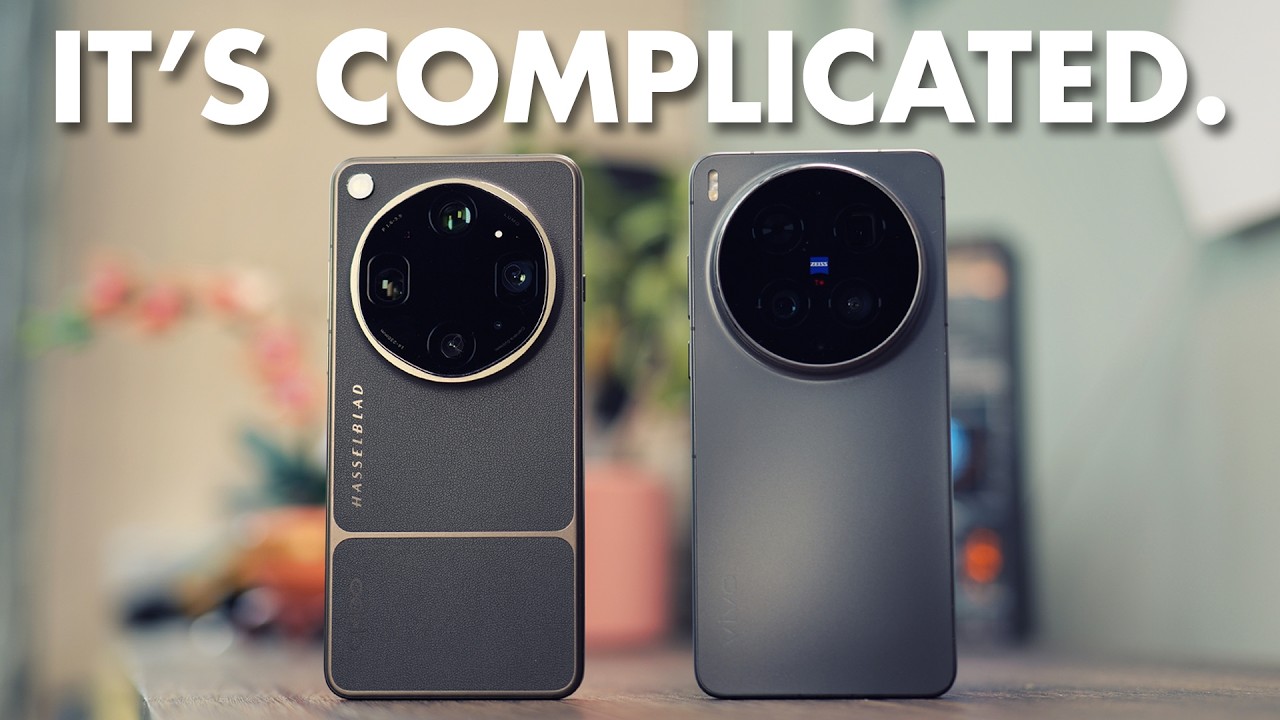
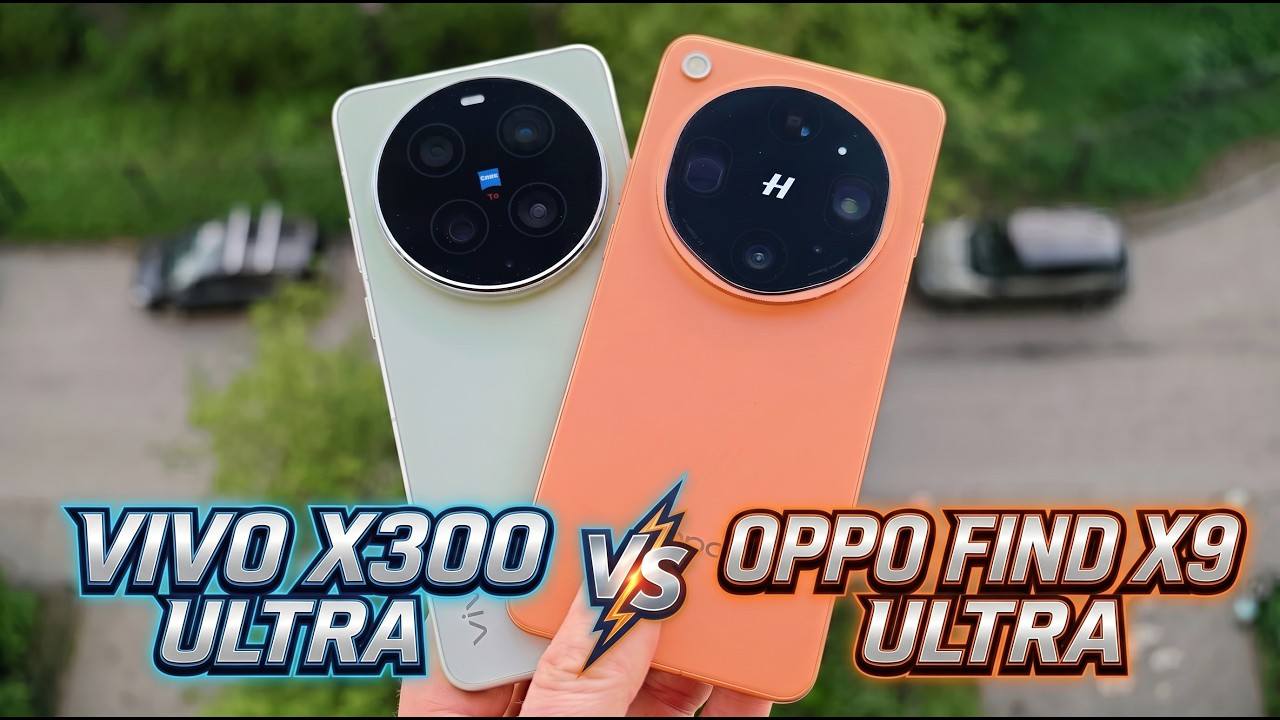
Oppo X9 Ultra, Vivo X300 Ultra i Xiaomi 17 Ultra: batalla fotogràfica de PremiQum
PremiQum compara els tres mòbils amb una Hasselblad en retrat, zoom, RAW, macro i fotografia nocturna. El veredicte fotogràfic acaba en empat.
PremiQum posa cara a cara l’Oppo Find X9 Ultra, el Vivo X300 Ultra i el Xiaomi 17 Ultra Leica Edition en una comparativa dedicada exclusivament a la fotografia. Durant gairebé 39 minuts prova retrats, persones, paisatge, RAW, macro, ràfega, zoom i escenes nocturnes. Una càmera Hasselblad de format mitjà serveix de referència per observar color i desenfocament òptic.
La Hasselblad no participa com si fos una rival equivalent. El vídeo l’utilitza per detectar quan el processament del mòbil s’acosta a la llum real i quan afegeix saturació, nitidesa o detall artificial. Amb aquest criteri, no hi ha un vencedor absolut: Oppo i Vivo acaben compartint el primer lloc fotogràfic, cadascun per motius diferents.
Retrat i color: Oppo és el més natural
Els tres telèfons separen bé el subjecte del fons en la majoria de retrats, fins i tot amb cabells fins. Vivo comet alguns errors més visibles amb branques i vores, mentre que Oppo s’acosta especialment a la intensitat de desenfocament de la Hasselblad. Xiaomi també resol bé el contorn, però la seva interpretació del color és més agressiva.
La prova de la cullera i la forquilla força els algoritmes amb objectes petits davant del fons. Cap mòbil supera el primer intent: alguna part queda desenfocada o mal retallada. Quan s’utilitzen els teleobjectius, tots tres milloren. Aquesta escena confirma que el desenfocament digital continua tenint punts febles malgrat que els retrats normals siguin convincents.
En selfies, el resultat depèn de l’escena, però Xiaomi tendeix a saturar massa la pell i li dona un to groc o taronja. Oppo és el més fidel en la foto de grup i Vivo s’acosta més a la referència en un altre autoretrat. Amb persones fotografiades sense mode retrat, Oppo reprodueix el to de pell amb més naturalitat a molts augments.
Paisatge i RAW: cada sensor té un guanyador
En paisatge diürn, tots tres ofereixen un rang dinàmic alt i conserven informació tant al cel com a les ombres. Oppo acostuma a apropar-se més a l’exposició i als colors de la Hasselblad, encara que cap telèfon és consistent en totes les escenes. Vivo encerta millor algunes llums i Xiaomi produeix habitualment una imatge més viva.
Els fitxers RAW deixen més marge per editar que un JPEG processat. Els tres conserven prou rang dinàmic, però el rendiment canvia segons la lent. Vivo sorprèn amb l’ultra gran angular, especialment en S-RAW, amb menys soroll i detall alt. A més, és l’únic dels tres que permet RAW de 200 megapíxels.
Oppo és més sòlid amb la càmera principal quan la presa queda subexposada: el fitxer surt més net i tolera millor la recuperació. Xiaomi és el més feble amb l’ultra gran angular i la principal, tot i que el teleobjectiu respon bé. Per tant, dir que un únic mòbil té «el millor RAW» amagaria diferències importants entre sensors.
Zoom: el teleobjectiu 10x d’Oppo marca distàncies
Vivo obté resultats molt nítids en diversos augments mitjans, però l’Oppo domina quan el zoom és molt llarg. A 20x, 60x i al màxim, és el que conserva més lletres, números i horaris llegibles. El nou teleobjectiu 10x permet recuperar informació que els rivals converteixen en formes distorsionades.
El comportament no és perfecte. A 10x, el resultat d’Oppo de vegades sembla un retall digital i no queda clar quan entra en funcionament l’òptica dedicada. A partir de 20x, en canvi, l’avantatge és evident. Vivo pot semblar més nítid però els algoritmes deformen caràcters petits, i Xiaomi mostra artefactes en forma d’escala de píxels.
Xiaomi aporta una tecnologia singular: el teleobjectiu de focal variable. És una solució flexible dins del seu rang òptic, però no guanya la prova de llarga distància. El vídeo valora més la informació real que una imatge aparentment afilada, un criteri especialment rellevant quan es fotografia text.
Macro i ràfega: Vivo sobresurt de prop, però es mou més
La fotografia macro és el triomf més clar del Vivo X300 Ultra. Permet ampliar més, manté una qualitat alta i ofereix un ús més flexible que els rivals. Oppo no arriba al mateix augment, però continua produint macros excel·lents i el revisor no ho considera una mancança decisiva.
Xiaomi és més restrictiu: el mode macro del teleobjectiu queda entre 3,2x i 4,3x, exigeix més distància i pot canviar automàticament a un retall de la càmera principal. L’ultra gran angular enfoca molt a prop, però el conjunt dona menys control manual del que suggereix la seva focal variable.
En captura immediata o ràfega, Vivo és el que entrega més fotos mogudes. Oppo i Xiaomi són més fiables quan el subjecte canvia de posició ràpidament. És un recordatori que un sensor amb molta resolució no garanteix per si sol una bona fotografia d’acció.
Fotografia nocturna i llarga exposició
De nit, cap marca reprodueix sempre el color de la Hasselblad. Oppo encerta algunes escenes, Vivo unes altres i Xiaomi s’acosta millor a una il·luminació taronja concreta. Els tres mantenen bon detall en persones i eviten un retoc facial excessiu fins i tot amb zoom.
En zoom nocturn, Oppo torna a ser el més fort als augments llargs. Vivo destaca a 1,5x i en algunes distàncies intermèdies, mentre que Xiaomi queda més exposat al soroll i als artefactes. Les diferències varien amb la lent activa, de manera que el vídeo compara cada esglaó i no només el màxim anunciat.
Vivo produeix les llargues exposicions més vistoses i és l’únic que arriba a mostrar una mica l’efecte de rastre d’estrelles en les condicions de prova. Xiaomi ofereix una presa nocturna molt equilibrada, sense un groc excessiu i amb més nitidesa a les ombres. Oppo genera la imatge més fosca en aquella escena concreta.
Funcions, edicions especials i preus de la prova
Oppo inclou el mode panoràmic XPan inspirat en Hasselblad, efectes de llum suau i controls de retrat, però és el que ofereix menys filtres i modes. Vivo és el més complet en opcions creatives, perfils, retoc i efectes amb IA.
El Xiaomi 17 Ultra Leica Edition incorpora un anell giratori al mòdul de càmeres. Pot controlar zoom, desenfocament, filtres i paràmetres manuals com ISO o velocitat. També inclou perfils Leica i efectes addicionals de foto en moviment, però aquestes funcions són específiques de l’edició Leica.
El revisor va pagar, convertit a euros, 1.165 per l’Oppo xinès, 1.175 pel Vivo xinès i 1.247 pel Xiaomi Leica. En el moment d’editar, indica preus a Espanya des de 1.700, 1.800 i 1.249 euros respectivament; l’edició Leica del Xiaomi començava a 1.950. Són xifres contextuals del vídeo, no preus actuals garantits.
Veredicte: empat entre Oppo i Vivo
Oppo guanya en naturalitat de color, pell, càmera principal RAW i zoom extrem. Té una frontal convincent i un conjunt molt consistent, però menys modes, una ubicació incòmoda de l’ultra gran angular per a alguns trípodes i un teleobjectiu 10x que no sempre sembla activar-se.
Vivo és el líder en macro, varietat creativa, RAW de 200 megapíxels i llarga exposició. A canvi, processa massa alguns detalls llunyans, la focal principal de 35 mm pot resultar estreta i la captura instantània produeix més moviment.
Xiaomi queda per darrere en aquesta comparativa concreta: la frontal altera la pell, l’ultra gran angular és menys nítid i els RAW admeten menys recuperació. Tot i això, té una principal potent, una focal variable única, bons resultats nocturns i una experiència física especial amb l’anell Leica.
PremiQum no tria entre Oppo i Vivo per a fotografia: els considera dignes del primer lloc. La decisió definitiva queda ajornada a una comparativa general de rendiment, bateria i pantalla. Si només es mira la càmera, Oppo és la tria per color i zoom; Vivo, per macro, RAW i creativitat.
Contrast i context
Fonts consultades
- 01
- 02
-
03
vivo vivo X300 Ultra
- 04
Font de treball
Transcripció amb marques de temps
Consulta la transcripció
-
0:00
, obre el vídeo en una pestanya nova
This is the brand new Opo X9 Ultra. This is the Vivo X300 Ultra, and this is the Xiaomi 17 Ultra-like edition. And in this video, we will compare the photo capabilities of these three flagship camera phones against a professional camera from Hasselblad. Well then friends, let's go! Hey friends, this video was translated using AI so the sound quality isn't the best. If you prefer watching the original video, just follow the link in the description. Yes, friends in the photo test section we will be comparing smartphone results not only with each other, but also with our professional Hasselblad camera. We need it as a reference for natural color reproduction and natural optical bokeh. It is clear that smartphones and medium format cameras are different classes of devices, but it is precisely in contrast with Hasselblad that you can clearly see where smartphone algorithms make the image look realistic and where they start recoloring the scene. Over sharpening details and adding too much artificial detail to the image. Let's start with a portrait photo. Vivo has a refined color profile, which was previously called natural. Xiaomi uses the lightest standard. I'm leaving the blur intensity for all three smartphones at the recommended values. To compare, let's immediately add Hasselblad to evaluate the accuracy of the digital background blur. And my wonderful daughters are helping me with this test. The first difference is seen in the zooms. Upload offers five magnifications from one X to 10X. Vivo shoots a portrait, starting from the ultra wide and up to 5.9x zoom. It also offers 5 levels of zoom. On the Xiaomi, portrait is available on the main camera, 2x zoom, and the variable telephoto lens, taking the photo. In the first series of shots, Oppo and Xiaomi's Bokeh worked very similarly to Hasselblad. They correctly separated the foreground from the background, and kept part of the bush and a flower in focus. Vivo has the weakest blur in this trio, since the photo was taken on the ultra wide lens. and comparing this shot to the others wouldn't be quite fair. Taking a photo with the main camera of the X300 Ultra, the Blur's strength is close to what we see on Hasselblad. However, Vivo made the most glaring mistakes in the trio. Look at the branch. It is partially out of focus, while the leaf near the girls is in focus. It's noticeable that Vivo also blurs fine hair more than anyone else, although Oppo and Xiaomi have this problem too. This is especially noticeable above the head of my younger daughter Mia. Zooming in closer, Oppo turned out to be closest to Hasselblad in terms of blur strength. The competitor's blur is a bit weaker, but in terms of blur accuracy, all three results are quite good, even with hair, the algorithms handled it quite neatly, and there are only minor errors along the edge of the blur, switching to the telephoto lenses. Here, the smartphones also handle foreground separation quite well. All three keep many fine hairs in focus, and only upon closer inspection, can you notice some minor errors? By the way, Hasselblad blurs the entire background at a similar zoom, including the Rose Bushes, whereas on the smartphones the branch with the flower still remains in focus. We see the same thing when filming at 4.3x zoom on the Xiaomi. Moving to larger zoom on the Oppo and Vivo, both worked quite well with the blur edge and preserved fine hair. Also, Oppo has 10x zoom with portrait mode, but at this magnification we can no longer evaluate the blur, though we can comment on the color reproduction. In my opinion, none of the smartphones match the Hasselblad colors across any zoom levels. However, Oppo and Vivo still provide a more natural and soft result than Xiaomi. But it is important to say here that color perception depends heavily on which device you are using to watch the review. Your smartphone, laptop, and TV can give three completely different results. And friends, let me clarify right away. We are not criticizing smartphones for failing to match Hasselblad's color reproduction. It is just a fact that helps to understand exactly how the algorithms work. It is important for us to simply show where the color is closer to reality, and where the smartphone is already giving its own, more processed and enhanced image. And now we move on to our signature SpoonFourc test. Let's check how the smartphones handle blurring small objects. In the first series, no one passed the photo test. With Oppo and Xiaomi, the spoon is partially smudged while with Vivo it's just blurry. When shooting at 1.5x zoom, Vivo works better. The result is excellent. The whole spoon is in focus. At the next zoom level, both Vivo and Xiaomi worked well.
-
3:53
, obre el vídeo en una pestanya nova
Whereas with Oppo, we still see a blurry part of the spoon to the left of the hand. But if we take photos with the telephoto lenses, then all three smartphones handle the task without any problems. This also applies to the extreme focal length of 4.3x on the Xiaomi telephoto lens. Next, the Vivo and Oppo also get high quality results without any blurring errors, including when switching to the 10x telephoto lens on the Oppo Find X9 Ultra, moving on to selfie photos. Let's start with this shot of my daughters. Here, Oppo gives us the most honest color in the trio. It is specifically this one where skin tone and clothing look closest in hue to the Hasselblad photo. With Vivo, the shot looks pleasant and soft, but the tint here is different, a bit pinkish. Xiaomi, however, makes the skin very yellow and gives it a sort of carrot-like look. In the second series of photos, where I am alone, we see a different situation. Here, Vivo gives us a more natural skin tone, close to the reference. Oppo's result is also soft overall, but yellowish. Xiaomi oversaturates the skin again and gives it a carrot tint. Now let's take a couple of portrait selfies and start with such a difficult scene with three people and backlight. Small flaws along the blur edge are present in all three smartphones. However, the most obvious mistake is seen on the Xiaomi. It left a palm branch near my lovely mom's head and focus. As if you were the foreground. Second example, a simpler scene, but even here the front cameras had trouble with the blur edge. In some places, thin hairs are blurry, and there are also small, unblurred areas of the background visible in the hair. However, This is a typical result for digital bokeh on modern front cameras. By the way, all photo tests were conducted on the exact operating system versions that you see on the screen right now. This is important to keep in mind, because after updates, smartphones might perform differently in terms of color reproduction, noise reduction, detail, and overall photo processing. Let's look at regular photos of people without portrait mode. On the Vivo, I'm changing the profile from refined to natural size. and on the Xiaomi I choose like a vibrant. Let's see what color reproduction results these smartphones offer with these color settings. On the ultra wide lenses, Oppo and Vivo gave a soft, calm shot. While the Xiaomi result is the most saturated with a noticeable sandy tint, moving to the main cameras and adding hassle-blad photos as a reference. The camera produces a cold photo and Vivo came closest to this result, though Oppo was more accurate with this guy color. At two X-Zoom on Oppo and Xiaomi, the situation doesn't change, so I suggest zooming in closer, enabling telephoto lenses. The situation here is interesting. For white balance, Vivo is closest to Hasselblad again. But as for skin tone, I think Oppo hit it more accurately. Moving on to larger zooms. Once again regarding skin color, the most accurate was from the Oppo Find X9 Ultra. But it should be noted that the photo itself is more saturated than the Hasselblad one. At the same time, no one got the clothing color right. Doing 10 X-Zoom. And here we look not only in color reproduction, but also at how details are rendered. And actually, all three flagships are impressive here. Skin looks natural, no harsh processing or retouching is visible. And as for skin tone, Opel once again gives us the result closest to Hasselblad. 20x, the final zoom in this test. I have nothing more to add to what was said above. The photos are natural and realistic in terms of detail, and regarding color reproduction, the fine-dx9 Ultra ended up being closest to Hasselblad on almost all zooms. Let's move on to some tasty photos and see how these phones handle food photography. Only Vivo has a dedicated food mode where you can choose different effects, like adding a light source or haze. The competitors don't have such an option. So here I use filters and portrait mode to get an interesting result. And this is the appetizing result we get. Who did it better? I think this is a matter of your color preferences.
-
7:47
, obre el vídeo en una pestanya nova
Let's move on to landscape photography and start with the ultra wide lenses. Let's start with this kind of example with backlight and a dark foreground. Vivo and Xiaomi did well. The sky isn't blown out. But the foreground is also quite bright. All pose exposure is clearly lower than its rivals, which makes the foreground a bit dark. In the second photo with similar conditions, we see that all three smartphones show good detail in both the sky and the shaded foreground. The vegetation is clearly visible. When shooting in simple conditions, You get beautiful shots like these. Smartphones provide pleasant and high-quality shots, but with their own tints. Let's move to the main camera, and for an example of realistic color reproduction, we'll add a photo from Haselblad. In the first example, we see that Oppo is close to Haselblad not only in tints, but also in exposure. In the second example with the blue mini van, we see that all three smartphones perform differently and none of them match the reference shades. This is noticeable by the color of the asphalt, for example. Another series of shots now features a beautiful embankment. Once again, it is specifically the Oppo Find X9 Ultra that gives the shot closest to Hasselblad. Another example now with such beautiful flowers, the vegetation itself looks similar in all four shots, but if you look closely at the tile shades, Oppo and Xiaomi will be closer to Hasselblad. Let's take a couple of photos with the telephoto lenses. In the first example, All three smartphones fail to match the Hasselblad lighting and adjust the white balance and shades in their own way. In the second series of shots, we see that the smartphone photos differ in brightness and contrast, but overall their hues are similar to the Hasselblad photos. Another example, again with colors. This time, Vivo produced the result closest to the reference. It's overall color reproduction is most similar to the photo on the right. The last example with vegetation, this time it seems like all three competitors' photos turned out similar to what Hasselblad gave us. If we are talking about the foreground, but for some reason the sky on the op-o went into a purple tint, while at the same time the sky tint on the vivo and Xiaomi is closer to the reference, moving on to raw photos. The point of this test is to see how much information the smartphones preserve in the file before the algorithms process it. In a standard JPEG, the smartphone immediately adds color, boost contrast, and cleans up noise itself, whereas RAW gives a significantly more room for manual editing. For now, I suggest you evaluate what kind of results we can achieve and raw from each lens of every flagship. What can I say about the flexibility and quality of raw photography in our case? Regarding file flexibility, I wouldn't single anyone out here. All three smartphones produce shots that have good dynamic range, but as for the sharpness and clarity of daytime raw, Vivo surprised me, especially on the ultra wide lens. The detail turned out very high. And the image looks noticeably sharper than its competitors. Friends, also to reveal the maximum potential of the raw format. I tried taking such photos with under exposure. A special thanks to our subscriber for the idea, based on these files, Xiaomi looks the weakest. The Ultra Wide and main camera struggle more than Oppo and Vivo, although the telephoto lens performed quite well. With Oppo and Vivo, it depends on the lens. Vivo performs better on the Ultra Wide lens, especially in Esra, where there is a wider dynamic range and less noise, while Oppo looks slightly stronger with the main camera. As for the telephoto lenses, Oppo and Vivo have roughly the same results. I also tried shooting 200 megapixel raw photos on the Vivo, and I'll say right away, it is the only smartphone in this trio that allows taking raw shots at such a resolution. In terms of editing flexibility, these photos are no different from other shots on the Vivo. The key feature here is specifically the higher resolution of the images. Let's test the photo zoom and check the smartphones optics for long-range capability. I should note that on the Vivo. Maximum Super Photo Enhancement is enabled. On the Ultra Wide lens, Oppo and Vivo shots look comparable. All details and text are sharp and easy to read. With Xiaomi, even small text is generally readable, but the result is blurry. By the way, I should note that on Xiaomi, 50 megapixel photos are only available through Pro mode, whereas you simply cannot activate such a resolution through the standard camera interface. Here, we can only enable 200 megapixel photos on the telephoto lens.
-
11:41
, obre el vídeo en una pestanya nova
Let's move to one X zoom on Vivo. This is a crop from the ultra wide. At the same time, it must be said that in terms of quality, it doesn't fall behind competitors using the main lenses at all. Its sharpness is slightly lower, which is noticeable, but detail readability doesn't really suffer from this. We are enabling 1.5X on Vivo and 2X zoom on the competitors. Of course, the photo in the center looks the sharpest, but the shot on the left also looks decent and generally doesn't fall behind the Vivo result. But with Xiaomi, the photo is weaker, it is more blurry. If we do a 2x zoom on the X300 Ultra, then it gives us a good result again. Similar in quality to the Oppo shot. We switch to the telephoto lenses. All three lenses are 200 megapixels. And in the end, all three photos turn out very similar in detail. Zooming in further, digital zoom kicks in with Oppo. The result is quite sharp, but with a slight glow around the letters, which is an artifact. Vivo doesn't have this problem, and it also has the sharpest and clearest details, while Xiaomi gave us the blurriest shot in the trio. And now we have the same zoom level, 10x zoom. But Oppo is switching to a second telephoto lens, though I get the feeling that there's no point to it, because the resulting photo looks more blurry than the one from Vivo. Xiaomi performed roughly the same as Oppo. Both fall behind the Vivo at this zoom, zooming into 20x. At this zoom, the best photo is given by the Oppo Find X9 Ultra. The letters are easy to read only on that one. while the rivals symbols are more distorted. Apparently, this is where the 10x telephoto lens starts to show its limits. 60x zoom. Once again, we see the best result from Opo. Only in its photo can we see the numbers and learn the business hours. Switching to maximum zoom 120x on Opo and Xiaomi, and 105x on Vivo. And again, specifically the left photo turns out best in detail. Only here can you read small letters and numbers while the rivals distort details too much with algorithms. Overall, The new 10x telephoto lens on the Oppo is really powerful. While we're here, let's also evaluate the new feature on the Vivo X300 Ultra, the so-called telephoto enhancement. What can I say? It is clear that when this feature is activated, the smartphone render details more aggressively, and in a photo like this, you can even make out the silhouettes of symbols, whereas without the enhancement, the result is more blurry. However, we only got this result at 60X zoom, but at maximum zoom, you can no longer see any difference in detail between the Vivo shots. Friends, also pretty requests. We compared 10x zoom on Oppo with a 10x crop from a 200 megapixel shot from the Vivo Telephoto lens. And here is what we ended up with. Moving on to macro photography on the Oppo X9 Ultra. This mode works very interestingly. If you activate macro mode, then at 1x the smartphone shoots a crop from the Ultra Wide lens. At 2x the main camera is enabled. and here even optical bokeh appears. Next, at 3x, the telephoto lens turns on and you can zoom in with it up to 30x. And here, it seems the 10x telephoto lens is not involved in macro photography. That is, in macro mode, Apple uses the ultra wide, the main camera and the 3x telephoto lens. Overall, I like the implementation. The zoom is powerful and we have decent control over the zooming distance. The Vivo X300 Ultra has a separate super macro mode, which is activated by the flower icon at the top of the interface. After that, the smartphone immediately switches to the telephoto lens. And from then on, we can shoot macro with different zoom options, getting deep and high quality photos with strong zoom and impressive bokeh. With the Xiaomi 17 Ultra, the situation is debatable. In super macro mode, there is a strange limitation. You can only use the telephoto lens within its optical range of 3.2X to 4.3X. and you can't do, for example, 10x zoom anymore. If you don't enable SuperMacro, then you can use the Ultra Wide. It focuses from a very close distance, literally, from a couple of centimeters. With the main camera, the working distance increases to about 10 to 12 centimeters, while on the telephoto lens it is already around 30 centimeters, and this is inconvenient.
-
15:35
, obre el vídeo en una pestanya nova
And if you bring the smartphone a big closer, Xiaomi itself might switch us from the telephoto lens to a digital crop from the main camera. So I can't just easily select the telephoto lens and shoot actual optical macro. That is why Oppo and Vivo look more interesting in their macro implementation. Let's test burst photography. In this mode, smartphones take dozens of shots in a few seconds. And here it is, especially important how the cameras catch focus on motion. Taking shots and picking a few random photos. In the first series of shots, Oppo's result is not bad. But the racket and shuttlecock are a bit blurry. With Vivo we see the strongest blur. While at the same time, Xiaomi delivered the sharpest shot. Another example. Here, Oppo performed best of all, even though its racket is out of focus again. And a third control example. With Oppo the result hasn't changed, the shuttlecock is in focus, and the racket is blurry. Vivo again gave the most smudged result. While Xiaomi caught focus well on the racket, but slightly blurred the shuttlecock. And I suggest we test instant photo right away. This mode is turned on by pressing the running man icon on all three smartphones. Here, focus on movement is even more important to us, because this mode implies that we must literally catch the moment. In the end, we see that in all examples, Oppo and Xiaomi give us sharp shots without motion blur. Both the shuttlecock, the racket, and my lovely daughter are in focus, but Vivo sometimes misses, and the result here is weaker than its rivals. On Oppo, you can view such a photo or make changes in an editor. For example, by adding a slow motion effect. However, there are no other interesting features here. With Vivo, we can't even make a slow motion effect. Here we only have live photo viewing, and that's it. At the same time on Xiaomi, we can use a video editor to add a boomerang effect to live photos, as well as a loop effect. And now it's dark outside. Let's proceed to low light photo tests, and let's start with portraits. I'm not changing the blur settings. Vivo is set to refine color profile. and Xiaomi to like a standard. And helping me with this test is my lovely eldest daughter Maya. In the first series of photos, we see that the smartphones worked quite neatly, no errors on the blur edge are visible, but our blur intensity is still quite low. If we switch to the Vivo main camera, it again shows a good result with neat separation of the foreground from the background. I should note that on the Hasselblad at a 35mm focal length. The blur is stronger, and even the flowers near my lovely daughter ended up out of focus. Let's zoom in further. At 2x zoom, only Vivo gives us okay comparable to Hasselblad, just like in the daylight test. Of course, with Oppo and Xiaomi, you can manually set a stronger blur. But right now, we are evaluating specifically the blur intensity recommended by the manufacturers. All three smartphones work great with the blur edge, keeping many fine hairs in focus, switching to telephoto lenses. Oppo and Xiaomi gave us bokeh here similar to optical on Hasselblad, while vivo's blur is clearly stronger. But again, I praise all the smartphones for the neat separation of the foreground from the background. If we switch to the Xiaomi telephoto lenses long zoom, the result is quite high quality, I have no complaints. I can say the same about the 6x and 5.9x zoom on Oppo and Vivo respectively. Both neatly separate even thin hairs from the background. At 10x zoom on Oppo, we can evaluate the image quality. All three flagships delight with a natural detailed image without aggressive retouching or AI enhancement. Excellent results for these shooting conditions. As for color reproduction, the smartphones in this test gave results that are not at all like Hasselblad. All three flagships clearly tried to compensate for the orange lighting, whereas the camera honestly preserves it. Testing selfies in these conditions. In the first example with my lovely wife Anna, we see that among the smartphones, Opo gives them more honest color. It's clothing color turned out more similar to what we see on Hasselblad. Although it's still changed the skin tone and tried to balance the white balance under yellow lighting.
-
19:29
, obre el vídeo en una pestanya nova
But the competitor's results are even less similar to the reference. Another photo where I am alone now. Hasselblad again gives us a yellow shot. Xiaomi's photo is reddish. Vivo's is cold. Opo just has a slight yellow tint. But perhaps, it is this one that again has the result closest to Hasselblad. It is not good, not bad. It is just a fact. I will remind you about this, friends. Taking portrait shots. I'll know right away that Vivo blurs the background very heavily. and even hassle-blad with its optics does not give us such blur. As for the digital blur quality, we predictably see errors across all three flagships. For example, in the left part of the photo, the smartphones erase many fine hairs from my daughter, a second example is when I am alone. The blurring algorithm finds it easier to work with hair, since mine isn't quite as long. However, it is visible that on the vivo and Xiaomi, there are sharp areas to the right of my neck. Let's move on to filming a person using the main camera unit. Without digital blur, the vivo has a refined color profile. while for the Xiaomi we will look at like authentic. At the initial zooms, we will once again look at color reproduction. And starting from 10x zoom, we will evaluate how the smartphone algorithms reconstruct facial details. I'm starting as usual with the ultra wide lenses. For now, I suggest you choose the best photo to your own taste. Moving onto the main cameras and adding Hasselblad photos to the comparison. And so far, none of the smartphones give us a result similar to the camera. We see the same thing when filming at 2x zoom on Oppo and Xiaomi. The smartphone again balances the yellow lighting. Trying to give us a balanced image. But everyone colors their photos in their own shades. When switching to telephoto lenses, the situation changes a bit. Here, Oppo has already approached Hasselblad's color reproduction. This is visible by the clothing shade and skin tone. The result is not exactly one-to-one, but it's more accurate than the competitors. Switching to digital zoom, once again, Oppo gives a closer result to Hasselblad. However, its shot leans more into yellow while Hasselblad's leans into orange. Activating 10 XZOOM on Vivo and Oppo 8.6 XZOOM on Xiaomi, and lets evaluate the detail in AI processing. With Oppo, thanks to the telephoto lens, the result is excellent and detailed. With Vivo and Xiaomi, the photos are more blurry, but it's good that both of you will excess the processing. And finally, we switch to 20 XZOOM while on Xiaomi! We enable 17.2x zoom, and again, all three smartphones produce a quite natural result. We can see skin texture, beauty marks, and eyebrows. It looks quite natural. The Vivo X300 Ultra has a new feature. Telephoto lens enhancement, and I think we have the best conditions right now to test this mode. But in the end, the difference from the previous photo without active enhancement is not visible at all. Perhaps this enhancement only makes sense when zooming on text, rather than on a person. Because that is exactly how it works with super photo enhancement. Let's move on to landscape photography in these conditions. If we are talking about photos on the ultra wide lenses, then all three flagships give us quite pleasant and high quality shots even in low light. Sometimes one smartphone has stronger flares and blown up highlights than the other, but the result always varies depending on the scene. I can say that someone performed worse or better. And the difference comes down to white balance intent. By the way, let's move on to the main lenses and see which flagship has the most accurate color reproduction in these conditions. For this, we are once again adding a Hasselblad reference. In the first example, we have warm orange light, which gives the shot that same tint. The result closest to this color was achieved on the Xiaomi, whereas the Vivo photo is yellowish, and the Oppo turned out with a brownish tint. A second example with softer light. The reference is slightly yellowish, and this time the Oppo was the closest to it, another example, but now we have multicolored lighting. Judging by the color of the asphalt, Vivo worked most accurately, but if we look at the building ahead, then Opel and Xiaomi are closer to Hasselblad in color reproduction. I also took several shots using the telephoto lenses. Let's start with a photo of this sculpture of children reading. Here the Hasselblad result is very yellow.
-
23:22
, obre el vídeo en una pestanya nova
And you can see that the smartphones tried to compensate for such yellow lighting to make more pleasant shots. Another example with a busy street? Here, Vivo got closest to the reference. Although the result is, of course, not 100% identical in color reproduction, but the competitor's shades are even less similar to the example on the right. Let's finish our test with this flower pot. With Hasselblatt, we again see a yellowish shot. The smartphones, however, have their own shades and white balance, which doesn't match the reference at all. I'll remind you that we are simply stating this as a fact. and not criticizing the smartphones for their own color reproduction. Let's test the zoom range in these conditions. We'll start as always with the ultra wide lenses. In detail, you can see that Vivo gives us the sharpest result. And for example, the numbers are most readable on it. On Oppo, the details are a bit more blurry, but Xiaomi has the weakest result. Let's switch to 1x. Oppo gives us the best photo here. With Xiaomi, the result is a bit more blurry, and you can also see noise. The result from Vivo looks the weakest of all. In these conditions, the crop from the ultra wide lens can no longer compete with the main cameras of its rivals. When switching to 1.5x zoom on the vivo and seeing a bit of digital zoom on its rivals, we see that it is exactly the x300 Ultra that gives the clearest and most detailed photo, which is expected and logical. At 2x zoom, Opil gives us the weakest result. For example, you cannot read the word fashion on it, and you also can't see the texture of the sign. On Xiaomi, you can see both the texture and the word, although the small letters are partially distorted. Vivo, of course, gives the clearest result. Since we are currently using its 1.5x main camera, if we take photos with telephoto lenses, then the Op-O find X9 Ultra gives us the best result. Its details and letters are the sharpest, whereas the competitors' results are a bit more blurry. When shooting at 4.3x zoom on Xiaomi, we get decent text readability, although it is noticeable that all the details here are more distorted than on the Op-O, for example. Next zoom. This time, Vivo offers us the highest quality photo. Its text is the clearest and neatest, whereas on Xiaomi, you can see distortions and artifacts. At the same time, on Oppo, the details are completely blurry, even though its zoom is slightly less than its rivals. Switching to 10X, the second telephoto lens is working on Oppo. Overall, its photo looks neat, although it is a bit too processed. Vivo's processing work differently, and for some reason, the bottom text started to split. Large pixel staircases are visible in the Xiaomi shot, though the text is generally readable. At 20x zoom, the best result is on the left. Here we can see a restaurant's business hours more clearly. More or less these same numbers can be seen in the Xiaomi photo. But with Vivo, the algorithms distorted the details very heavily. At the next zoom level, once again, it was upo that provided the most acceptable detail. Here we can clearly see the time 12.00. On the Vivo, this same text turned into 11.00. On the Xiaomi, you can see the number 12 clearly, but the zeroes turned into a pixelated mess. Let's enable the maximum zoom. Oppo find X9 Ultra wins here unconditionally. You can see not only the battery life graph, but also the small text above it. Not entirely, but you can still read it. With its rivals and even with the Hasselblad camera at a comparable zoom, this small text is completely impossible to resolve. While just like in the daytime zoom test, the new Oppo Telephoto lens performed worthily. Let's test another interesting mode, long exposure photography. All three smartphones offer a separate mode for this type of shooting. The principle is the same for all of them. We have several shooting presets available to us. There is a preview demonstrating each option. Everything is intuitive and convenient. The results are impressive, but they differ in exposure and saturation. Personally, I like these photos from Vivo the most, but that is purely my subjective choice. Let's take a photo of the moon. Obviously, at the initial zooms, no smartphone will be able to show Earth satellite. That is normal, but instead we can evaluate the overall scene and the visibility of the moon in clouds. All three smartphones delivered impressive results. but Vivo as usual saturates the sky more than anyone else and makes it blue. Whereas the competitors' results are softer, you can get good photos of the moon starting from 30X zoom in beyond. It is important to note that it was cloudy that day, and the moon was partially covered by clouds on all smartphones. So the testing conditions were not easy. Nonetheless, all three flagships performed quite well with the color of the moon and provided good shots. No one made it too yellow, red, or some kind of unnatural shade.
-
27:16
, obre el vídeo en una pestanya nova
Now let's test Night Mode with long exposure in minimal lighting conditions. On all three smartphones, we are activating Night Mode, also all three flagships offer a tripod mode option, which optimizes the shooting algorithm specifically for such scenes and provides the maximum shutter speed. As a result, Opo produces the darkest result with an unpleasant yellow tint. Vivo gave a brighter photo with a beautiful night blue sky, but a blurry foreground. Xiaomi also performed quite decently. The photo is beautiful without yellowness and not too dark, while the sharpness and detail in the shadows are top-notch. But Vivo and Xiaomi have a unique feature here. They offer photo presets that Oppo doesn't have. And in this case, I'm talking about the StarTrail effect. In this mode, the shutter speed becomes even longer. However, the conditions for such a photo are of course not the best, almost all the skies and clouds. As a result, we only get a slight StarTrail effect on the Vivo, whereas with the Xiaomi, nothing like that is visible at all. I still recommend filming such scenarios away from bright city lights and under a clear sky. Let's talk about the smartphones photo features. Let's start with the new model features, besides the mini filters that are now in every flagship, Oppo offers a unique X-pan mode, which simulates shooting on the legendary Hasselblad X-pan film panorama camera and is recommended for landscape photos. In portrait mode, we also have several features such as a soft light effect, as well as retouching and facial feature editing. Other features include ID photos, stickers, and similar not very interesting little things. Of course, in this regard, the VOL looks like the most interesting one in the trio. There are also many profiles and filters here. More flexible facial features settings and retouching, as well as presets for portrait shooting and different variations of background blur and portrait mode. But one of the main key features is, of course, AI filters, which can radically change a photo. Shall me 17 Ultra-Like Edition stands out with its Master Zoom ring. This is a rotating bezel on the main camera unit, which is responsible not only for zoom, but also allows you to control bokeh and filters. And in Pro mode, you can rotate exposure, ISO, shutter speed, white balance, and adjust other parameters. But this solution, it's more about interacting with a smartphone, rather than real utility in my opinion. The second distinctive feature of this flagship is a set of presets like Essential and in Portrait Mode. There is a large set of presets that simulate signature like a lenses. We talked about all of this in detail in a separate review of this Xiaomi. If you are interested, the link will be in the description. Well then, friends. Let's summarize our photo tests and see which smartphone proof to be stronger in real shooting scenarios. But we will start as always with the prices. All three smartphones I have are the 512 GB versions, and the prices in Euro are based on the exchange rate at the time of purchase. The Oppo-Find X9 Ultra Chinese version was bought in Spain for 1,165 Euro. The Chinese version of the Vivo X 300 Ultra cost me 1,175 Euro. And my Xiaomi 17 Ultra-like edition turned out to be the most expensive in this trio, 1,247 Euro. Now let's go over the current prices. The Op-O-Fine X9 Ultra can be found from 1,700 Euro. The Vivo X300 Ultra from 1,800 Euro. The regular Xiaomi 17 Ultra from 1,249 Euro. And if we are looking specifically for the Lika Edition, the price starts from 1,950 Euro. I check the prices in Spain, where I am currently living with my family. And, of course, they are current as of the time of video editing. Let's figure out which smartphone will be more interesting to buy right now. If we are talking specifically about photo capabilities, I want to note that all three smartphones seem strong to me in terms of photography. All three flagships performed well in portrait photography without blurring. We didn't see any aggressive face processing even at high zooms and even in low light. The portraits with digital blur were also pleasing. All three smartphones did a good job separating the foreground from the background and worked quite neatly even with long-anthin hair. In landscape photos, the flagships also pleased me, the shots turn out great. Beautiful, with pleasant color reproduction.
-
31:10
, obre el vídeo en una pestanya nova
and even in low light, the smartphone optics work decently. I should also know that all three smartphones produce high quality and flexible raw photos, which can be edited more or less equally. Although Vivo does have a distinct advantage in this mode, I will talk about that later. But let's go over the strongest sides of each smartphone. Let's start with Oppo, and talk about its pros. Of course, one of the strongest sides of the new Oppo is the 10x telephoto lens. which when zooming in heavily allows us to see text in details that remain blurry or distorted on its rivals. It has a good front camera, which gives pleasant and high-quality selfies, including in low-light conditions. The ultra wide, main camera and 3x telephoto lens also work confidently and provide high-quality photos in different shooting conditions. One of the most noticeable pluses of the Oppo-Find X9 Ultra is its color reproduction. The smartphone justifies its collaboration with Hasselblad. Because in today's tests, it really often hit the natural colors of Hasselblad. I will also count macro photography as a plus. Maybe this smartphone doesn't give us such powerful macro zoom as Vivo, but the photo quality is still excellent in the end and I definitely wouldn't consider it a minus. I will separately note the high quality raw photos. With the main camera, Oppo gives a lot of wiggle room during processing, which we check separately when filming with under exposure. There is less noise and the image is cleaner. And in this regard, the main camera looks stronger than these same lenses on Vivo and Xiaomi. Now let's go over the downsides of Oppo. And actually, there are not that many. For me, one of the main problems with the Oppo was the ultra wide lens located at the bottom of the camera module, which caused the tripod to constantly end up in the frame. I should also note that Oppo offers the least variety of features among our trio. It falls behind Xiaomi, and even more so, Vivo with its modes and filters. Despite the fact that the Oppo did well with portrait shots, It's still failed our signature spoon fork test. The spoon remained partially blurry more often than on its rivals. As a downside for the Oppo, I'll note the strange performance of the new telephoto lens. It felt like it wasn't always activating. For example, in the 10x photo zoom test, the photos look just like the digital crop on the competitors. At the same time, at 20x, the photo quality on the Oppo find X9 Ultra is already noticeably better than on vivo and Xiaomi. These are strange results, and in the end, It's unclear in which situation the 10X optics actually kick in and when we're just getting a digital crop. Let's talk about Vivo, although we have already said a lot about it more than once. We have already discussed all its pros and cons in its previous tests. And here, let's just go over them briefly. Vivo has a strong camera setup, which performed excellently in our tests. It delivers high quality shots on the ultra wide, the main camera and the telephoto lens, and even performed well when shooting a 1X crop of the ultra wide during the day. Another very strong side of Vivo is macro photography. Here, it is the undisputed leader in the top three. Macro photography is more flexible and convenient than the competitors, and the quality remains top-notch even at high zoom. And of course, Vivo has a huge variety of features and modes, and in terms of the number of settings and presets, as well as filters, it beats both Oppo and Xiaomi. Besides, in my opinion, this Vivo gives us the best photos and long exposure mode, producing the most saturated and vibrant results. A strong point of vivo is, of course, raw photography. Only here do we have both standard raw photos and S-Raw at 200 megapixels resolution, which competitors do not offer. I would also include long exposure night photos as a plus. Vivo gives us beautiful bright photos with a pleasant saturated night sky. Plus, it has additional presets, including the StarTrail effect, and it was specifically on the vivo in our test that this effects showed up, even if just a little. The main controversial point of the vivo is the overly aggressive image processing.
-
35:04
, obre el vídeo en una pestanya nova
and this was especially visible in the photos and tests. At long zoom levels, the algorithms heavily distort small details in text. Letters can look unnatural. Turning into strange symbols and becoming blurry. As a result, the shot seems sharp, but in terms of actual readability, the Vow doesn't always pull far ahead of its rivals. Another important nuance is the main camera with a 35mm focal length. Personally, I find this option not very convenient. The image turns out narrower, it's good for portrait photography, but for other scenarios, I would prefer the usual 1x main lens, like what we had, for example, on the Vivo X100 Ultra, or X300 Pro. As for the flaws in our test today, I would note Vivo's performance in instant shooting, where it more often gave a blurry result than its rivals. And let's also briefly talk about our Xiaomi 17 Ultra-like edition. This is also a very competitive flagship, which offers us a strong main camera. and a unique telephoto lens with variable focal length. No other competitor has this technology, and it clearly sets the 17 Ultra part in our trio. I will also separately mention the signature features of the Xiaomi 17 Ultra-Like edition. First of all, there is a rotating bezel here, which adds the feeling of working with a camera and makes controlling the shoot more interesting. Secondly, the preset settings and filters from Lika that we mentioned in the features section, but it is important to note that all of this is only available in the Lika edition version. I should mention that the live photo here is also more interesting than on Oppo and Vivo, because only with Xiaomi can you add boomerang and loop effects. Xiaomi performed well in night sky photos with long exposure. The shot turned out beautiful, not too dark, and with better sharpness and detail. Even in the shadows, what negatives can I point out regarding this Xiaomi? The front camera is clearly not the best in the trio. There are questions about the color reproduction. On this module both during the day and at night, Xiaomi often oversaturates skin tones too much and creates a sort of carrot or orange tint. The result looks frankly unpleasant. The ultra wide lens is also perhaps the weakest in this test, whether in photosume during the day or at night, it gave us the most blurry results. Also, Xiaomi sometimes overdoes the sharpness, which causes a pixelated staircase effect in the details when zooming. Xiaomi's raw files turned out to be weaker than its rivals. The ultra wide and main camera don't hold up as well during processing, especially if the shot is taken at lower exposures. The zoom performed quite well in this case, but overall in terms of flexibility and raw quality, Xiaomi is inferior to Oppo and Vivo. Macro Photo Another controversial point In macro mode, you can only use the telephoto lens within its optical range from 3.2x to 4.3x, but you can not do a stronger zoom for example. 10x without macro mode, you can use the ultra wide lens, it focuses very close. The main camera works from about 10 to 12 centimeters, but the telephoto lens requires around 30 centimeters, which isn't always convenient for macro. And if you bring a smartphone a bit closer, Xiaomi might switch us from the telephoto lens to a digital crop from the main camera by itself, so there is no full manual control over the filming. These are our test results friends. So, what's the final verdict? Which smartphone would I choose for myself specifically for photography? Actually, it is a difficult choice, and Oppo and Vivo in my view are top photo flagships that are good in their own way. Oppo wins thanks to the 200 megapixel main camera at 23mm, and the 50 megapixel telephoto lens at 10X zoom. While Vivo is more interesting in terms of creative features, I would say that both smartphones are worthy of first place when it comes to photos. So I will make my final decision in the next... final video about this trio of flagships, where we will analyze performance, battery life, displays and other parameters, and what would you choose for photography friends? Oppo, Vivo, or Xiaomi? Write in the comments, and of course, subscribe to our channel, hit the like button, and turn on the notifications, and bye-bye everyone!