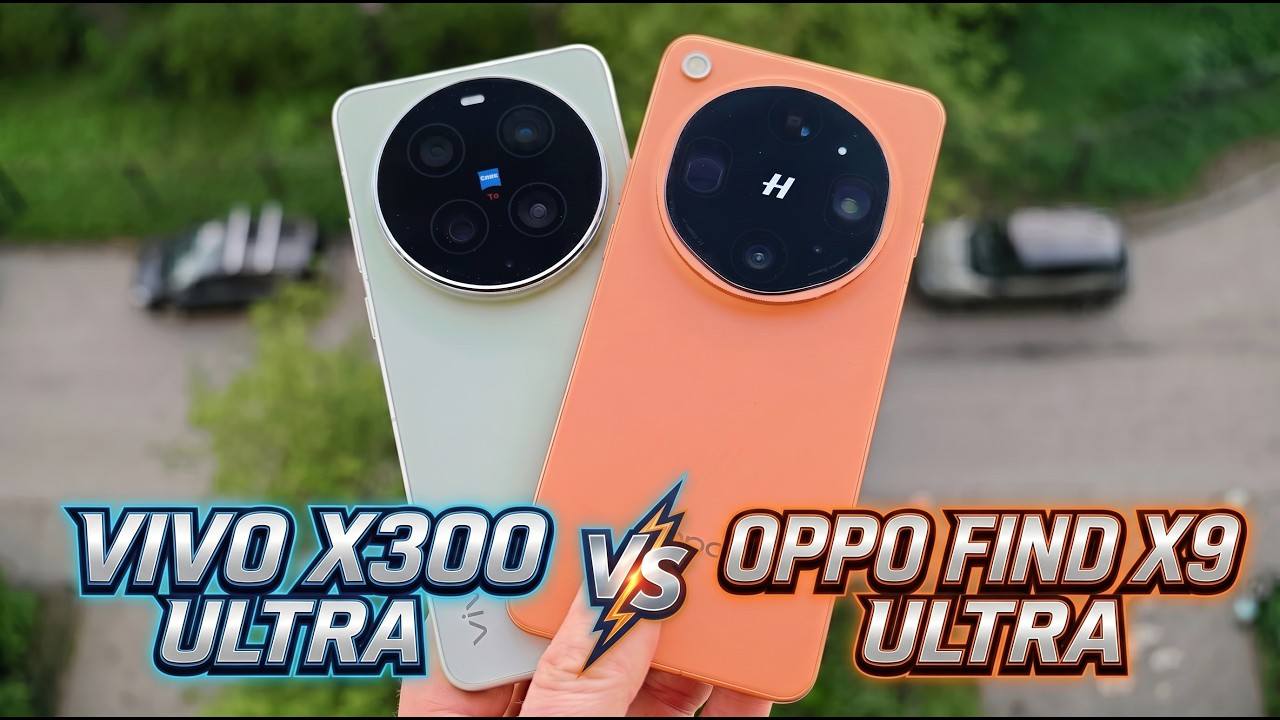
OPPO Find X9 Ultra vs vivo X300 Ultra: càmeres cara a cara
La comparativa de NEON AIRSHIP enfronta foto i vídeo de dia i nit. OPPO domina color i zoom llarg; vivo destaca en ultra gran angular, vídeo i controls.
Dos candidats a millor càmera mòbil del 2026
NEON AIRSHIP compara les versions globals de l'OPPO Find X9 Ultra i el vivo X300 Ultra durant més de mitja hora. Grava vídeo de dia i nit, prova estabilització, focus, macro i zoom, i després amplia fotografies de persones, aus i carrers foscos.
El mètode és més rigorós que una col·lecció de mostres, perquè situa els dos telèfons davant la mateixa escena. No és un laboratori: les preses no sempre coincideixen al mil·lisegon, l'exposició automàtica varia i el creador escull perfils diferents quan busca el millor resultat. Les conclusions descriuen aquestes unitats i aquest firmware.
El resultat no és un guanyador absolut. OPPO convenç més en fotografia general i distància llarga; vivo ofereix vídeo més flexible, ultra gran angular superior i una focal principal de 35 mm amb un caràcter diferent.
23 mm o 35 mm: la decisió que condiciona tot
L'OPPO utilitza 23 mm equivalents com a càmera principal. És ampla, pràctica per a vlog, interiors i plans en primera persona. L'obertura f/1,5 i el sensor de 200 MP produeixen desenfocament real quan el subjecte és a prop.
El vivo comença a 35 mm amb un altre sensor de 200 MP. El camp és molt més tancat, el fons sembla més pròxim i la perspectiva afavoreix retrats, carrer i objectes. Per gravar-se amb el braç estirat costa mantenir el cap dins el quadre, sobretot quan l'estabilització retalla.
Aquesta diferència impedeix comparar detall sense ajustar enquadrament. Un subjecte ocupa més píxels al vivo només perquè la focal és llarga. L'autor retalla sovint l'OPPO a 35 mm per aproximar la composició, però un retall digital no reprodueix exactament òptica i profunditat.
Selfie i color: OPPO és més fiable
Les dues càmeres frontals tenen autofocus i graven 4K30. De dia, l'autor prefereix la pell i l'exposició de l'OPPO. vivo tendeix a desaturar la cara en mode normal i canvia molt el color en activar retrat. El retall de cabell i gorra és molt bo en tots dos.
Amb les principals, vivo produeix en una escena un to sèpia que no correspon a la pell real; OPPO es manté més fidel. A les fotos de natura, la tendència canvia: vivo pot fer verds molt intensos i aplicar massa nitidesa, mentre OPPO conserva textura més natural.
No totes les mostres segueixen la mateixa regla. De nit, vivo encerta millor la temperatura freda d'alguns fanals i OPPO escalfa l'escena. La conclusió és estadística, no absoluta: OPPO dona més cops un color que l'autor considera fiable, però cap sistema és immune a una escena difícil.
Ultra gran angular: el sensor gran de vivo es nota
El vivo equipa un sensor de 50 MP i 1/1,28 polzades al 14 mm, amb estabilització òptica. L'OPPO també millora el seu ultra gran angular, però la diferència de mida apareix en detall fi, desenfocament a curta distància i poca llum.
De dia, la separació no sempre és gran. Tots dos enfoquen de prop i produeixen una imatge útil. En ampliar pell i plomatge, vivo conserva més textura. En una presa extrema d'un ocell, la distorsió ampla i el fons desenfocat creen una imatge que l'OPPO no replica.
De nit, l'avantatge és més clar: els carrers i la vegetació tenen més informació i menys fang al vivo. L'estabilització no pot crear fotons; un sensor més gran parteix d'un senyal millor abans del processament.
Zoom llarg per a OPPO; macro per a vivo
OPPO té un teleobjectiu de 200 MP a 70 mm i un segon de 50 MP amb zoom òptic 10x. vivo concentra el tele en 85 mm i 200 MP. Fins a aproximadament 3–4x, tots dos són molt competents i el vivo pot apropar-se més per a macro.
A 10x, l'OPPO comença amb una lent dedicada i mostra més pèl, teulada i textura. A 20x, 50x i 100x la distància augmenta: el vivo inventa patrons més visibles, mentre l'OPPO manté una aparença de fotografia, encara que també usa millora computacional.
La lent 10x té un sensor petit i necessita llum. De nit, el telèfon pot evitar-la i retallar la càmera 3x; en una mostra, la marca d'aigua confirma aquest canvi. Quan passa, la superioritat òptica desapareix i els dos resultats tenen textura artificial.
Per a macro, el 85 mm de vivo enfoca a uns quinze centímetres i permet un enquadrament molt tancat. L'OPPO 3x també és bo, però la càmera 10x necessita més d'un metre. El creador recomana quedar-se just per sota del punt de canvi de lent si vol ampliar una flor o un objecte petit.
Vídeo: vivo deixa crear una aparença en 4K
Tots dos graven Log i admeten LUT dins el mode professional. En el mode normal, la diferència és gran. Els filtres de l'OPPO provat redueixen la gravació a 1080p30; el vivo permet estils, ajustos de to i color a 4K30 i fins i tot 4K60 en diverses combinacions.
vivo afegeix «Film Look» i «Film Style», amb gra, altes llums difuses i retall panoràmic. Un mode queda limitat a 24 o 25 fps, una decisió coherent amb l'estètica. No substitueix Log per a una producció que necessita igualar càmeres, però produeix una peça acabada sense postproducció.
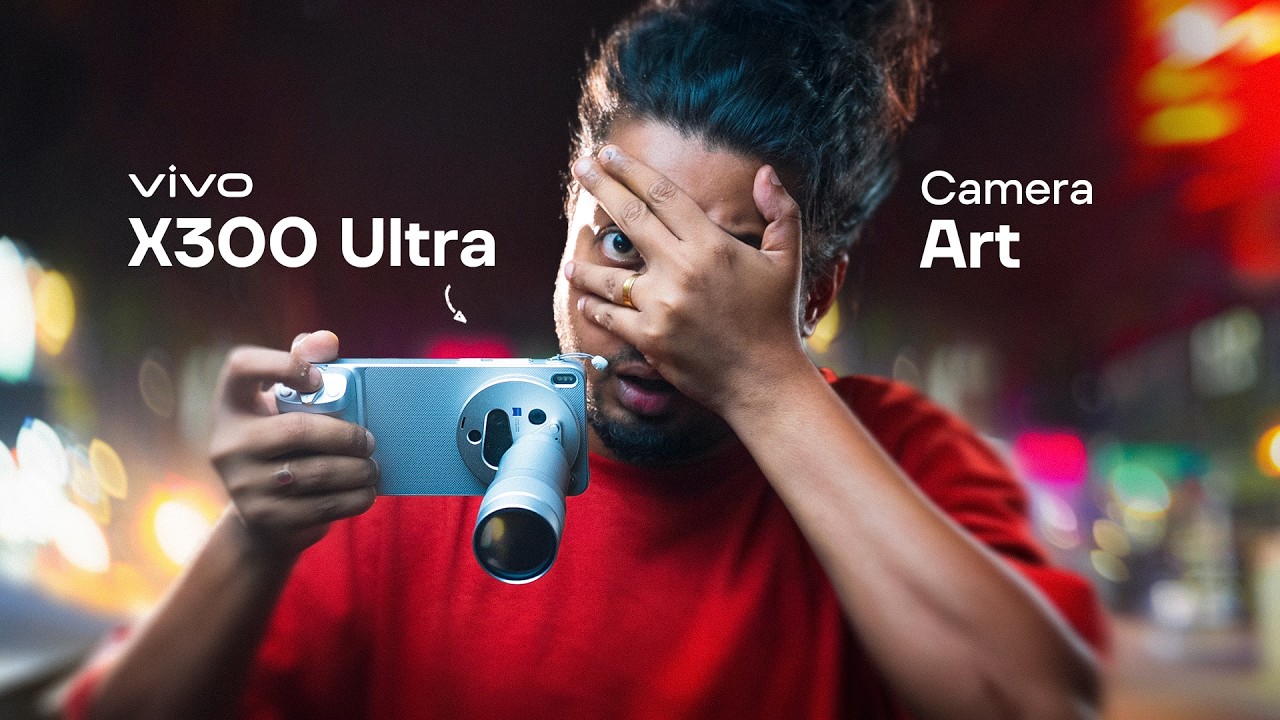
L'autor també destaca el canvi dels micròfons del vivo respecte al X200 Ultra. El soroll de vent queda molt reduït i la veu és clara. L'estabilització és excel·lent als dos, amb un avantatge pràctic de vivo en vídeo; a zoom extrem, cap pot eliminar el moviment d'una caminada.
Fotografia nocturna: una victòria repartida
En selfies nocturnes, OPPO conserva millor el to de pell, mentre vivo pot retenir una mica més de textura. Amb les càmeres posteriors, l'ultra gran angular de vivo domina i la principal de 35 mm ofereix una exposició i nitidesa més naturals en diverses escenes.
El teleobjectiu de vivo també resol bé rètols i vegetació a 3,7x. La lent 10x d'OPPO aporta poc quan falta llum; l'aplicació prefereix el sensor més lluminós i un retall. Això és una decisió raonable, no un engany: activar una lent fosca només per respectar el número podria empitjorar la foto.
Els dos utilitzen fusió de fotogrames, reducció de soroll i reconstrucció. A 100x no hi ha una observació pura. El criteri útil és si el resultat manté textura creïble i text llegible, no si la interfície mostra una focal espectacular.
OPPO per a foto, vivo per a vídeo —amb excepcions
La conclusió de NEON AIRSHIP és que l'OPPO «guanya» fotografia per color més constant, processament menys agressiu i zoom llarg sense rival. El mode Master pot millorar encara més els JPEG i donar RAW per editar.
vivo el convenç més en vídeo: micròfons, estabilització, perfils i controls a resolució alta. També prefereix el 35 mm per fotografiar persones i el gran sensor de 14 mm quan hi ha poca llum. El problema és que voldria el 23 mm per gravar i el 35 mm per fer fotos.
Aquest desig resumeix la comparativa. Cap telèfon combina totes les seves preferències. Qui grava parlant a càmera pot prioritzar el camp ampli d'OPPO; qui crea vídeos amb aspecte acabat pot triar vivo. Per a concerts llunyans, el 10x decideix. Per a macro i nit ampla, vivo té avantatge. El millor sistema depèn de quina lent s'utilitzarà de veritat.
Contrast i context
Fonts consultades
-
01
YouTube — NEON AIRSHIP Oppo Find X9 Ultra vs Vivo X300 Ultra: Detailed Camera Comparison [Global Versions]
-
02
YouTube Canal de NEON AIRSHIP
- 03
-
04
vivo Global Càmeres ZEISS i funcions de vídeo del X300 Ultra
-
05
vivo Global Mida, resolució i obertura dels sensors
-
06
vivo España Detall de les focals 14, 35 i 85 mm
- 07
Font de treball
Transcripció amb marques de temps
Consulta la transcripció
-
0:00
, obre el vídeo en una pestanya nova
Hello YouTube. It's time for the one you've been waiting for, the Oppo Find X9 Ultra versus the Vivo X300 Ultra. Sorry this one's taken a while. I've been busy, but we're finally getting to it. I've already used both of these phones quite a lot and I've got a lot of thoughts about them already. What I've not done is put these two phones head-to-head. So, I haven't compared them like for like yet and that's what this video's going to be. So, let's just dive right into it, shall we? Okay, so as usual we're starting on the selfie cameras. Both are set to 4K 30 and we're using the built-in microphones. You'll see a little symbol on the screen that tells you which one we're listening to right now. Both of these have auto focus. So, if you get close up or far away, it shouldn't matter. It should keep you in focus all the time. I wasn't very impressed with the X200 Ultra's selfie camera. So, I have to see if this one's any better, but looking at the phone screen, I think I like the way the Oppo looks better. We'll see what it looks like when it's processed. Now moving around to the rear cameras and we're starting on the ultra wides. Obviously, Vivo's got a really impressive ultra wide and it kind of needs it because it's got a 35 mil main lens, which will be very cropped in. You'll see that in a sec. But, Oppo's ultra wide has been upgraded this year, too. Got a much bigger sensor than last year. So, how big is the difference? Both of these do have auto focus and uh yeah, they should look pretty decent. Now, here are our main cameras and hopefully I'm properly framed on the Vivo cuz it is very tight. It's hard to do vloggy shots like this. But, if I am in the frame, you'll see that the background is very blurry on the Vivo, which I quite like. So, yeah, depends what kind of thing you shoot. Both have their advantages, but which one's looking better right now? Okay, so now we're going to test out our video zoom. We're starting on the ultra wide cameras. Now here's the main cameras. Here's our 3x. And our 3x-ish. And we'll go into 10 times. Which is Oppo's second telephoto. We can do a 10 times crop on the Vivo, so you can see a difference. See if I can follow this guy a little bit on his lawn mower. There's also a tractor over here, which might be interesting. Going to go up to maximum zoom on the Oppo, which is 30 times. And maximum zoom on the Vivo, which looks about the same. Got to say the Oppo looks clearer on my phone screen. Stabilization looks quite good on both, but a bit more stable on Oppo on the phone screen. We'll see how they look
-
2:51
, obre el vídeo en una pestanya nova
when they're fully processed. Now all the way back out to the ultra wide. It's a pretty big zoom. Okay, now let's do a quick test of our video stabilization. Starting on the ultra wide cameras, and I'm just walking along normally. Now here's a quick jog. Main cameras now. Obviously Vivo's a lot more cropped in. Here's walking along normally. And here's a quick jog. 3x on the Oppo, 85 mil on the Vivo. Here's walking along normally. And here's a quick jog. Finally, Oppo has a 10x lens. Vivo doesn't, but we'll crop to 10x anyway and see what that looks like. Here's walking along normally. And here's a quick jog. So a few of you weren't happy with my last focus test. So, I'm going to try something different. I'm going to do them one at a time. I'm going to focus up close on this tree and off into the distance and see how smooth the phone adjust. Looking pretty good on the ultra-wide on the Oppo. Now, here's the main camera. Very good. 3x Pretty flawless. Very smooth, actually. And the 10x, I think I'll have to back up a bit. So, there's infinity. There's macro. Back to infinity. Yeah, very smooth on the Oppo. Now, the same test with the Vivo starting on the ultra-wide. Here's infinity. Macro. Infinity. Macro. Looks flawless. 35 mil. Very smooth again. Maybe not quite as quick, but really smooth. And then finally, our 3.7x telephoto. Here's infinity. Back to macro. Out to infinity. Back to macro. Looking good. So, to check out our minimum focus distance, I'm going to use this little Tamagotchi toy again. As you can see, it's dead tiny, but it's really detailed. So, start with the ultra-wide camera on the Oppo. And I can get to about here with it still in focus. The main camera you need to get back to about here, which is probably about 20 25 cm away. The 3x is one of the best lens for macro. You can get to about here, which I would say is probably around 20 cm from the lens. And the 10x, you need to back up quite a bit. Yeah, I need to be all the way back here to keep it in focus. It's hard to say how far that is. Maybe like just over a meter, meter and a half maybe. Now, I'll do the same thing with the Vivo starting on the ultra-wide camera, which looks like it's in focus about here, which is pretty damn close. The main camera can focus about here, which is probably around 25 cm from the lens, I would guess. And the 3.7x telephoto can focus around here, which is probably only 15 cm or so from the lens. And that looks pretty good. So, one really important thing to point out when shooting video with these phones, on the Oppo, if you want to use a filter,
-
7:05
, obre el vídeo en una pestanya nova
you get loads of lovely filters, but no matter what you choose, it's going to switch you down to 1080 30. And then, if you switch to 4K, the filter will go away and you're just stuck with the default profile, default picture profile. On the Vivo, it's really different. Well, first of all, you get these new film looks, which I'll demonstrate in a bit cuz they're really cool. They add like film grain and halation, loads of different things. They're not customizable, you're just kind of stuck with what they give you, but they do look wicked. But if you go and add a filter, you can add all the ones you're familiar with. There's even a Zeiss natural one, which I've not been using for this comparison. Um, I've just been using the standard one cuz I'm using the standard one on the Oppo and that makes sense. But, you got loads of cool filters. I really like the negative one. And not just that, you can go in, you can adjust the tone and the color of it with this pad, which is very similar to the iPhone. And you can go into an advanced menu and tweak all of these. You can save it as presets. But crucially, you can do all of that at 4K 30 frames per second. I think you can even do it at 4K 60. Yeah, it works at 4K 60 as well. So, it's a massive, massive advantage. Of course, if you go into pro video mode, both of these phones can shoot in log and both can apply LUTs in camera. So, you can see we've got some preset LUTs in the Oppo menu and you can add your own. And same thing with the Vivo. I've added a bunch of custom LUTs here or just a Rec. 709 conversion. But, I like that you get all the options within the normal video mode on the Vivo, whereas you don't on the Oppo. Both of these phones have a portrait video mode and they both work on the selfie camera, which is what I'm using right now. And we're at Tropical Birdland. So, now let's take some photos and videos of birds. Okay, so this is the film style mode on the Vivo X300 Ultra, which uh gives a very different look. It's not quite as extreme as the film look mode. I think I've got those right way around. Okay, so the last one was called film look. This one's called film style. And this one gives you a wide screen crop. It gives you more of like a film grain look and bloomier highlights, which look wicked, but uh only 24 frames per second or 25. But, it does look really, really cool. Now switch around to the rear cameras. We're on the ultra-wide first. Here Vivo should have a clear advantage. But how much of a difference does it
-
10:35
, obre el vídeo en una pestanya nova
make in reality? And now our main cameras. Hopefully I'm in the shot on the Vivo, but you never know. I've tried my best. Okay, now we're going to check out video zoom at night time. This is our ultra-wide cameras. Here's the main cameras. 3x, 3.7x, 10x, and 10x. Okay, it's about as close as we'll get. I'm going to push the Oppo out to its maximum of 30 times. And the same on the Vivo. There we go. Same sign in both. Definitely looking cleaner on the Oppo, I think. Now let's do a quick test of video stabilization. Here's walking along on the ultra-wide cameras. Now here's a quick jog. Switching into the main cameras. Walking along normally. And with a quick jog. 3x periscope, 3.7x on the Vivo. Walking along normally. And with a quick jog. And 10x is going to look awful, but let's do it anyway. There's 10x on both. Walking along normally. And with a quick jog. Okay, we're finishing things off with some extreme low-light testing on a really dark street. Just walking up to a street light now. You should actually be able to see me. But if I keep walking till I'm backlit, you'll definitely see a lot less of me. But which phone's looking better? Now switch around to the rear cameras and we're starting on the ultra wide. As you know, Vivo should have the clear advantage here. But how much better does it look? Does it look better? You tell me. And now here's the main rear camera. Obviously, the framing is a challenge with the Vivo. But uh I'm just going to walk up to the street light ahead of me, so I'll be lit a bit better. How do these two look? Now just a quick run through of all the lenses walking along on the dark street. These are all dry cameras. Here's our main cameras. 3x on the Oppo, 3.7 on the Vivo. And finally, 10x on the Oppo. And 10x on the Vivo. The Oppo does look really dark. It's a pretty small sensor on that 10x. But yeah. Time to look at some photos and we're starting with a couple of selfies on the selfie cameras. For most of this comparison, Oppo's going to be in its original profile, whereas Vivo is going to be in Zeiss natural, which is just what tends to get me the best result. Pretty big difference in color between these two. Oppo's obviously a lot more vibrant and poppy, got really bright greens in the trees, whereas Vivo's just a lot more desaturated overall. I think the reality was somewhere between these two. It wasn't as dull a day as Vivo made it look, but it wasn't quite as vibrant and poppy as Oppo made it look. And I think which you prefer is all going to be down to preference. I definitely think the Oppo is a more
-
14:03
, obre el vídeo en una pestanya nova
flattering selfie. It's been sunny lately. I've I've got a tiny bit of a tan going on, and you're not seeing any of that on the Vivo. I look very pale on the Vivo. Let's look at the details. Oppo looks a tiny bit sharper to me, but it's not a massive difference between the two, and they are the same resolution. Just Oppo just looks a little bit better to me. Colors is all preference, but I think the details are a tiny bit better on the Oppo. Now, the same shot, but with portrait mode turned on, and a pretty dramatic difference in color from Vivo here. Switching to portrait mode has definitely punched up the greens in the background. I think it makes for a more eye-catching image. The cutouts look pretty good on both of them at a glance. I think the exposure may be slightly too high on the Vivo. This side of my face looks very, very bright. I think it's been reined in a little better on the Oppo. Both are super sharp and detailed. I just prefer the skin tones a bit on the Oppo, and the the cutout is a tiny bit cleaner on the Oppo as well. On the brim of my cap up here, it's a smoother line, whereas it's a bit more wiggly on the Vivo. But we are splitting hairs because these are both excellent, and a lot of it is down to your own personal preference. But I'm going with the Oppo for this one. Now, flipping the phones around and using the ultra-wide cameras. Sort of seeing the same thing with the colors. The greens look a bit more realistic on the Vivo, whereas they're a bit punchier on the Oppo. Don't look bad at all, I think. I quite like the look of the Oppo, but Vivo might be a bit more realistic. If we zoom in a bit, I'm definitely seeing more detail on the Vivo, more texture in my skin, better detail in the stubble. It's a bit bit softer, bit blotchier on the Oppo. Not bad at all. Definitely a little bit better on the Vivo. The Vivo has that larger sensor, and that's giving you some more background separation as well. It's a bit blurrier back here. Is it a massive difference? Not really, but it is a difference, and I think Vivo's a little bit better. Now using both the main rear cameras, and obviously we have a massive difference in the field of view. Vivo's a lot more punched in, and because you've got that longer focal length, you get a bit more compression. Background looks a bit blurrier and closer, if you know what I mean. Oppo's a bit more typical, but we do get a really blurry background still, because it's got an F1.5 lens and a massive sensor. Colors are weird on the Vivo. It almost looks a bit sepia toned.
-
16:22
, obre el vídeo en una pestanya nova
Like, that's not what my skin looks like. My skin looks exactly like it does in the Oppo. Oppo's really true to life. not really sure what's going on with the Vivo. It certainly doesn't look bad. It just looks like it's got a filter on it, and it doesn't. So, uh, quite bizarre. Very close in terms of detail, but with the edge to Oppo, for sure. I think they're both the same resolution, again. Do have to check, because Oppo does funny things with the resolution. Yeah, just looks sharper and more detailed, and the colors are more accurate. So, I'm giving this one to Oppo, but I do like that 35 mil lens. It does make it hard to vlog with, but if you taking pictures of other people, then it's a really nice focal length. Just a shame Vivo messed up the colors on this one. Okay, now we're going to check out our photo zoom. Starting on the ultra wides, I don't really need to say it again, but Vivo's grass looks a lot more natural. It's been punched it on the Oppo, and the reality is somewhere between the two. We're going to be zooming in on this barn finder on both. I do a massive punch in so you can see it on both. You can't really push that far on the ultra-wide cameras. Maybe if we go to these trees. Yeah, there's not a massive difference in fidelity between these two in the daylight at least. I do think Vivo sharpening is a little bit heavy, but it also looks like it has a little bit better clarity than the Oppo. Now I'm moving to our main lenses, and these will be really hard to compare cuz they're different focal lengths. If we zoom in on our subject, yeah, Vivo looks clearer cuz it is physically more zoomed in, but Oppo gets a lot more in the shot. So, depends on the circumstances which one's going to do better. Now our telephotos, and it'll be the same thing here cuz Vivo's got an 85 mil, Oppo's got a 70 mil. Really weird colors on the Vivo again here. Very green and quite dark. Um Oppo is too magenta, but it's more true to life. If we push in on the details, actually not a massive difference in detail here, but Vivo sharpening is way heavier. Uh yeah, Oppo looks a little softer, which I kind of prefer cuz you can always add sharpening, but it's hard to take it away. So, yeah, definitely preferring Oppo here. Now at 10 times, which is the second telephoto on the Oppo and a digital crop on the Vivo. So, Oppo should smash it here, but does it? I mean, it's better, not not as big a gap as you might expect, but I think we'll see a bigger gap when we push further. This is 20 times zoom, and Vivo's still
-
18:51
, obre el vídeo en una pestanya nova
doing really well despite only having that 85 mil telephoto, but you can see way more details on the Oppo. Like look at this corrugated collapsed roof. You can see all these lines on it and everything. They're just mush and AI textures on the Vivo. Now I believe this is 50 times zoom or thereabouts. I don't really need to zoom in to show you the difference here because you can plainly see it. Processing's way too heavy on the Vivo. Just not looking good at all. Oppo's still looking like a real photo. And yeah, it's a bit soft, but it's better than whatever's going on here. And at 100 times, we're seeing more of the same. Yeah, everything just looks like clone stamped on the Vivo. Obviously, both are using AI to enhance these textures and things, but no contest. The Oppo is way more detailed and way more natural-looking. So, for long-range zoom, Oppo is a clear winner. Now, on the opposite end of the scale, let's look at some close-ups taken at the minimum focus distance on each lens. And you can see here that the ultra-wide on the Oppo can get a tiny bit closer than the Vivo, but the Vivo's got that massive sensor which creates more background separation and looks quite cool, I think. Colors are quite muted again, but I don't think it looks bad. It's just a stylistic choice. And if we punch in, both look really detailed. No complaints there at all. Just you can get slightly closer with the Oppo. Now, here's our main cameras. We've got that massive difference in field of view again. Because the Vivo's a longer focal length, it looks like I'm closer. I don't think the lens is physically closer to the subject, if you get what I mean. But it is closer in terms of the framing. In any case, you can't get super close-up with the main lens, but you can get this close. And the details look good on both. The um the Oppo's more focused on this back card than the actual toy, but the part that is in focus looks really clear. Yeah, both got loads of detail. And the 3x and 3.7x telephotos are the best for telephoto stuff. But as you can see here, Vivo can get a lot closer, and it gives you lovely results. The Oppo looks great. It just can't get as close. Now, at 10x, it gets interesting because we have a second telephoto on the Oppo, but it's not really great for macro. It can focus closer than you might expect, but you still have to be like well over a meter away from your subject. Whereas on the Vivo, you would just digitally crop into that same lens and get really, really close. And I actually quite like to shoot macro this way. Yeah, if I if I punch in on the Oppo's 10x, it just
-
21:21
, obre el vídeo en una pestanya nova
doesn't look great for macro. It's really lacking detail. But what you can do on the Oppo is punch in to like 9.5 times. Obviously, you can't go to 10 times cuz it'll switch to the other lens, but if you go to just under 9.5, 9.8 times zoom, you can get a lovely shot like this. So, both are actually quite good for macro. Vivo's easier to use because you don't have to worry about switching to that next lens, but then as you saw, that that extra lens really helps for long-range zoom. So, it does serve a purpose. So, now we've got a 10x shot of this amazing white owl that was standing on the floor. I've never seen one of these standing on the floor before. It looks really unusual. But um on the Oppo, I shot this in master mode, and on the Vivo, I used the street photography mode. And this was to show more like how I shoot in real life. The Oppo's in its original Hasselblad style, and Vivo's in Zeiss Natural. The processing's very different in street photography mode, and I think it looks a lot better. This one does have a subtle portrait mode effect, which has added some extra blur to the background, but you can turn that off as well. I'll be honest, I just forgot to turn it off. But yeah, it's working really well in this, so I'm glad it was on. And obviously, with its built-in 10x lens, Oppo has a massive advantage here, and you can see more detail. The fur looks a lot more detailed on this than it does on the Vivo shot, but Vivo's done a really good job considering how big of a digital crop that is. At a glance, with that extra portrait blur going on, I kind of prefer that image, but then when I punch in and look at the details, I prefer the Oppo. So, yeah, both really good. Now, these two are on the ultra-wide cameras, and they're taken in the standard standard photo mode. And I didn't manage to get the same pose in both of them, but these are the best two ultra-wide shots I got of this bird. And you can see both lenses give you a bit of background separation when you're this close, but you do have to be very close with the ultra-wides. And obviously, you get a bit more with the Vivo with its larger sensor, but in good lighting, I think the Oppo looks just about as good. Maybe slight edge to the Vivo in terms of detail, but it's not a dramatic difference between the two. So, yeah, both both have very decent ultra-wides. Vivo's is technically better, but in daylight, it's quite hard to see the difference. So, this shot, both phones are on the main camera, and again, Oppo's in master mode, Vivo's in street photography mode, but I've turned off
-
23:43
, obre el vídeo en una pestanya nova
the background blur, which is why it says F16. That basically means it's off. In this case, Oppo's definitely a lot softer, uh which can be a good thing. Part of why I like master mode is cuz it's not as over sharpened as the main mode. But in this case, it maybe looks like a bit of motion blur, and the Vivo's looking miles better. It's incredibly sharp. Like, look at that claw. That looks stunning. Yeah, so Vivo wins that easily. And now, another one on the main camera again, same bird from a different angle. The exposure is a tiny bit brighter than I would like on the Oppo, but you can always turn that down. And Vivo might be slightly too dark, but you could always bring that up a bit. And I think Vivo looks sharper again, but I wouldn't necessarily call that an advantage because you could just apply a bit of sharpening to the Oppo shot if you really wanted. I think what makes a bigger difference here is the 35-mil focal length. Gives us some nicer background compression, and it's just a more naturalistic field of view. Looks more like what you would see with your eye, whereas the super wide 23-mil on the Oppo is a bit unnatural. So, I'm preferring the Vivo again in this case. Looks really good. Now, this one, I'm not going to compare properly because I just kind of messed up on the Oppo. You've got my finger in the shot, and it's just not a very good angle. But part of that is because of the motion blur, and I think Vivo's massive sensor on the ultrawide really helped us here. I basically just wanted to show you how good this Vivo ultrawide shot is. Look how sick that looks. It's a really interesting angle, all distorted from the ultrawide lens, and just really, really sharp on this bird. So, yeah, in certain circumstances, that like super over spec ultrawide really does make a difference. Background blur as well. You just never get that with the Oppo. Everything looks in focus on the Oppo. Now, this is a 10x shot, and I'm pretty sure it was in the standard photo mode. Don't need to tell you, but Oppo has the advantage here, and you can see the difference big time in this shot. So much detail in the fur, and the colors are just The colors are really accurate on the Oppo, super oversaturated on the Vivo, and just kind of overprocessed. Doesn't look great. Now, these two are quite dramatically different as well. Both on the main cameras, but I cropped the Oppo to 35 mil, so it'd be easier to compare. Vivo's way, way punchier, really bright greens. Oppo's more true to life, but I quite like the way the Vivo looks. It's exaggerated, but it looks good, you know? It's very eye-catching. If we zoom in on the details, Vivo's just really
-
26:12
, obre el vídeo en una pestanya nova
oversharpened. The Oppo looks way more natural. So, I think even though at a glance the Vivo looks great, you could probably just edit this Oppo image and get it looking better than that with better details because it's not all oversharpened and crusty. One more similar image just a split second later, see if we see the same thing. Yeah, exactly the same. The fur is so much more natural on the Oppo compared to the Vivo. Vivo's just very oversharpened, but at a glance, it's the more eye-catching image. So, you know, both have got their positives and negatives. Now, these two were both taken in portrait mode, and they're both on the telephotos, but again, I did a little crop on the Oppo to bring it to 85 mil to get almost identical field of view. Check out the details. Slightly sharper on the Oppo. Fur, feathers, whatever you call it, looks better on the Oppo again. Both have got quite a nice blur effect. I'm not seeing any immediate errors. So, quite close, but still I think Oppo edges it out. We'll end our bird coverage with this one cuz he gave us a nice pose. Both look to have the tiniest amount of motion blur, but they're otherwise very sharp. It was quite dark here in this enclosed area. Yeah, I think that's too close to call. They're both about as good as each other. Okay, so let's look at some night time stuff and we're starting with a couple of selfies on the selfie cameras. Quite similar shots at a glance, but I'm definitely preferring the skin tone on the Oppo. That looks really accurate to me. Again, I'm just looking a little bit pale on this Vivo shot here. Doesn't look bad, but Oppo looks better. If we zoom in, not seeing much of a difference in detail. Contrast is slightly higher on the Oppo, but the see all the same details on both of them. And not much in the way of noise considering how dark it was. So, I give this to Oppo for the colors, but Vivo's really, really close. Now, the same shot but with portrait mode turned on. I can see Vivo's really tweaked the colors here. It's brought a lot of color back to my face, which I think looks a bit better, but still don't think it quite matches Oppo. I think Oppo's is more accurate for my skin tone. The cutout looks really, really good on both of them at a glance. Love that you can see individual hairs sticking out on the Vivo. That's really impressive. Not really seeing any major errors. I actually think Vivo's shot at this time, the texture of my skin looks a bit better. Maybe a tiny bit of motion blur on the Oppo. So, yeah. Oppo's skin tone is better. Vivo's a little bit sharper. This one is basically down to personal preference, I think. Okay, now
-
28:36
, obre el vídeo en una pestanya nova
these two were taken on the main rear cameras of each phone. Kind of same thing with the skin tone. Vivo's really unflattering. Like it's made my nose really red. It's just like too sharp. It looks uh just a bit gross, but there's a lot of detail there. Not a lot of flattering detail, but a lot of detail. And the Oppo's really detailed, too, but yeah, without making me look Christy, which I appreciate. Obviously, we've got the difference in focal length. I do like the 35 mil cuz it gives you that extra background compression, looks more like a camera than a phone. But it's just the processing. I just think Oppo's done a better job. Now we're going to run through all of our lenses. We're starting on the ultra wides. Both look decent at a glance. Brighter exposure from Oppo, bit darker from Vivo. Kind of prefer the Vivo exposure, but that's easily adjustable. But if we zoom in a bit, it's quite clear to me that the Vivo is more detailed and just looks a bit sharper and cleaner. Oppo's is very muddy. It just can't quite keep up in these darker conditions. Now main cameras. Obviously got that difference in field of view again. And you know what? I'm preferring the way Vivo looks this time. Oppo looks a bit over sharpened to me. Vivo's image is a bit more natural, and I prefer the exposure on the Vivo, as well. So I'll give that to Vivo. Now here's our telephoto cameras. I tried to get this guy on a bike going through, which has worked quite nicely. I feel the exact same way here. I prefer the way Vivo has rendered these neon signs up here. I prefer the way the backlit text looks on the front of Slim Chickens. I think these bushes just look a bit over sharpened on the Oppo. It is a darker exposure again, but I think that looks better. So I'm sticking with Vivo. Now at 10x, we should see a pretty big difference, but keep in mind the Oppo has a really small sensor on that on that 10x telephoto. Does it still look better than digital crop? I think it does, but barely. And in some areas, it's worse. Like the signage is clearer on the Vivo compared to the Oppo. It's actually very, very close. Like you can see the AI processing on both of these on this text here. Yeah, at night, not such a big difference. And finally, we have a series of images from the rear dock street. Starting on the ultra wide cameras, I like that you can see a bit of blue in the sky on the Vivo. Oppo's image is very, very black. I think in this case, Vivo's a little more true to life because those street lights are very cold in temperature and they look a bit warm on the Oppo. Let's zoom in a
-
31:02
, obre el vídeo en una pestanya nova
bit. Yeah, pretty massive difference in detail between the two. Can make out a lot more on the Vivo. Oppo looks muddy and blurry. Massive sensor on the ultra wide does make a big difference. Now, here's our main cameras. Same thing with the colors. Think Vivo's doing better. Oppo doesn't look bad, it's just too warm. I think the sharpening looks a bit more natural on the Vivo as well. So, sticking with Vivo for that. Now, our telephotos. Colors are the same on both. I like the consistency, but again, Vivo's more realistic. If we punch in, I think Vivo's looking marginally better, but it's um really, really close. And finally, a 10x shot, but as you can see from the watermark, Oppo decided not to use that 10x telephoto for this cuz the sensor's too small. So, these will both be cropped from the telephotos and neither look great. These bushes on both of them look really AI processed. Although, this one in the foreground looks bit better on the Vivo. Can't tell if it's made up or not, but it looks better. So, I'll give it to Vivo. Right, that's about it for this one. I hope you found it useful. I learned some stuff there. I hope you did, too. For photography, I think Oppo absolutely smashed it. I was getting more reliable and consistent colors with the Oppo and that long-range zoom is just unmatched with the new 10x. It's just a really versatile system for photography and it gets even better in master mode, which we didn't get to explore too much here, but is the way I shoot normally. However, when it comes to video, Vivo really impressed me. The biggest changes with the microphones. I think Vivo's gone from having one of the worst microphone setups on an Android phone to having one of the best. It almost completely cancels out wind noise. It just sounds great. Plus, the stabilization is excellent and you can tweak all the colors. You get way more options for video. So, yeah, both phones have their benefits. There's definitely not an outright winner. Depends what you're looking for. The thing that bugs me is I prefer a 23 mil main camera when I'm doing video work because I can do POV shots and vloggy shots. And I prefer 35 mil for photography. Neither phone is perfect for me. I'd love to swap the main camera on these two phones. But, let me know what you think in the comments. Which one do you think did better? And if you like this kind of thing, get subscribed cuz there's always more phones on the way. And I will catch you in the next one. Toodles.