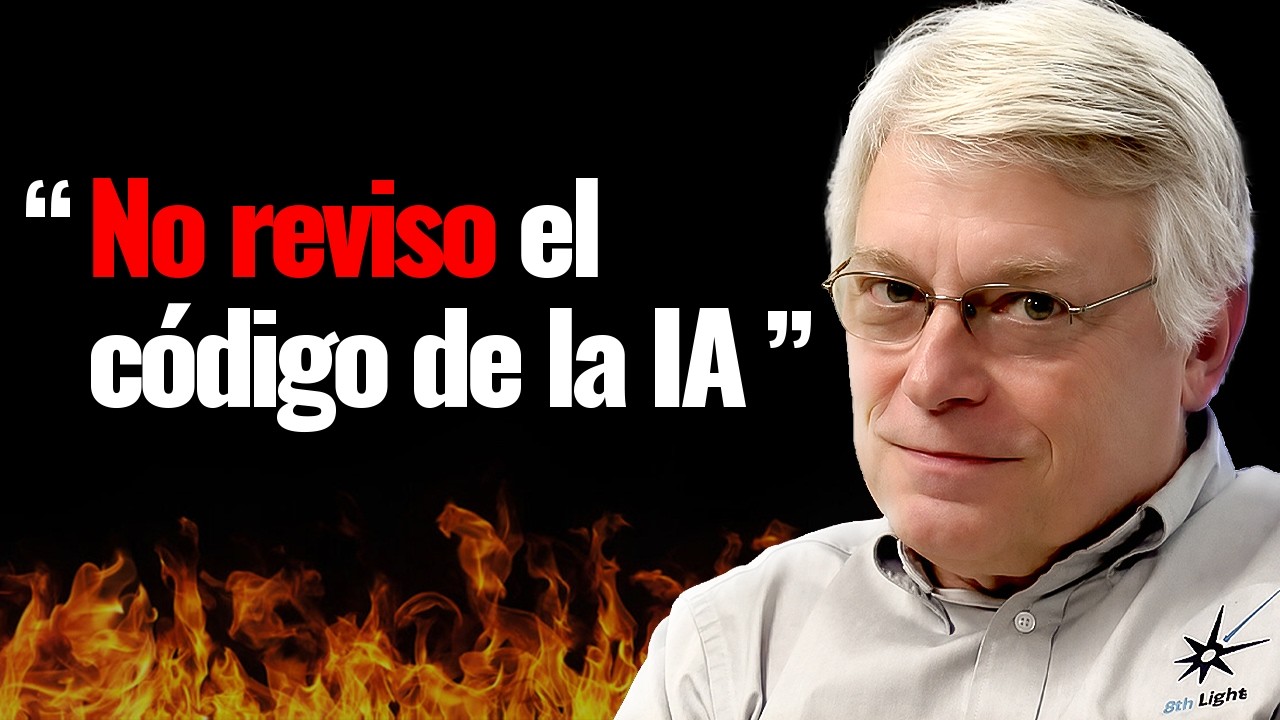
Elon Musk preveu una economia deu vegades més gran el 2036
Elon Musk pronostica que la IA i els robots multiplicaran per deu l’economia en una dècada. Examinem què afirma i què exigiria complir-ho.
Una predicció extraordinària davant del públic d’Abundance360
Peter Diamandis entrevista Elon Musk en directe a Abundance360 el març de 2026. En menys de vint-i-cinc minuts recorren intel·ligència artificial, centres de dades a l’espai, robots humanoides, ocupació, renda universal, salut i fins i tot mamuts. La frase que dona títol al vídeo és la més concreta: si les tendències continuen i no hi ha una tercera guerra mundial, Musk considera “còmode” preveure una economia deu vegades més gran en deu anys.
No presenta un model econòmic ni defineix si parla de producte interior brut real, valor nominal, producció física o capacitat de còmput. No és una previsió consensuada, sinó una visió que connecta models que contribueixen a construir models nous, robots capaços de treballar en el món físic i molta més energia disponible.
L’entrevista es va gravar l’11 de març de 2026, de manera que el seu horitzó aproximat és 2036. Les dates i magnituds són opinions del convidat, no compromisos garantits de Tesla, SpaceX o xAI.
La IA ja participa en la millora de la IA
Diamandis pregunta si ha començat la millora recursiva: sistemes d’IA que ajuden a crear la generació següent. Musk respon que el procés ja està en marxa, encara que els humans no n’han desaparegut. Cada model successiu intervé més en el programari, les dades, les proves o la recerca necessaris per entrenar-ne un altre.
Anomena el moment actual un “enlairament dur” perquè percep avenços gairebé diaris. Afirma que Grok destaca en algunes proves de predicció, però reconeix que xAI va endarrerida en programació i treballa per recuperar terreny. Cap rànquing únic determina quina IA és més intel·ligent: els resultats depenen de la prova, la versió i les eines disponibles.
Musk descriu el progrés com una successió de corbes en S: una tècnica avança ràpidament, troba rendiments decreixents i una innovació nova obre una altra fase. Admet que la trajectòria exacta és difícil de predir, tot i confiar en l’acceleració general.
Multiplicar per deu exigeix créixer gairebé un 26% cada any
Una economia que es multiplica per deu en una dècada necessita un creixement anual compost d’aproximadament el 25,9%. És una diferència enorme respecte de les taxes globals habituals. L’actualització del Fons Monetari Internacional de juliol de 2026 projecta un creixement mundial del 3% aquell any i del 3,4% el 2027.
Si una economia cresqués un 3% anual durant deu anys, acabaria sent prop d’un 34% més gran, no deu vegades més gran. Per assolir el pronòstic de Musk, la IA i la robòtica haurien de provocar un salt de productivitat sense precedent recent, mantenir-lo durant tota la dècada i superar colls d’ampolla d’energia, capital, materials, regulació, demanda i desplegament.
La manca de definició pot canviar molt el resultat. El PIB nominal pot augmentar per inflació; el PIB real intenta mesurar més producció; i el volum de càlcul pot créixer molt més de pressa sense traduir-se proporcionalment en béns i serveis finals. La predicció només es pot avaluar de manera rigorosa si se n’especifica la mètrica.
Energia orbital, centres de dades i una escala solar
Musk porta l’argument molt més enllà de deu anys. Imagina intel·ligència i indústria esteses pel sistema solar, alimentades per una fracció de l’energia del Sol. Una civilització que consumís un milió de vegades més electricitat que la Terra encara capturaria, segons ell, una porció petita de la producció solar.
La referència a una futura esfera o eixam de Dyson serveix per visualitzar un límit físic, però no és un pla de desplegament per a la pròxima dècada. Al principi de l’entrevista, Diamandis pregunta pels centres de dades espacials després de la integració de SpaceX i xAI. Musk evita detalls perquè SpaceX es troba en període de restricció informativa.
En l’horitzó proper, la demanda energètica ja és una restricció real. L’Agència Internacional de l’Energia calcula en el seu escenari base que els centres de dades arribaran a uns 945 TWh el 2030, aproximadament el doble que el 2024 i prop del 3% del consum elèctric mundial. La IA n’és el motor principal, però xarxes, generació, refrigeració i permisos avancen més lentament que el programari. Aquesta projecció mostra una expansió molt ràpida; no demostra, per si sola, una economia deu vegades més gran.
Optimus i la productivitat de les fàbriques
La segona palanca és el treball físic. Musk diu que Tesla està acabant el disseny d’Optimus 3 i que vol començar-ne la producció lentament durant l’estiu, abans d’intentar augmentar-ne el volum. També parla d’una nova iteració anual del robot i d’una fàbrica concebuda específicament per construir-lo.
Són objectius, no resultats assolits. Una demostració controlada tampoc equival a un robot que funcioni moltes hores, amb seguretat i a un cost competitiu. Destresa, bateria, fiabilitat i integració determinen si un humanoide eleva realment la productivitat.
Musk afirma que Tesla no preveu acomiadaments generals i que espera ampliar la plantilla, però amb una producció molt més alta per persona. La hipòtesi és augmentar el resultat de cada treballador amb automatització, no descriure una fàbrica que avui ja funcioni sense humans.
De la deflació a una renda alta universal
Diamandis pregunta com es repartiria una abundància tan gran. Musk recupera la seva idea d’una renda alta universal: si la producció de béns i serveis creix molt més ràpid que la quantitat de diners, els preus tendirien a baixar i els governs podrien transferir ingressos a la població. A molt llarg termini, imagina que els diners perdrien rellevància davant de recursos físics com l’energia i la massa.
Aquest pas no és automàtic. Més productivitat pot abaratir productes, però la distribució depèn de propietat, salaris, competència, impostos i polítiques públiques. Si els actius productius estan molt concentrats o alguns recursos continuen escassos —habitatge ben situat, terra, cures o energia—, una gran capacitat tècnica no garanteix accés universal.
El mateix Musk evita presentar només un final feliç. Estima que el resultat serà positiu amb una probabilitat del 80% o més, però adverteix que hi ha altres desenllaços i que l’optimisme no ha de convertir-se en complaença. Aquesta probabilitat és una intuïció personal, no un càlcul demostrable.
Un escenari per orientar empreses, no una certesa econòmica
El vídeo condensa la filosofia de Musk: la IA amplia la intel·ligència, els robots multipliquen el treball físic i l’energia espacial evita un sostre terrestre. Des d’aquesta combinació, una economia deu vegades més gran li sembla conservadora. També anticipa una base lunar, persones a Mart i sistemes industrials a la Lluna dins d’una dècada.
La manera útil de llegir aquestes afirmacions és com un escenari condicionat. Permet preguntar quanta energia, infraestructura i adopció serien necessàries, quins treballs canviarien i com es repartiria la producció. No permet donar per fet que el 2036 el PIB mundial serà deu vegades superior.
Les dades disponibles avui descriuen una economia global que creix prop d’un 3% i un sector de centres de dades que sí que s’expandeix a dos dígits. Entre totes dues velocitats hi ha la qüestió que el vídeo deixa oberta: si la IA i els robots es convertiran prou ràpidament en producció útil fora dels laboratoris. El pronòstic de Musk és clar; la cadena causal necessària per complir-lo encara s’ha de construir.
Contrast i context
Fonts consultades
-
01
YouTube — Peter H. Diamandis Elon Musk: The Economy Will Be 10x the Size in 10 Years | #239
-
02
YouTube Canal de Peter H. Diamandis
-
03
Fons Monetari Internacional Perspectives de l’economia mundial, actualització de juliol de 2026
-
04
Agència Internacional de l’Energia Demanda energètica de la intel·ligència artificial
- 05
Font de treball
Transcripció amb marques de temps
Consulta la transcripció
-
0:00
, obre el vídeo en una pestanya nova
audience and as you can see, still trying to monetize hope. Yeah, you look like you're in great shape. I'm doing great. That's the sort of use of some things going on or what? It's our longevity x-priced. We're getting there. OK. I think in our last conversation, you're getting on board with the idea of extended longevity. Yes? Yeah. Yeah. OK. But we, but at that. Something agree. I mean, I got it if we wanted everyone to live with what I've built. But I think health span and not having an extended period of some essence where you're just growing in a self-salt, it's not like a good idea. We want to avoid that. Yeah. So first off, congratulations on the merger of SpaceX and X-AI baller move. Going to power humanities first, Dyson Swarm. So I'm curious, Segly. It truly is. What's your timeline for launching these data centers and how much bandwidth do you think you can get in the first year? Give us a sense of the speed at which you're going to be making this happen. Yeah. So SpaceX has, as well. SpaceX is in the quiet period. I can't actually tell you things that would be a course of problems. Yeah. I'll leave it. I'll leave it that. I appreciate that. But can't wait for the speed. We had a conversation here on Monday with Eric Schmidt and when the leads from one of the other hyper-scanners I mentioned, who? But I'm curious, where you feel we are in recursive self-improvement. Are we there? Do you see Grock doing recursive self-improvement at this point? And what's the timeline for AGI and ASI?
-
1:59
, obre el vídeo en una pestanya nova
Give us a sense of that. Yeah. I think we've been in recursive improvement for a while here. You're saying, if you mean by like recursive self-improvement without a human in the loop, is that what you mean? I do. On the AI software side. Humans are gradually getting less and less in the loop on the recursive self-improvement. So every successive model is built by the one before it. So that is happening to a large degree. But it's not yet fully automated. It may be there. And if this here, but I'm not later than next year, do you see a hard take off at that point? We're in the hard take-off. OK. Right now. Yes. I mean, look at this point. I go to sleep. There's some passive AI breakthrough. And when I wake up, there's another one. Yes. Yeah, it's hard to keep track. Honestly. Yeah. It's been a headspinner. Well, I think a lot of the headspinning is happening from you, too. Yeah. Well, you know, Grokstein pretty well. And in some metrics, by some metrics, it's the best, for example, the best of predicting things which are arguably the best metric for intelligence. The new Grokfall 4.2.0 is really really good. We're currently behind on coding. The reason I was a bit afraid for this was that we're just in a giant, sort of, all hands on coding, just going through all the other things that need to happen to essentially catch up and exceed our competitors on coding. Which I think we'll do, I feel we should probably get there by the middle of this year. And then I think, cool, Dr. Dwyer, say, just how much intelligence
-
4:25
, obre el vídeo en una pestanya nova
there will be, or just how far it will exceed human intelligence. To agree that is impossible to fully understand. Did you get to the imagined situation where we, let's say, at this time, million times more energy is a harness than all of Earth's current electricity usage. That would still only be a roughly a million of the Sun's energy output. So, essentially, can increase Earth's economy by a factor of a million. It's still roughly a trillion. So, since we're a trillion of the Sun's energy, if you increase the Sun's economy in terms of electricity usage, by roughly a million, you will be roughly one million only of the Sun's energy harnessed. But what is an economy or an intelligence using a million times more electricity than all of Earth's civilization? Think about what look like or do. It's going to be something pretty magnificent. The challenge will be even basically appreciating the end-level of intelligence. But it's safe to say, we'll solve everything you can possibly think of, long-drip, really being, you know, still we wanted them. And I do enjoy your unrelenting optimism. Thank you, pal. I see you. I see you. My hope. Hope. Yeah, exactly. Taking the heart, monetizing hope, which is pretty funny. It was grossed up with that one. It was grossed. It was gross, marketing advice to me when you've roasted beyond. Right, I think. Probably the most senior in saying you monetize. But if you've been a monetizing misery, I don't know. I'm sure. Yeah. But yeah, just, we have, and robots are going to increase the economic output or by so many orders magnitude, we cannot possibly cover it.
-
6:40
, obre el vídeo en una pestanya nova
We're likely in the very short time to become a minority, then a vast minority, then a microscopic minority of intelligence on this planet. Yes, I'm going on this planet in the slow system. Yes, for sure. Because, you know, your best case outcome for intelligence is roughly one billionth of the Sun's energy. That's your best case outcome. If you, if you'd driven intelligence only on Earth. Intercept it, right? Yes, yes. It's roughly one. It's roughly half a billionth of the Sun's energy hits Earth and that's the vast majority of energy that's out there, but that would be access. So really, the intelligence, the solar system will be many orders of magnitude greater than the intelligence on Earth itself. How, ask a question, Elon. How far out can you see? How many years out can you make reasonable predictions right now? It's hard to predict the path, exactly, especially because often things are kind of an S-COB or a series of S-COBs where the Sun's slow growth is exponentially, it's less as an end-go-s-log or the Mac. That generally is what I've seen with breakthroughs in AI, for example, as you'll be some breakthrough and it'll do an S-COB. Then it looks like it's just going to go to infinity, but then you hit logarithmic returns until it's not the breakthrough. So progress in the AI is just a series of overlapping S-COBs or connected S-COBs. There was a point where you could probably predict out a decade or two decades. What are your thoughts now? Because this is going to sound pretty crazy. It's okay. We've been talking about crazy.
-
9:01
, obre el vídeo en una pestanya nova
You're a separate receptive audience to wild problem applications. Yes. I'd say the economy is 10 times the current size in 10 years. Great of them. Yeah, usually thanks. You said triple digit growth in five plus years from now on GDP and 10x the economy. In terms of your ability to... I feel like that's a 10x and roughly 10 years. I feel like it actually a fairly comfortable prediction with... If there's World War 3 or something that could put a king in those plans or those expectations. Yeah. But in the absence of World War 3, if current trends continue, I would say the economy 10x is in 10 years. Love it. Can you give us a... We had a bunch of people who have a base on the moon. Yes. And we'll have people on Mars. And we have mass drivers on the moon. Yes. I think so. I think we'll have a mass driver in the moon on 10 years. I love it. Gerard Keo-Neil's vision being fulfilled. We had four robots on stage here this year. On the button and summit. I look forward to Optimus. I'm curious, Optimus 3 timeline and in particular, when can I buy one or two? When do you expect Optimus to go into commercial, for commercial sale? Or would you be leasing it? Well, we're in the file stages of completion of Optimus 3, which is really going to be by far the most advanced robot in the world, no Thanksgiving class. Yeah. And right, I haven't even sent any demos of robots that are as good as Optimus 3, frankly. Maybe they're out there or see good or something.
-
11:16
, obre el vídeo en una pestanya nova
But yeah, I'm not sure I'm saying things that are reasonably public as well, of course. Of course. We're streaming this on X. Yeah. Okay, this is pretty public and I can. Yes. Yeah, I think we'll start production on Optimus 3 the summer. But very slow at first. Yeah. Like it's a classic escrow of manufacturing units versus time. And then probably reach high volume production around 7x2. And then we'll have Optimus 4, you know, design clean next year. I try to release a new robot design every year and I'm in a group of robots design every year. When Dave Bundy and I were at the Gigafactory, was an extraordinary experience, 11.5 million square feet for the Tesla. I think you said you're building out 9.5 million square feet for Optimus there as well, which is extraordinary. Let's let's. And I asked quickly around those. Yeah. Yeah. I had to be, that'll be quite, that's going to be a new factory design too. Like it's different from other factories. How far before we have robots building robots? I mean, you automated so much of the Gigafactory already where their humans playing a small role. Do the robots just play the role that humans are playing in that regard? We still have a lot of humans building things. You know, Tesla, direct employees or building things, or like basically people in the factory are either building a managing people who are building roughly 100,000. So, a lot of people, Tesla, total hit counts around 150k of over 2,000 are, you know, in the factory, 1,000 or another. And then, as suppliers, there's probably maybe a million or two million people in our
-
13:36
, obre el vídeo en una pestanya nova
suppliers type of thing. So, it's a lot of people. What we do expect that is that the output per person at Tesla becomes very, very high. So, we're not planning any like layoffs or reductions in post-analysis. Back we will increase our head count. But the output per human, that Tesla is going to get netty high. Wouldn't we worry, like, you can't bring believe it. We're together. We discussed the idea of sustainable abundance on our podcast. And you reinforce the idea that we have a coming age of universal high income, which has become a point of discussion beyond UBI. But I'm just wondering if you have any thoughts on how we get there. Have you reflected that any further. And more so, you know, we talked about a time frame of civil unrest, you know, two, three, four, five years, probably a lot of COVID-like checks in the interim until we get to a demonetization and a deflation that leads us to UHI. Any more reflections on that? Could it be really, people need that hope in that vision? Yeah, I mean, to be clear, I don't really wish to be sort of complacent. We're doing it to be careful because the future is a range of possible outcomes. And they're not whole great. But at this point, I, I, I, I do agree with you that it's, it's likely to be great. You know, it's probably 80% likely, maybe more likely to be great. And, and I do think we'll have universal high income. We're basically just issue money to people, you know, and the, really, just because the output of good services will so far exceed the money supply.
-
15:31
, obre el vídeo en una pestanya nova
But, you know, that, that effectively, you have deflation. It's just deflation is just the ratio of the output to good services to the money supply. So that's, so if the rate of growth of goods and services are exceeds the rate of growth of the money supply, which everybody will happen, then you will have deflation. Yes. And a lot of a lot of people spinning up new companies, competing against each other, driving the price down and creating increasingly variability and deflation. Faster and faster. Yeah, it's basically, yeah, I know it's going to make some of the best of and for many services that they will actually run out of things to do for the humans. They'll just run out of things that are the humans. And then they, well, you know, there's only so much that humans can even express that they want. So you go back to my example, if you go a million times greater than the worst economy, you, you've long since saturated old human desire, you know, like maybe, like, I mean, if you go a thousand times more than our current economy, thousand times, you probably were already saturated human, anything people can think of that they want. So do you think the value of money is going to significantly decrease? Will it, will we go post-capitalist? Yeah, I think money will stop being relevant at some point in the future. So just as you're becoming, it's probably something like an in-banks culture sort of future. And I think the AI, down the road, will really not use human currency, it will just care about power and
-
17:28
, obre el vídeo en una pestanya nova
mass, what is in tonnage. It's kind of ironic then, right, just as you're becoming a multi-trillionaire money starts to have less value. Yeah, pretty much. Yeah, you know, this is all this stuff. It's really just truly interesting, represents like some percentage ownership in companies that I have, you know, built and it's not like sitting in the bank account, you know, it's just, literally I don't have percentage of the companies, the companies are doing lots of useful things, the value of the company grows. I don't have percentage of the companies and that's sums up to number which seems high. Yeah, you know, I always interviewed by somebody who was asking me about your drive, what drives you. And I said, you want to driven to solve problems. He's driven to make life in the world better by just solving the biggest problems over and over and over again. And if someone else was solving them, he wouldn't need to, but no one else is solving them. So I just want to say thank you for that, pal. Thank you for that. Thank you, both. I am curious, do you think that democracy and our modern institutions can keep up with this super sonic tsunami coming our way? Are they just going to fall in its way? They're just going to break down. How do we deal? I mean, it's called the singularity for a reason, you know, that it's hard to predict what happens in the singularity. I mean, rocks logo is the singularity. I love it. It's a beautiful logo behind you, by the way. It's gorgeous. Yeah, thank you.
-
19:24
, obre el vídeo en una pestanya nova
Yeah. Yeah. It's the light, the light, the halo around a black hole is the mass and light are falling in, type of thing. So it's hard to know what happens inside the singularity. But it's going to be very interesting. Like we're going to live in the future, we're very entertaining of that I'm confident. Yes. And I think also like AI and robotics, what's the only way we're going to solve our budget depths, frankly, and not just go bankrupt as a country. So I'm, you know, you've had an influence on me and that I'm like, I'm just decided to be more optimistic. It's like we just should be more optimistic. Thank you, Phil. I thought that I wasn't optimistic and optimistic, but I was like, maybe dwelling a little too much from the negative stuff. It's all upside being an optimist. And I'm realist a little bit. Yeah. Yeah, yeah, exactly. You don't want to be complacent or just assume you're going to go well, but try to make it go well. But I mean, there won't be some pretty amazing things that happen. So if you've got human right robots that have very high dexterity and incredibly smart, it means that everyone on Earth will have access to better medical care than the richest person on Earth. Which by the way, I would say like, you know, if I'm allegedly the richest person, I would have, I think actually sovereigns are richer than me by the way, but it's, like, I had to have like a like an ex-searchary three times because the first two ones were done wrong.
-
21:06
, obre el vídeo en una pestanya nova
You know, I like this, I'm like, what that, you know. So, and I'm like, I'm back still heard so little bit. I'm like, can I actually solve back pain? I don't be a huge one. And I think it will. So, you know, that pain sucks. I think that's maybe like, you know, as soon as why people get wrong from when they get older, because it's back pain. It's like if you're back where it's all the time, you can't sleep while you're going to be wrong. We had done. We had David's in Claire on stage this morning, and he's going into human trials with year one hundred, his partial objectic programming. And one of the, one of the papers recently, published shows it enables joint repair. And so, back then, maybe one of the things that it eliminates. So, I hope you have an amazing. Yeah, for sure. I honestly, I've just had an several arguments, we just go up tremendously if you just saw that, because it's under pressure of if you'll get back pain, it's wet, and I feel good back pain. I keep finding my life. I keep finding, finding, finding, you come down to felt in life in Dallas. We'll, we'll help you out. But sometime when you have to, you have like, what do you, I just said, like, you can get like MRI and Cascans and everything, but like, what do you do with that? And it was like, happy to send you the list. Oh, DMU, the list of the series. Yeah, exactly. You know, listen, you've been so generous. Next up on stage with me is one of another great
-
22:41
, obre el vídeo en una pestanya nova
moonshot entrepreneur Ben Lam who runs colossal, the de-extinction company. You know, the woolly mammoth and 15 other species. I heard, I heard you say you might want to many woolly mammoth, is that true? Yeah, I think it would be really cool to have a pet menace or woolly mammoth that we see pretty upbeat. Okay, I'll put a word in with you for you with with with with with. I mean, I'd be a little bit more of a little thing's just running around trompeting away and it's like, look at this, the, the, the, a great little bit. Amazing. So I can somebody please do Jurassic Park, I've, in real life, well, you know, I definitely got even if the summer's good. And you super cool. I think if anybody's going to do that, it's Ben Lam and colossal, he's re, he's engineering living life products. Someone asked him recently if he could make a Pikachu and he said probably. Yeah. Jurassic, Jurassic world, that would be great. All right, I'll ask him. Yeah, you, you're on, so grateful for you coming and joining us and sharing. Thank you, my, thank you, my friend. Let's give it up for Elon Musk.