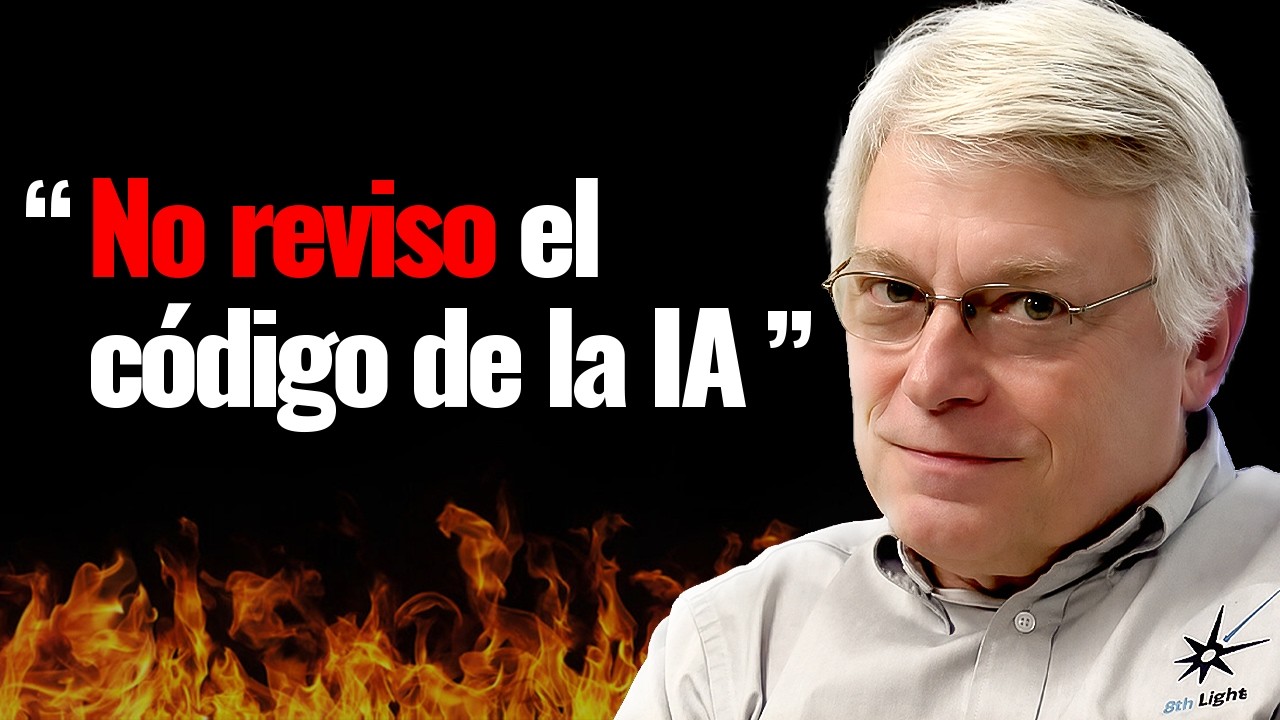
JEPA: l’aposta de Yann LeCun per una IA que entengui el món
Yann LeCun aposta pels models del món i les arquitectures JEPA perquè la IA aprengui representacions, anticipi conseqüències i pugui planificar més enllà del llenguatge.
Yann LeCun sosté que els grans models de llenguatge són molt bons manipulant text, però que no proporcionen per si sols les capacitats necessàries per entendre el món físic, recordar-ne l’estat, anticipar les conseqüències d’una acció i planificar. El vídeo de Welch Labs reconstrueix el camí tècnic que porta des de les xarxes siameses fins a les arquitectures predictives d’embeddings conjunts, o JEPA, i situa aquesta idea al centre de l’aposta empresarial d’Advanced Machine Intelligence (AMI).
La ronda inicial d’AMI va ser de 1.030 milions de dòlars. La xifra converteix la proposta en una aposta econòmica enorme, però no en una validació científica automàtica. El mateix vídeo es presenta com la primera part d’una sèrie: explica l’origen del marc i deixa per a la segona part la comparació experimental amb altres enfocaments.
1. El límit que LeCun veu en els LLM
Els models GPT van demostrar que la predicció autosupervisada del token següent permet aprendre representacions molt útils sense etiquetar manualment cada exemple. El patró encaixava amb la metàfora que LeCun havia popularitzat anys abans: l’aprenentatge autosupervisat seria el gruix del pastís, el supervisat la cobertura i l’aprenentatge per reforç només la cirera.
El desacord no és sobre la utilitat dels LLM. LeCun admet que funcionen especialment bé quan el llenguatge és el substrat del problema. La seva objecció és més concreta: generar una seqüència plausible de paraules no equival necessàriament a mantenir un model causal del món ni a simular, abans d’actuar, què passarà després. Per això preveu que JEPA i els LLM resolguin inicialment problemes diferents, encara que defensa que els models del món acabaran ocupant una part més central de la IA.
2. Per què predir píxels porta a imatges borroses
El vídeo compara la predicció del token següent amb un intent ingenu de predir directament el fotograma següent. Un vocabulari lingüístic té un conjunt finit de sortides, mentre que un fotograma d’alta resolució conté milions de valors i admet una quantitat astronòmica de futurs possibles.
Si una pilota pot rebotar cap a l’esquerra o cap a la dreta i el model ha de produir una única imatge minimitzant l’error píxel a píxel, una solució probable és fer una mitjana dels futurs. El resultat és una imatge borrosa, i la degradació s’acumula quan aquesta predicció es reutilitza de manera autoregressiva.
Aquesta explicació descriu el problema de la regressió directa més simple, no tot el camp generatiu actual. Els models probabilístics i de difusió poden representar millor múltiples futurs, però continuen dedicant molts recursos a detalls difícils de predir i poc importants per actuar, com el moviment aleatori de les fulles al costat d’una carretera.
3. Aprendre representacions en lloc de reconstruir-ho tot
La sortida que proposa LeCun és traslladar la predicció a un espai latent. Un encoder transforma una imatge, un fragment de vídeo o un altre senyal en un vector o una matriu de nombres: l’embedding. L’objectiu deixa de ser reconstruir cada píxel i passa a ser capturar la informació que importa per distingir objectes, relacions i canvis.
La idea té antecedents en les xarxes siameses que LeCun i els seus col·laboradors van utilitzar als anys noranta per comparar signatures. Dues còpies d’una mateixa xarxa codificaven una signatura de referència i una de prova. Les representacions de signatures autèntiques havien de quedar a prop; les fraudulentes, lluny. El sistema aprenia així una representació útil sense haver de generar signatures.
En visió autosupervisada es poden presentar dues transformacions d’una mateixa escena i exigir representacions semblants. Això permet que el model aprengui invariàncies i característiques semàntiques aprofitables posteriorment en classificació, segmentació o seguiment.
4. El problema del col·lapse de representacions
Fer semblants les representacions de dues vistes té una solució trivial: retornar exactament el mateix vector per a qualsevol entrada. El criteri d’entrenament quedaria satisfet, però el model no hauria après res. És el col·lapse de representacions.
L’aprenentatge contrastiu el combat separant exemples negatius, però pot exigir molts exemples i molt còmput. Barlow Twins va proposar una alternativa basada en la reducció de redundància. El mètode calcula la correlació entre les dimensions produïdes per dos encoders: vol correlació alta entre les dimensions corresponents i baixa entre dimensions diferents. Idealment, la matriu de correlació s’aproxima a la identitat.
VICReg va simplificar i fer més explícita aquesta família d’idees combinant tres objectius: invariància entre vistes, variància suficient en cada dimensió i baixa covariància entre dimensions. DINO i les seves evolucions van mostrar fins on podia arribar l’aprenentatge autosupervisat de representacions visuals a gran escala. El punt clau és que una xarxa pot extreure característiques denses molt informatives sense etiquetes humanes i sense reconstruir la imatge original.
5. Què és exactament una arquitectura JEPA
JEPA significa Joint Embedding Predictive Architecture. Una observació X i un objectiu Y passen per encoders que els converteixen en representacions. Un tercer model, el predictor, intenta estimar l’embedding de Y a partir de l’embedding de X. En vídeo, X pot ser una seqüència de fotogrames i Y una part oculta o un estat futur.
La predicció en l’espai latent permet ignorar detalls imprevisibles que no són rellevants. El model no necessita endevinar cada fulla, ombra o textura del fotograma següent; ha d’anticipar els factors abstractes que l’encoder conserva. La qualitat del sistema depèn, precisament, que aquest espai latent no perdi informació essencial ni col·lapsi.
I-JEPA va aplicar el marc a imatges. V-JEPA el va estendre al vídeo, i V-JEPA 2 va combinar representacions apreses observant vídeo amb un model condicionat per les accions d’un robot. Meta informa que aquest sistema pot usar la predicció latent per controlar un braç robòtic en entorns nous, un resultat prometedor però encara acotat.
6. Del model del món a la planificació
Quan el predictor rep també una acció hipotètica, pot estimar com canviarà l’estat del món. Un controlador pot provar seqüències d’accions dins del model, comparar els estats futurs amb un objectiu i escollir el pla que més s’hi acosta. L’optimització i el control són idees clàssiques; la novetat és aprendre tant la representació abstracta com la dinàmica directament de les dades.
Aquesta és la crítica més forta de LeCun als agents basats exclusivament en generació autoregressiva: un agent fiable hauria de poder predir les conseqüències abans d’executar una acció. La inferència es converteix en una cerca entre futurs possibles, fet que podria ajudar tant a complir una tasca com a descartar plans insegurs.
Encara falten respostes importants. Cal demostrar que aquests models escalen a entorns oberts, mantenen memòria persistent, gestionen objectius llargs i superen alternatives multimodals en tasques reals. Treballs posteriors com LeWorldModel indiquen que es poden entrenar JEPA de cap a cap amb arquitectures més compactes, però continuen sent resultats inicials, no una substitució general dels LLM.
Conclusions principals
JEPA no és un model concret ni un generador de text alternatiu. És un marc per aprendre representacions i predir en un espai latent, amb l’objectiu de construir models del món que entenguin canvis, incorporin accions i permetin planificar.
L’aposta de LeCun uneix dècades de treball en xarxes siameses, aprenentatge autosupervisat i reducció de redundància. Barlow Twins, VICReg, DINO, I-JEPA i V-JEPA mostren un progrés tècnic real. El salt pendent és convertir aquestes peces en agents generals, robustos i útils fora de demostracions controlades.
Els LLM continuen sent eines extraordinàries per al llenguatge. La qüestió que planteja el vídeo és si la pròxima etapa de la IA necessitarà una arquitectura complementària que no només descrigui una acció plausible, sinó que pugui imaginar-ne les conseqüències abans de dur-la a terme.
Contrast i context
Fonts consultades
-
01
Welch Labs Yann LeCun's $1B Bet Against LLMs [Part 1]
- 02
- 03
-
04
Proceedings of Machine Learning Research Barlow Twins: Self-Supervised Learning via Redundancy Reduction
- 05
- 06
- 07
-
08
arXiv DINOv3
- 09
Font de treball
Transcripció amb marques de temps
Consulta la transcripció
-
0:00
, obre el vídeo en una pestanya nova
Okay, then let me make a controversial statement that again is going to get me a lot of friends in Silicon Valley. Um AI legend Yann LeCun has raised a billion dollars to pursue an alternative approach to AI. Unlike large language models, LeCun's approach is not rooted in language and is not generative. By design, it does not spit out text, images, or videos. Instead, LeCun has proposed Jepa. Jepa is not a single AI model, but instead an alternative framework for training AI models. Many successful approaches in AI and machine learning train models to predict some output Y given some input X. Large language models are given some input text X and trained to predict the text Y that comes next. Image classifier models are given an input image X and trained to predict the corresponding label Y. Jepa does not work like this. Instead, our inputs X and outputs Y are each passed into models known as encoders. These encoders return a vector or matrix of numbers, often referred to as an embedding. From here, a third model known as a predictor is trained to predict the embedding of Y given the embedding of X. Why might this be a better way to build AI systems? Do you think that Jepa world model model-based approaches, do you think they'll replace LLMs one day or are they kind of solving different problems? Initially, they'll solve different problems. Eventually, they'll replace. Um I don't know. Okay. Because, you know, LLMs are really good at manipulating language, but basically nothing else. Um and they're really good in domains where the language itself is the substrate of reasoning. Compared to the mainline generative language-driven approach to AI, Jepa lives on an alternative path of joint embedding architectures. Interestingly, LeCun played a significant role at the outset of both paths. In part one of this two-part series, we'll explore this alternative path to Jepa. We'll dig into why Yann moved away from generative architectures just as they were gaining traction in language, and explore Yann's epiphany for a new solution to the representation collapse problem that plagued joint embedding architectures for years. Finally, we'll dig into the Jepa architecture itself. In part two, we'll dive into Jepa implementations and see exactly how these models stack up against LLM-driven approaches.
-
2:31
, obre el vídeo en una pestanya nova
Yann LeCun saw the revolution coming. In the 1980s, while most of the AI field was busy building expert systems that were explicitly programmed instead of learned from data, Yann pioneered the convolutional neural network. 25 years later, when deep learning began its rise to its now dominant position in AI, the breakthrough deep learning model AlexNet turned out to be uncannily similar to LeCun's convolutional nets from the 1990s. However, as deep learning continued to pick up steam through the 2010s, LeCun and other researchers became increasingly concerned by just how much this approach to AI depended on labeled training data. AlexNet was trained on the enormous and meticulously labeled ImageNet dataset using supervised learning, where AlexNet was trained to match the labels assigned to each image by human annotators. In contrast, children are able to learn very general representations for concepts like dog with very few explicitly labeled examples. As manually labeled data became a bottleneck for supervised learning, interest grew in alternative approaches. Reinforcement learning, where models learn from interacting with their environments instead of from labeled data, experienced a mini renaissance in the mid-2010s, highlighted by Google DeepMind's breakthrough performance on Atari games and the highly complex board game Go. Concurrently, LeCun and others explored unsupervised methods that learn from data without labels, including a variant called self-supervised learning, where the labels are taken from the data itself. Starting in 2015 or so, I started showing a a slide that has become a bit of a meme in the machine learning community, where I said like, you know, if uh it's the cake slide, right? So, if uh intelligence is a takes the bulk of the cake, it is self-supervised learning, and the icing on the cake is supervised learning, and the cherry on the cake is reinforcement learning. And at the time, people were kind of crazy about reinforcement learning, so I was trying to tell them like, this is not never going to you know, take us to, you know, anywhere close to human-level intelligence uh cuz it's too inefficient. Um and uh uh turns out the success of self-supervised learning uh you know, happened in in text and and language way faster than it did in sort of more uh you know, natural uh modalities like like vision. Here, Yann is referring to the success of next-token prediction for training
-
5:00
, obre el vídeo en una pestanya nova
large language models. OpenAI was founded in 2015 and initially focused their efforts on reinforcement learning, creating OpenAI Gym and Universe, and showing very impressive performance on complex video games. While much of the company was focused on reinforcement learning, Ilya Sutskever, Alec Radford, and others became interested in a new neural network architecture from Google, the Transformer, initially designed for language translation. While experimenting, uh Radford tried an interesting modification. Instead of having the Transformer translate from a block of text in one language to a block of text in another language, he switched to a simpler self-supervised approach, where training text is broken into sequences, and the Transformer is given all but the last little piece of text, known as a token, in each sequence, and trained to predict what this final token will be. Radford and his OpenAI colleagues trained their transformer on a fairly large internal OpenAI data set of 7,000 books. Note that we now call this phase pre-training. And then further trained their model using standard supervised learning from human-generated labels on specific language tasks. Their two-stage training approach worked well, setting new state-of-the-art results on nine language benchmarks, including tasks like high school-level reading comprehension questions, outperforming architectures and methods that were individually designed and trained for each individual task. Radford's model is now known as generative pre-trained transformer 1, or GPT-1. GPT-1 didn't receive much public attention at the time, but was a huge unlock, breaking models free from their dependence on human-labeled data, and opening up unprecedented levels of scale. Other researchers at OpenAI quickly grasped the significance of Radford's results, and the team went all in on this approach, aggressively scaling up to GPT-2 in 2019, GPT-3 in 2020, and ChatGPT in 2022. In 2012, AlexNet was trained on around a million examples. In 2020, GPT-3 was trained on hundreds of billions of examples. And interestingly, the new training paradigm that emerged exactly matched Yann LeCun's predictions from a few years earlier. An extensive self-supervised pre-training phase, followed by supervised learning, and finally reinforcement learning, to shape the raw next token predictor model into a
-
7:30
, obre el vídeo en una pestanya nova
helpful AI assistant. However, while these self-supervised generative approaches clearly broke through in language, the picture was much fuzzier for image and video data. But I I I kept working on vision and then initially uh my the the uh idea was to use um so to train a system to predict what happens in video but to use uh generative architectures. Um so basically train at a pixel level what's going to happen in a video. Years before the success of GPT-1, researchers including LeCun had tried to apply the same self-supervised generative approach to video. In the most straightforward implementation, we configure our neural network to take in the RGB pixel values from a sequence of video frames and then predict the pixel values in the next frame just as the GPT models are trained to predict the next token in language. However, when we use these models to predict the next frame, the results are blurry. And this blurriness compounds dramatically in longer horizon predictions. Large language models are autoregressive. When ChatGPT answers a question, it generates one token at a time. At each step, feeding its latest generated token back into its input to create the next output. If we try this autoregressive approach with a next frame video prediction model, the results quickly devolve into blurry nothingness. Before we see exactly how Jeppa is able to get around this blurry prediction problem, let's look at another fascinating application of transformers beyond language models. This video is sponsored by Hudson River Trading and this is an order book. The left column shows all the bids to buy Nvidia stock ranked by bid price. And the right column shows all the current offers to sell Nvidia stock ranked by asking price. On a busy trading day, on the order of 1,000 new buy and sell orders like this come in every second. This deluge of orders is an incredibly rich information source. Is it possible to train a transformer, like the ones used in V-Jeppa, to find patterns in this data and use these patterns to predict future prices. Hudson River Trading has trillions of tokens of historical data. This is the same order of magnitude of training data used to train frontier LLMs. And their researchers are working to push the frontiers of machine learning on this data. The Vijeppa model we'll see later in the
-
9:58
, obre el vídeo en una pestanya nova
video maps patches of videos to individual embedding vectors. We could take a similar approach with order book data, tokenizing groups of orders using some financial intuition. However, this naive approach does not work well in practice. And the Hudson River Trading team has developed some really interesting approaches to adapt cutting-edge transformer architectures to the complexities and constraints of trading data. And all of this is happening in a setting where speed is everything. Models have to run under incredibly tight latency constraints. These fascinating and highly complex research and engineering challenges, combined with the resources to actually tackle them, and an open highly collaborative environment, make Hudson River Trading an incredibly unique place to work. I hear a lot from potential sponsors these days and have been seriously impressed in my interactions with the Hudson River Trading team. The level of technical discussion and enthusiasm for these deep and interesting problems is unparalleled in my experience. If this sounds interesting, Hudson River Trading is currently hiring for AI researchers, algorithm developers, and software engineers. They're hiring globally and you don't need a finance background. You can learn more at hudsonrivertrading.com/welchlabs. Now, back to Jeppa. Now, the blurry frames produced by our generative video prediction approach are not some huge mystery. Language is complex and unpredictable, but it's nothing compared to video. Language models used fixed-size vocabularies. GPT-2 has 50,257 discrete outputs, one for each token that the model could say next. This complete enumeration approach is hopeless in video. For full HD video in the most general case, each pixel can take on 256 discrete values, and we have 1920 * 1080 * 3 color pixels, meaning there are something like 10 to the power of 15 million possible next video frames, dwarfing the number of atoms in the observable universe. So, there's no way our video prediction model can have a discrete output for each possible next video frame, as our language model has a discrete output for each next possible token. Instead, many generative video approaches of this era have the network directly output pixel intensity values. The big challenge with this approach is how the model learns to handle uncertainty. If we compare an LLM learning to
-
12:28
, obre el vídeo en una pestanya nova
complete the sentence the ball bounced to the and a neural network predicting the next frame of a video of a ball actually bouncing, we can see exactly what goes wrong. In the LLM training case, the model will see various examples in its training set of the ball bouncing left and right. And since the model has separate outputs for each of these tokens, it can essentially independently update these probabilities. Our video model doesn't have it so easy. If our data set includes videos of the ball starting down the same path and then bouncing in various directions, since our model is forced to directly predict a single output frame for a given input, the best it can do in the face of this ambiguity is to predict the average of these outcomes. When we average the pixel values of our videos, we end up with a blurry, washed-out mess. Now, this is only the most naive approach, and there have been many, many interesting video and image prediction strategies tried with various degrees of success over the last couple decades. However, the challenges that naturally arise led LeCun and other researchers to ask an interesting question. Do our models really need to be generative? In our GPT example, during the crucial pre-training phase, it really doesn't matter that our model is generative. After pre-training on next token prediction, we're left with a model that's essentially a really good auto complete. But this is not the point. What actually matters are the internal representations and features that the model learns to solve the next token prediction task. These learned internal representations are what allows pre-trained models to be quickly adapted into powerful AI assistants. Next token prediction on language is a proxy for intelligence that has turned out to work shockingly well. But are there other signals and methods that we can use to learn these powerful internal representations that we need to build intelligent systems? Simultaneously, we started realizing in the you know, round 2017-18 that uh the the best system to learn representations of images are systems that do not are not generative. They don't reconstruct. They they you know, you you you get an image and you run it to an encoder and then you try to kind of coerce this encoder to extract as much information as possible with certain properties. So,
-
14:59
, obre el vídeo en una pestanya nova
for example, you take two images of the same scene or you take an image and you corrupt it or transform it in some ways. You run them both through encoders and you tell the system the representation, whatever you extract, should really be the same for those two images because they semantically represent the same thing. Um and I've been working on things like this since the '90s. So, this is not a new idea. This this idea of joint embedding. Uh we used to call this Siamese neural nets. The method Yan is referring to here, Siamese networks, was created by Yan and his collaborators at Bell Labs in the early 1990s when developing systems to detect fraudulent signatures. The system worked by passing a pair of signature images into two copies of the same neural network. The network copies were not trained to generate any kind of data. Instead, they output vectors of numbers, often referred to as embedding vectors. These network copies were trained on two types of examples. Positive examples that contain a reference signature and a non-fraudulent signature, so these are by the same person, and negative examples that contain a reference signature and a fraudulent signature. For fraudulent examples, the network copies are trained to produce embedding vectors that are maximally different. And for positive examples, produce embedding vectors that are maximally similar. When a new signature comes along, we can pass it into our network to compute an embedding vector, and compare it to the embedding vector produced from our reference signature. If the resulting embedding vectors are not similar enough, the signature is detected as fraudulent. By jointly embedding our signatures, our Siamese network learns a very useful internal representation of the images of our signatures, notably without learning to predict or generate any actual signature images as a GPT-based approach would. Joint embeddings offer potentially viable solution to our blurry video problem. As Yan explains, You you get an image and you run it through an encoder, and then you try to kind of coerce this encoder to extract as much information as possible with certain properties. So, for example, you take two images of the same scene, or you take an image and you corrupt it or transform it in some ways. You run them both through encoders, and you tell the system the representation, whatever you extract, to really be the same for those two images because they semantically represent the same thing. So, the idea here is that we sidestep the blurry video problem we saw with generative models
-
17:27
, obre el vídeo en una pestanya nova
by using a joint embedding architecture to map copies of images or videos with one or both corrupted or transformed to similar embedding vectors. This trained model will ideally learn a useful internal representation of images or video that we can repurpose for other tasks. Just as GPT models learn internal representations during pre-training that can be adapted into AI assistant behaviors. However, this joint embedding strategy has a huge problem. Since we're training our network to make the embeddings of our original and corrupted images or videos as similar as possible, the network can find a trivial solution where it simply returns the same embedding vector for any input that we pass in. If our network learns to output, for example, a vector of all ones for any input, then the network will return all ones for a corrupted and non-corrupted view of the same image, maximizing the resulting similarity, but without actually learning anything useful. This problem is known as representation collapse. In LeCun's original Siamese network approach, the team used what's now known as contrastive learning to avoid representation collapse giving the network both positive and negative examples. It turns out that we can apply the same contrastive approach to images and video. Training our network to output similar embeddings for views of the same underlying images or videos and dissimilar embeddings for different images or video. These contrastive methods have been successfully implemented on images and videos, but can run into issues when they're scaled up, requiring large amounts of computation and many negative examples to learn meaningful representations. And LeCun has argued that in the worst case, the number of contrastive samples may grow exponentially with the dimension of the representation. By the end of the 2010s, it was clear to LeCun and others that using generative models to fully reconstruct images and video was not a good strategy for self-supervised learning. But there wasn't a straightforward solution to the representation collapse problem that would allow joint embedding architectures to learn the same level of powerful and general internal representations that large language models were enjoying. And so, it was pretty clear that ego-structure was a bad idea for signals like like images and a fortiori for video. And I had a bit of an epiphany because uh
-
19:57
, obre el vídeo en una pestanya nova
the uh the the methods that we were using to train those joint embedding architectures were kind of hacks a little bit until um I did some work with uh uh a couple of postdocs at um at at Meta, particularly back with Stefan Deny, who uh came up with um technical Barlow twins. So, it it's based on another idea in uh in computational neuroscience and machine learning that you know, Jeff Hinton also played on with similar ideas, which is that you see you should have time to have some measure of information content and try to maximize that. And there's some really old work by uh by Barlow uh but he's a famous computational neuroscientist And right. theoretical neuroscientist. Here, Yann is referencing the work of Horace Barlow, who hypothesized in 1961 that the neurons in animal and human vision systems operate by reducing redundant information between neurons. Stefan Deny, a postdoc LeCun was working with in 2020, was familiar with Barlow's work and proposed that one way to avoid representation collapse could be to apply Barlow's idea to the outputs of their networks. In the joint embedding architectures we've been considering, our embedding vectors are produced by a final layer of artificial neurons in our embedding networks. So, if our embedding vectors are of length 128, then the output layer of each of our networks contains 128 neurons. If we pass in a batch of various images into each of our networks and plot the output activation of the first neuron as we step through our images, we can see that this fires strongly on this first picture of a dog, not so much on this cat picture, and so on. Following our joint embedding approach, our network takes in a distorted view of the same batch of images. The whole point of our joint embedding architecture is to make the resulting embeddings of the same underlying images or videos similar. So, we want the output of our first neuron in our second network to be similar to the output of our first neuron in our first network. In a standard joint embedding architecture, we would simply measure and maximize the similarity between these two vectors. However, as we've seen, this approach is susceptible to representation collapse, with the network simply learning to output the same values for any input image. But now, applying Barlow's hypothesis as proposed by Stéphane Deny, we should
-
22:26
, obre el vídeo en una pestanya nova
reduce the redundancy between the outputs of different neurons. We have a bit of a choice to make here. We could compare the output of the first neuron in our first network to the output of our second neuron in our first network, or to the output of the second neuron in our second network. The team chose to compare to the output of the second network. As we'll see, this results in a simpler implementation, and the team further notes in the appendix of their paper that in practice they didn't see much difference between these alternatives. Here's the output of the second neuron in our second model. To measure reduce between neuron outputs, the team computed the cross-correlation between these output vectors. This computation consists of scaling each vector and taking the dot product, resulting in a single number, the correlation, or more precisely, the Pearson correlation coefficient between our vectors. To reduce the redundancy between our neurons as proposed by Barlow, we want this correlation to be close to zero. If we arrange the neuron outputs of our first encoder vertically and the outputs of our second encoder horizontally, we can compute and place the correlations between all pairs of neurons into a single matrix. This cross-correlation matrix has one row for each output neuron in our first encoder and one column for each output neuron in our second encoder. The elements along the diagonal capture the correlations between corresponding neurons. Since the whole idea here of this joint embedding architecture is to produce similar outputs for distorted versions of the same image, we want the corresponding neurons in our two encoders to have high correlations. Alternatively, all of the off-diagonal entries in our cross-correlation matrix correspond to different neurons in our two encoders. And following Barlow's hypothesis, we want to reduce the redundancy between these neurons. So, we want these correlations to be zero. So, ideally, our cross-correlation matrix looks like the identity matrix. The Nee and LeCun and their collaborators designed a new loss function for their joint embedding architecture that measured the deviation of their cross-correlation matrix from the identity matrix. Their new method, which they called Barlow Twins, worked surprisingly well, avoiding representation collapse while learning a powerful internal representation of the images that it was trained on. The team used a few different methods to measure the quality of these internal
-
24:55
, obre el vídeo en una pestanya nova
representations. Earlier, we saw how by using self-supervised pre-training, GPT-1 was able to outperform purely supervised models that had been adapted to specific language tasks. For vision tasks, one of the most important benchmarks at the time was accuracy on the ImageNet data set. This is the same image classification data set that the AlexNet model had shown breakthrough performance on back in 2012. The original AlexNet paper achieved an accuracy of 59.3% on the ImageNet validation set. To compare the self-supervised Barlow Twins approach to fully supervised models like AlexNet, the team used a common approach known as a linear probe, where a single layer of neurons are tacked onto the output of the Barlow Twins trained encoder model, and trained using supervised learning to classify the ImageNet data set. Importantly, the main encoder model is frozen during this training process. So, the simple linear probe is effectively adapting the Barlow Twins encoder's learned representation to solve the ImageNet classification task. Impressively, the frozen Barlow Twins encoder with a linear probe achieved an ImageNet accuracy of 73.2% outperforming the original fully supervised AlexNet model by over 10 percentage points. However, in the 9 years from the AlexNet paper in 2012 to the Barlow Twins paper in 2021, fully supervised approaches had made significant improvements over AlexNet. In 2020, a team at Google applied the transformer architecture to image classification, achieving a new state-of-the-art ImageNet accuracy of 88.6%. So, by 2021, thanks to the Barlow Twins epiphany and other joint embedding approaches, self-supervised learning was advancing rapidly for vision tasks, but it was still inferior to fully supervised methods. The general and clearly superior self-supervised generative pre-training methods in language that were fueling the rapid advancement of LLMs were still out of reach for image and video applications. And so, it became clear that this video was the the right way to go. So, we kind of uh after that, publish another version, a simplified version basically of bottle twins called VICReg. Which turned out to be quite good. Uh and then simultaneously, another group, some of our colleagues at Fair Paris,
-
27:25
, obre el vídeo en una pestanya nova
were working on uh uh similar methods, which eventually came to be known as DINO. Uh DINO V1, V2, V3. Uh now they have a new version, um which is not called DINO anymore. Uh and and this is also a joint embedding uh technique. So, so, it was really clear joint embedding was better for represent learning, you know, Right. self-supervised learning to to represent images. The DINO V3 paper, released in August 2025, marked an important turning point, achieving a very near state-of-the-art image net accuracy of 88.4% using a joint embedding architecture. As the authors say in their paper, "All in all, this is the first time that a self-supervised model has reached comparable results to weakly and supervised models on image classification." The quality of representations that DINO V3 is able to learn without access to any human-generated labels is astounding. DINO outputs an embedding vector for each patch of image that it analyzes. If I take this image of myself and take DINO's embedding vector from this image patch on my hand, and compare this embedding vector to the rest of the patches in the image, visualizing how similar each patch is to the hand patch using a color map, Dino does a remarkably good job segmenting my hand from the background. [clears throat] Here's the same approach applied to a ball, a cat, and a book. Following the success of Barlow Twins, VicRag, and Dino V1, in 2022, LeCun brought these and many other threads together into a 60-page position paper called a path towards autonomous machine intelligence. Unlike the great majority of LeCun's papers, where he works on specific and technical pieces of machine learning theory or practice, a path towards autonomous machine intelligence takes a holistic first principles approach to how we should build intelligent machines. LeCun begins by arguing that our current approaches to AI are nowhere near the capabilities of human learning, giving the example of a teenager that can learn to drive a car in around 20 hours of practice. How is it that we have those millions of hours of training data where we have we can train kind of level two system with it, which is what Tesla's doing basically. Yeah. Um but nowhere near level three, four, five. Okay? Uh
-
29:54
, obre el vídeo en una pestanya nova
yet a 17-year-old can learn to drive in a few hours of practice. Like how does that happen, right? Shouldn't we figure out what's the what's the secret there? Yeah. And my guess about it is the secret is world models. LeCun's billion-dollar bet is that the missing piece of modern AI is world models. Models that make predictions about the physical world. As he says in his 2022 position paper, common sense can be seen as a collection of models of the world that can tell an agent what is likely, what is plausible, and what is impossible. Using such world models, animals can learn new skills with very few trials. They can predict the consequences of their actions. They can reason, plan, explore, and imagine new solutions to problems. LeCun goes on to argue that joint embedding architectures offer the right foundation to build world models on top of. So, JEPA means joint embedding predictive architecture, and it's you you take an observation in the world, and then the next observation in the world, uh you run them through encoders, so it's like a joint embedding type architecture, and then you have a predictor that tries to predict that the state at time t + 1 from the state at time t, and you might condition this on an action, and then you have a world model. As a concrete example, instead of using a generative architecture to predict the pixel values in the next frame of video, we can map the video and next frame to embeddings, and then train a predictor model to predict the embedding of the next frame given the embedding of the video. In this implementation, the JEPA architecture frees the model of the intractable task of predicting every pixel in the next frame of video, and theoretically allows the predictor to focus on predicting only the salient features of the scene that make it through the encoder. Yann gives a nice example here. If you're trying to generate a model, you know, to predict what's going to happen in a dashcam video, uh it will spend most of its resources predicting the random motion of the leaves on the trees that border are bordering the road. And and those are things that are essentially not predictable, but they have a lot of pixels, you know, that move around. As Yann mentioned earlier, we can take JEPA one step further by conditioning on actions. In the VJEPA 2 paper, which we'll dig into in part two, the team conditions a JEPA model on the action signals sent to a robot arm. So, the JEPA model sees a sequence of images of the robot's arm and environment, and then is trained to predict the embedding of the next video
-
32:24
, obre el vídeo en una pestanya nova
frame, but is also given the control signals that are sent to the robot arm. This allows the predictor to learn to predict how various control signals will change the robot arm's position in the embedded image. This learned world model can then be used for robot planning and control. Given an image of some goal state, for example, moving a cup off of a platform, this image is passed into the next frame encoder, resulting in an embedding of the goal state of the robot. From here, a controls algorithm can be used to explore the world model's predictions given various hypothetical actions, and find a set of actions that will lead the model's predicted future state to match its goal state. As Yann says, this is really a new twist on an old idea. You build a model that gives you the state of the world at time T plus one as a function of state of the world at time T, and an action you imagine taking or intervention or control, right? And then if you have this, you can uh predict the outcome of a sequence of actions, and you can by optimization, you can figure out an optimal sequence of actions to arrive at a particular um outcome, right? This is classical optimal control. This is, you know, this is going back to the late '50s in the Soviet Union, early '60s in the in the West. Mhm. Uh very classical stuff. Yeah. What is not classical is you learn the model. Sure, yeah. a machine learning to learn the model. Right, yeah. What is even less classical is you learn a representation of the input that computes a state, an abstract state representation, and you learn the you know, the the model in that uh in that state. And that's Jepa. But will Jepa or other world model-based approaches really overtake large language models? Since LeCun first proposed Jepa in 2022, the architecture has been applied by various teams to a wide range of problems. How exactly do these models stack up? In part two, we'll dive deeper into V-Jepa-2 to get a sense for what's really happening inside the model's embedding space. And see how V-JEPA 2 fares as a robotics control algorithm against the rapidly advancing VLA approaches. We'll also explore VL-JEPA, which solves many of the same vision language problems we solve today with multimodal LLMs, but in a very different way and with impressive results. Finally, we'll spend some time on an
-
34:54
, obre el vídeo en una pestanya nova
implementation of JEPA called Le World Model. Le World Model gives perhaps the most complete, albeit early, picture of what JEPA-based systems can do. Until next time, I'll leave you with Yann's take. Okay, then I will make a controversial statement that again is going to give me a lot of friends in Silicon Valley. Um I do not understand how you can even think of building an agentic system without a agentic system having the ability of predicting the consequences of its actions. Mhm. Okay? And VLA doesn't doesn't do that. Sure. Sure. And LLMs do not have world models. They cannot predict the consequences of their actions beforehand. They just take the action and then apres moi le deluge as you know, as some famous French kings said. So, uh if you really want to build reliable agentic systems, they absolutely have to be able to predict the consequences of their actions. So that you can plan a sequence of actions to do something, first of all to uh fulfill the task that they are being asked to fulfill, but also uh perhaps to, you know, guarantee some safety guardrails, right? And And the inference process now becomes a search as opposed to just a auto-regressive prediction. Right. Uh so, that's a world model. That that's the whole idea of a world model. If you enjoyed this video, check out the Welch Labs Illustrated Guide to AI. Its cover produces highly consistent deno representations, so you know it has to be good. The book is beautifully illustrated and is a great way to dig deeper into many of the topics we touched on in this video. Chapter five on AlexNet is a great way to learn more about embedding vectors and the rise of deep learning. Chapter six on neural scaling laws takes a deeper look at the fascinating build-up from GPT-1 to GPT-3 at OpenAI. Chapter nine covers diffusion models, which are able to reconstruct highly accurate pixel-level representations of images and video, but with some notable trade-offs. Chapters 1 through 4 give some great background on all of these topics, covering the fundamentals of neural networks, backpropagation, and deep learning. Each chapter includes thought-provoking exercises and supporting code. The book is now shipping to 24 countries. You can pick up a copy today at welchlabs.com.