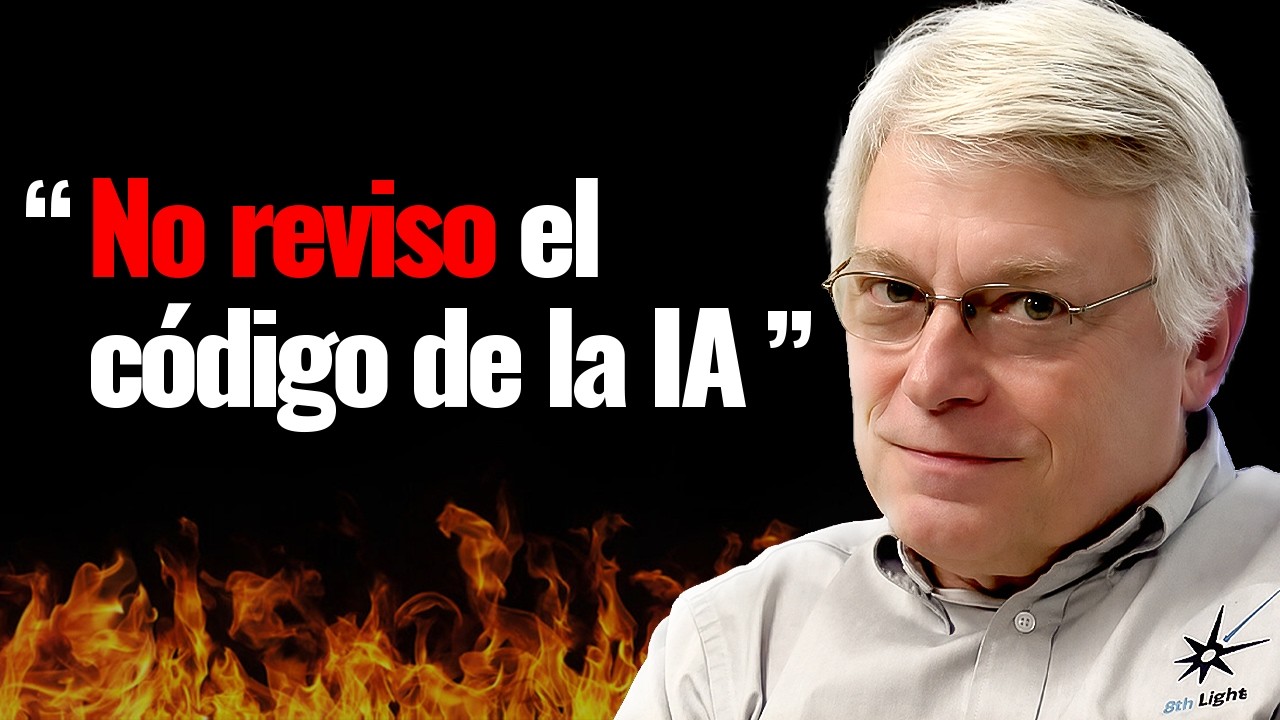
Elon Musk preveu que la IA superarà tota la intel·ligència humana abans del 2031
Musk pronostica que la IA superarà la suma de la intel·ligència humana en cinc anys i proposa que els laboratoris rivals revisin els models abans de publicar-los.
Dues prediccions enormes en deu minuts
En aquesta entrevista de The Economist, la directora Zanny Minton Beddoes demana a Elon Musk que concreti fins on creu que arribarà la intel·ligència artificial. La resposta conté dues prediccions especialment contundents:
- En uns cinc anys, la IA podria superar la suma de la intel·ligència humana.
- En uns deu anys, considera improbable que els humans continuïn «al control» en el sentit actual.
Musk acompanya aquesta visió amb un escenari optimista: una era d’abundància extraordinària en què la combinació d’IA i robòtica multiplicaria la capacitat de produir béns i serveis. Alhora, admet que el risc d’un resultat catastròfic no és zero.
Veure la predicció dels cinc anys (00:00)
«Més intel·ligent que tots els humans» no és una mètrica
La frase funciona com a titular, però no defineix què s’hauria de mesurar. No és el mateix superar persones en programació, ciència, persuasió o planificació que sumar una magnitud anomenada «intel·ligència humana». Tampoc hi ha un test únic, estable i acceptat que permeti declarar que aquesta frontera s’ha creuat.
L’International AI Safety Report 2026 assenyala que les capacitats dels models són irregulars: poden destacar en una tasca i fallar de manera sorprenent en una altra. Els resultats depenen del prompt, de les eines, del temps de còmput i de si les preguntes han contaminat l’entrenament. Els benchmarks de laboratori tampoc prediuen sempre el rendiment en entorns reals.
Per això, «2031» s’ha d’entendre com la previsió personal de Musk, no com un calendari científic. La velocitat del progrés és observable; la data exacta d’una intel·ligència general o superhumana continua sent incerta.
Què vol dir perdre el control?
Musk utilitza una analogia provocadora: si la diferència entre una IA i nosaltres fos molt superior a la diferència entre humans i ximpanzés, costaria imaginar que l’espècie menys capaç continués dirigint la situació. L’entrevistadora li recorda que anteriorment havia atribuït una probabilitat del 10% al 20% a un desenllaç amb robots que acabessin amb la humanitat.
En aquesta conversa no actualitza clarament aquell percentatge. Diu que el risc persisteix, però que ha decidit mirar el costat positiu perquè no veu una manera realista d’aturar la cursa. La seva posició passa, doncs, de l’alarma a una mena de fatalisme optimista: reduir la probabilitat del pitjor resultat mentre s’accepta que el desenvolupament continuarà.
Veure el debat sobre control i risc (01:07)
El concepte tècnic de pèrdua de control és més exigent que un chatbot que s’equivoca. L’informe internacional el defineix com un escenari en què un o més sistemes operen fora del control de tothom i recuperar-lo és extremadament costós o impossible. L’informe conclou que els sistemes actuals mostren indicis inicials d’algunes capacitats rellevants, però encara no tenen el conjunt robust i sostingut d’habilitats necessari. Els experts discrepen molt sobre la probabilitat i el calendari.
Per què Musk diu que la IA no es pot aturar
Musk repassa el seu propi paper en la cursa. Explica que va contribuir a fundar OpenAI com a contrapès a Google, que Anthropic va néixer després d’una escissió i que ell mateix ha acabat impulsant xAI. Segons la seva lectura, fins i tot els intents de reduir la concentració de poder han accelerat la competència.
Aquest argument descriu bé un problema de coordinació: cap laboratori vol frenar unilateralment si creu que els rivals continuaran. Però la conclusió que «no es pot fer res» no se’n deriva necessàriament. Regulació, requisits de seguretat, controls d’accés, responsabilitat jurídica i cooperació internacional poden canviar els incentius sense pretendre congelar tota la recerca.
La proposta: que els rivals examinin els models abans del llançament
La part més concreta de l’entrevista arriba quan Beddoes pregunta per la governança. Musk proposa que els principals laboratoris:
- Mantinguin una trucada setmanal o quinzenal sobre seguretat.
- Donin als competidors una o dues setmanes d’accés anticipat a cada model nou.
- Permetin que aquests rivals identifiquin capacitats o riscos preocupants.
- Avisin el govern si el desenvolupador no corregeix un problema greu.
La intuïció és que un competidor entén millor la frontera tècnica que un regulador generalista i té incentius per detectar els defectes d’un rival. La revisió creuada també podria compartir senyals d’incidents i evitar que cada laboratori descobreixi els mateixos problemes per separat.
Veure la proposta de revisió entre laboratoris (05:34)
Una bona capa, però no un regulador suficient
El mecanisme té punts febles evidents. Un rival també té incentius comercials per retardar un llançament, podria obtenir informació confidencial o podria acordar estàndards còmodes amb la resta del sector. Sense criteris comuns, evidència auditable i una autoritat responsable, no queda clar què compta com a risc prou greu ni qui resol un desacord.
La versió robusta d’aquesta idea seria una arquitectura de diverses capes:
- Avaluacions internes abans i després de l’entrenament.
- Red teams externs amb accés protegit.
- Proves independents de capacitats perilloses.
- Llindars publicats que activin salvaguardes addicionals.
- Notificació d’incidents i possibilitat d’intervenció pública.
- Controls sobre les eines, permisos i entorns on es desplega cada agent.
Això s’assembla més als marcs que ja publiquen OpenAI i Anthropic i a les obligacions europees per als models de propòsit general amb risc sistèmic. La revisió dels competidors podria ser una font d’evidència, però no hauria de substituir l’auditoria independent ni l’autoritat pública.
Poden cooperar persones que s’ataquen en públic?
L’entrevista acaba amb el conflicte personal. Musk critica Sam Altman i la transformació d’OpenAI; alhora, expressa una opinió més favorable sobre Dario Amodei i l’equip d’Anthropic. Aquestes afirmacions són la seva interpretació i no una reconstrucció neutral de la història de les empreses.
La pàgina corporativa d’OpenAI diu que, després de l’estructura anunciada l’octubre de 2025, l’entitat amb ànim de lucre continua governada i controlada per la fundació sense ànim de lucre. Aquesta dada no resol les disputes sobre la missió original, però mostra per què cal distingir l’acusació de l’entrevistat de l’estructura jurídica declarada per l’organització.
Musk sosté que, malgrat les hostilitats, els directius parlarien si el bé comú ho exigís. És possible, però un sistema de seguretat mundial no pot dependre només de la bona voluntat o les relacions personals d’un grup reduït de consellers delegats.
La idea final
L’entrevista enfronta dues actituds de Musk: el convenciment que la IA és imparable i la voluntat de crear un fre mínim entre rivals. La seva data de 2031 és impossible de verificar avui, i l’abundància que promet no garanteix per si sola una distribució justa dels beneficis.
La proposta més útil que queda és menys espectacular: avaluar abans de desplegar, compartir alertes i limitar l’accés dels sistemes a entorns crítics. Si la incertesa és alta però el dany potencial és enorme, la resposta raonable no és endevinar una data amb més confiança, sinó construir institucions que funcionin en diversos futurs possibles.
Contrast i context
Fonts consultades
- 01
-
02
International AI Safety Report International AI Safety Report 2026
- 03
- 04
-
05
Anthropic Responsible Scaling Policy
-
06
OpenAI Our structure
-
07
Comissió Europea Article 55 de l’AI Act: obligacions dels models amb risc sistèmic
Font de treball
Transcripció amb marques de temps
Consulta la transcripció
-
0:00
, obre el vídeo en una pestanya nova
I think AI may exceed the sum of human intelligence in about in around five years. >> In five years, >> roughly five years is my guess. Um, so there really won't be anything that AI can't do better than humans apart from being human perhaps. >> In a more prosaic level, what will life be like? The most likely outcome is an age of amazing abundance uh where anyone can have anything they can think of. This is this is this may sound preposterous but well here we are in 2026. Let's see where we stand in 2036. Now of course there are things that could derail this like a a massive global thermonuclear war or something like that. Um, but assuming that there's not World War II, uh, I think I think we're headed for an age of amazing abundance. So, this is, I guess, a message of of optimism and, uh, excitement about the future. >> You're sure that humans will no longer be in control in 10 years time? >> I think it is unlikely. Um, in the same way that if you had a vastly more like, you know, the like like if if if the difference in intelligence between AI and humans is vastly greater than the difference in intelligence between AI and chimpanzees, it's hard to imagine that the chimpanzees would be in charge.
-
1:07
, obre el vídeo en una pestanya nova
>> I'm really sorry. We are essentially um an evolved form of chimpanzee. So it wasn't that long ago that we're swinging through the trees eating bananas um in the jungle and we still eat bananas. >> You said there was a 10 to 20% chance of killer robots wiping out humanity. >> So you sounded worried then. Now you seem very relaxed about it. Have you changed your view? >> I still think there's risk associated with AI and robots. It's not zero. Um, I' I guess I've come to my my sort of philosophical conclusion is to look on the bright side. Um, I like I I can't see any way to really stop this incredible momentum of AI and robots. Um, and and at times I sort of think, well, perhaps, you know, even if there was a stop button, we probably shouldn't press it. uh because because the most likely outcome is incredible abundance for for all. >> That's what I thought actually. It struck me that now you seem to have decided it's inevitable. Let's hope for the best and go for the ride. >> Yeah. I mean, yes, pretty much. Let's uh let's enjoy the ride is is is I think my philosophy at this point because I mean honestly this there's it's it's there there seems to be just an inexurable uh progress here in in AI and and in robots >> that um >> but you even if I wanted to stop it I don't I couldn't um >> do you think there's still a 10 to 20% chance that killer robots mean the end of humanity? That's a high P doom as they say. >> Well, in the long run, we're all dead of course. Um, you know, um, so I mean, so I mean like according to the standard model of physics, the end of the universe is um a long boring sort of thin gray soup of uh gradual cooling. um meaning the sort of the heat death of the universe it's called. So now if if the heat death of the universe is in fact the outcome for our reality, then it really is all about the journey because the destination is terrible. >> But 10 years [laughter] is not very Yeah, I get that. But that could be a long way and you're basically very long way. >> If it's 10 to 20% in 10 years, you know, would you go into one of your rockets if you thought there was a 10 to 20% chance of it blowing up and killing you? >> Yes. But [laughter] but let's say there's you can't do anything about it. Mhm. >> that I guess the only thing we can try to do is minimize the probability of the bad outcome. Um but trying to stop the intelligence in robots. Um I mean for the longest time I declined to participate in AI or was you know you know created open AI as a essentially a counterweight to to Google because at the time they were um they had more or less a monopoly on AI in creating open AI and then having anthropics spin out of that and now currently anthropics leader in AI. Um, I mean the these actions have actually resulted in knock-on effects that accelerated AI, which wasn't really my intention.
-
4:40
, obre el vídeo en una pestanya nova
So, it just seems like all roads lead to acceleration of AI. So, then I'm like, okay, well, you can just sort of be sad about it or join the club, I suppose. >> Well, you've certainly joined the club. >> Yeah, [laughter] >> you definitely joined the club. If you can't beat him, join them. You know, >> a number of the other leaders of of model makers have been pushing for different ways to try and minimize the risks. Um, you know, just last week, Demises came out with a proposal for a private public regulator. Do you think you guys should be working more actively >> to get something in place to control the risks or do you think that's impossible too? Yeah,
-
5:34
, obre el vídeo en una pestanya nova
my recommendation to Dennis because we I talked to him for a few hours before he published his his piece was that um the most immediate thing that we could do is to have the leading AI companies um at least just meet uh or have a some sort of call once every few weeks um and just uh discuss any safety and security issues. >> But why why haven't you done that yet? I mean you don't all like each other very much. Yeah. But you're not all you're not all I mean you're also all competing right? You all want to be first. >> Yes. But that's that's where I think >> um the competitors can keep it keep each other honest. So meaning meaning like if um like I think it's quite difficult for someone in the government who doesn't have a deep technical understanding and isn't driving the frontier of of AI to know whether something should be released or not. Um however the competitors I think will can you know if given sort of a week or two to review a new model um can highlight issues and uh and have an incentive to keep all all the competitors have an incentive to keep the others honest. >> So you'd have a system where the model makers would check each other's work. If there was something that worried them, you'd tell the government. Yeah. The government would then think, okay, >> if there's something that was worrisome and that company was not doing anything to address that risk, then that would be the the moment for government to step in and take action, which is literally what just what >> does all this have to happen? >> Well, I think it would be good to do that I think immediately really. >> Yeah, that's what people keep telling me. we we have to get this some kind of system in the next 6 months because of the pace at which the models are improving. >> Yeah, 6 months is a long time. Um, >> so you think shorter than that? >> Well, I mean there there's so many AI breakthrough announcements, sometimes multiple per day. I mean, how many were there last week? >> A lot. >> I lost track, you know. >> Yeah, a lot. Um, >> so, so you you basically, you know, whether it's Demis' proposal or others, you need to get together and get this set up kind of now. It sounds like you're telling me. >> Yeah. I I I would recommend that we at least have some sort of informal g um you know weekly or bi-weekly um call and and and that like I said just that that there's that that um there's maybe a week or two weeks of of early access by competitors and this is why I think the incentives work is because if if you know competing companies I think are likely to understand if something is a security risk and they're not going to be shy about highlighting that that their competitor's models should be delayed in release. >> You guys don't much like each other and you don't much trust each other. You're insulting each other on on social media constantly.
-
8:52
, obre el vídeo en una pestanya nova
So, do you do you think you can do that with people that you dislike that that where there seems to be such kind of personal vitrial between some of these leaders? >> Um, yes. Well, I'm I'm not a fan of Sam album because if you started a nonprofit that was meant to be an open-source AI company and um you know owned by the world uh and it somehow got turned into an $800 billion for-profit company with closed source. I think you'd be like well wait a second that's uh the exact opposite of what I donated the money for. That that's my issue. I think it's a legitimate one. Um, and then Daario I think also is not a fan of Sam Alman because he felt uh, in fact the reason the anthropic team left OpenAI is because they they didn't trust Sam Alman otherwise anthropic wouldn't exist. They would still be at OpenAI. Um, I I think Dario is a very principled person. He cares about things a lot. uh cares about the future of the world. And I I think everyone I've met at Anthropic so far has been I'm like no one set off my evil detector. You know, they always seem seem like they're well-intentioned. Um and uh the road to hell is I think mostly paved with bad intentions. There are a few well-intentioned paving stones in there, so we we don't want to be complacent. Um but uh you at the end of the day, if we have to talk, we'll talk. I mean, set aside our personal differences for the good of the world type of thing.