De 140.000 a 240.000 dòlars en 18 mesos: què revela una cartera concentrada
Adriconomics afirma haver guanyat 100.000 dòlars en 18 mesos. Analitzem la recuperació, les vendes d’Oscar Health i PayPal i el risc d’una cartera concentrada.
La fita: de 140.000 a prop de 240.000 dòlars
El creador d’Adriconomics afirma haver superat els 100.000 dòlars de guany en divuit mesos. Segons les xifres que mostra, va començar amb 140.000 dòlars, no hi va afegir capital i la cartera ha arribat a prop de 240.000. També situa el rendiment de l’any en un 11%, aproximadament en línia amb l’S&P 500 en la data del vídeo.
Són dades comunicades pel mateix inversor, no un historial auditat. El vídeo no detalla si el guany inclou impostos, comissions, divises o tots els dividends, ni separa completament rendiments realitzats i no realitzats. Per això la fita serveix per entendre la seva experiència, però no per atribuir una rendibilitat replicable a una estratègia.
La pujada absoluta entre 140.000 i 240.000 és d’un 71,4%. No és correcte convertir-la directament en un «71,4% anual»: el període és de divuit mesos i les dates exactes i els fluxos de caixa són necessaris per calcular una taxa anualitzada comparable.
Un inici d’any amb 40.000 dòlars de pèrdua
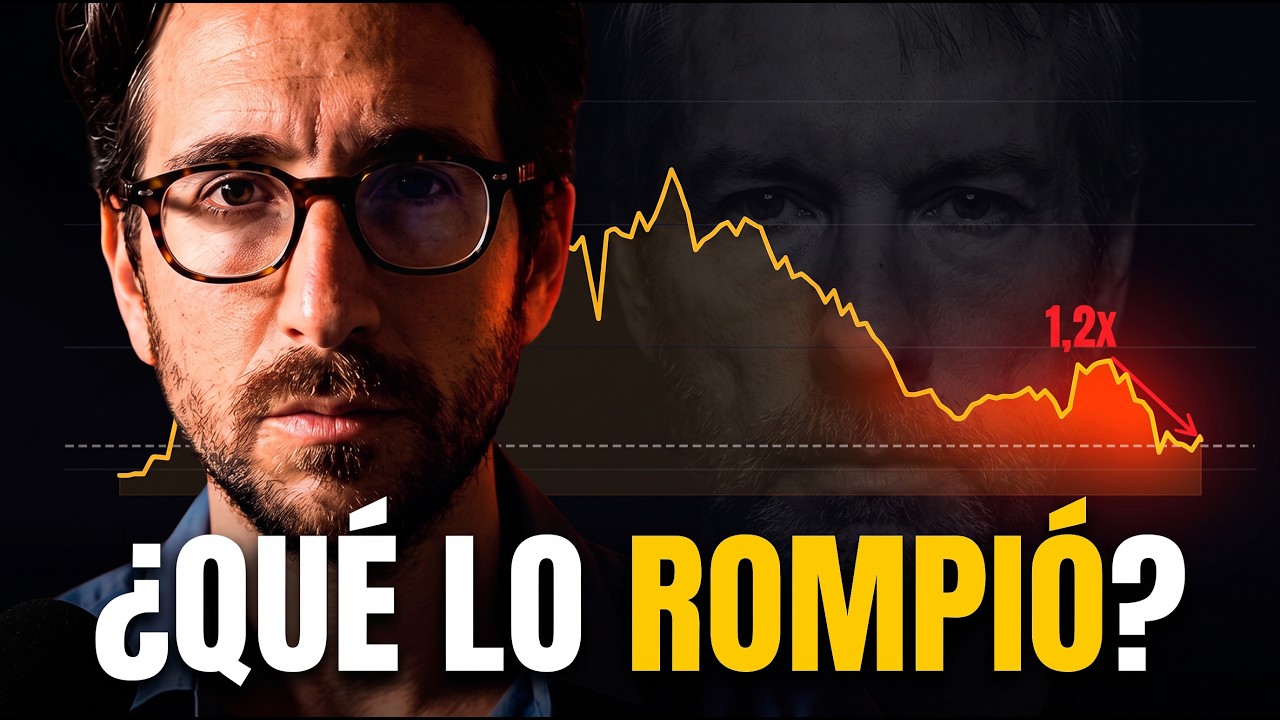
El recorregut no va ser lineal. A principis d’any, la cartera havia baixat uns 40.000 dòlars mentre l’índex es mantenia gairebé pla. El creador reconeix compres amb mala fortuna immediata: PayPal poc abans d’un relleu al capdavant, Adobe abans de la sortida de Shantanu Narayen i una altra posició afectada l’endemà per una demanda.
La seva resposta va ser aturar-se i no vendre per pànic. Defensa que només es pot aguantar una caiguda si la tesi és pròpia i s’entén el negoci. Aquesta idea no converteix «no fer res» en una regla universal. Si els fonaments han canviat, mantenir per orgull pot ampliar la pèrdua; si només ha canviat el preu, vendre per por pot destruir una tesi correcta.
La cita de Howard Marks que incorpora el vídeo resumeix la incomoditat de l’enfocament contrari: les oportunitats solen aparèixer quan les notícies són dolentes i la incertesa continua viva. Admetre que un mateix es pot equivocar és part de la decisió, no un motiu per actuar sense límits de risc.
Oscar Health: error o disciplina?
El creador va vendre Oscar Health a 13,73 dòlars amb un guany aproximat del 4%. Més endavant l’acció cotitzava prop de 29 dòlars i calcula que va deixar escapar uns 20.000 dòlars. Ho presenta com el gran error de l’any.
La causa és instructiva: sabia valorar l’empresa, però admet que no dominava el sistema sanitari dels Estats Units ni l’impacte de la política pública. Quan el preu va caure, no tenia prou coneixement per distingir una oportunitat d’un deteriorament real.
Mirat només després de la pujada, vendre sembla equivocat. Mirat des del moment de la decisió, reduir una posició fora del cercle de competència també pot ser gestió del risc. El benefici no demostra que la tesi fos completa, igual que una pèrdua posterior no demostraria automàticament que el procés era dolent. La lliçó útil és definir abans de comprar quines dades invaliden la tesi.
Per què va sortir de PayPal sense gairebé guanyar
PayPal va ser la gran venda del mes. Segons el vídeo, va comprar al gener al voltant de 57 dòlars i va vendre al juliol gairebé al mateix preu. Incloent dividends, calcula un retorn del 0,6% en sis mesos.
La primera raó és que el potencial havia passat a dependre d’una possible operació corporativa. El creador parla d’una oferta de Stripe de 60 dòlars per acció i considera que apostar per una guerra d’ofertes quedava fora del seu avantatge analític. Aquesta operació es relata segons el vídeo i no constitueix una recomanació ni una confirmació independent de les seves condicions.
La segona raó és el cost d’oportunitat. Al gener veia poques alternatives barates; al juliol en trobava diverses i preferia alliberar capital. Encara estima PayPal entre 75 i 80 dòlars, però dubta que la direcció pugui materialitzar aquest valor. És possible creure que una acció està infravalorada i, alhora, trobar una inversió millor ajustada al risc.
Una cartera concentrada i un 20% en efectiu
Després de la venda, l’assignació aproximada que mostra és:
- Duolingo: 27%;
- efectiu: 20%;
- Hims & Hers: 14%;
- Adobe: 10%;
- Novo Nordisk: 9%;
- Sanara MedTech: 8%;
- Microsoft: 7%;
- Booking Holdings: 6%.
Els percentatges sumen 101% perquè estan arrodonits. La característica important és la concentració: Duolingo representa més d’una quarta part i les set accions combinen tecnologia, salut i consum, però no constitueixen una cartera àmpliament diversificada.
Investor.gov recorda que diversificar no elimina les caigudes del mercat, però pot reduir l’impacte d’una sola empresa. També adverteix que comparar una cartera amb un índex exigeix un període, un risc i uns costos coherents. Igualar l’S&P 500 durant una part de l’any no diu si s’ha assumit més volatilitat per obtenir el mateix resultat.
Les sis candidates per al nou capital
El vídeo acaba amb sis empreses i demana al públic que les ordeni. No són tesis completes, sinó punts de partida:
- SoFi: creixement d’ingressos i membres, i compres d’accions del conseller delegat;
- MercadoLibre: ingressos a l’alça i preu a la baixa, però un negoci complex que exigeix més estudi;
- ServiceNow: exposició a programari amb un avantatge competitiu que considera fort, encara que no sigui la més barata;
- Oracle: valoració deprimida davant del risc que els compromisos d’infraestructura d’IA no compensin un deute elevat;
- Celsius: negoci fàcil d’entendre i potencial europeu, amb una valoració que encara voldria més baixa;
- Netflix: qualitat de negoci i preu més raonable després d’una caiguda, sense arribar als nivells de ganga de 2022.
Una votació a YouTube pot generar idees, però no substitueix una anàlisi. Cada empresa té riscos, comptabilitat, competidors i sensibilitats diferents. La mateixa experiència amb Oscar reforça que popularitat i comprensió no són equivalents.
Com llegir correctament els «13 de 13» guanyadors
El creador celebra haver tancat tretze operacions sense cap pèrdua. És una dada atractiva, però incompleta sense saber la mida de cada posició, el temps invertit, les posicions encara obertes i el pitjor retrocés. Una operació petita guanyadora i una gran posició no realitzada no tenen el mateix impacte.
També hi ha biaix de resultat: jutjar cada decisió només pel preu posterior. Un procés sòlid pot perdre diners, i un procés deficient pot guanyar per casualitat. Les mètriques més informatives serien rendibilitat ponderada pel temps, volatilitat, caiguda màxima, impostos, comissions i comparació amb un índex apropiat.
Conclusió
El valor del vídeo és la transparència sobre dubtes, errors i concentració, no la promesa d’un mètode infal·lible. La cartera va recuperar una caiguda de 40.000 dòlars i va arribar a una fita important, però ho va fer amb posicions grans i risc específic d’empresa.
Les dues decisions més útils per aprendre són oposades: mantenir quan encara es coneix la tesi i vendre quan l’avantatge analític desapareix. Cap de les dues es pot aplicar mecànicament.
Abans d’imitar una compra, cal reconstruir els números, llegir documents primaris, definir el risc assumible i comprovar si la cartera ja està massa exposada al mateix factor. La rendibilitat d’un creador és una història per analitzar, no una instrucció financera.
Contrast i context
Fonts consultades
- 01
-
02
Investor.gov Investor Bulletin: Performance Claims
-
03
Investor.gov Diversify Your Investments
Font de treball
Transcripció amb marques de temps
Consulta la transcripció
-
0:00
, obre el vídeo en una pestanya nova
Guys, finally, a really good month for my portfolio. This week, I officially crossed a hundred thousand dollar in profit for the very first time. I also made a big change selling out completely of one of my largest position. Because of that, I now have fresh capital to buy a new company. So, today, I'm going to share my top ideas, and at the end of the video, we are going to play a stock ranking game to choose my next buy together. I know most of you guys follow me for my research videos analyzing and rankings other YouTubers, but once a month, I like to share my personal journey with you in a very simple and honest way. So, let's look at my year-to-date returns. As you can see, my year start incredibly [music] bad. I was down forty thousand dollar while the S&P was basically flat. Back then, I decided the best fix was to do absolutely nothing, take a break, go on holiday, and just wait. But, if we have to be honest, I made some major mistakes at the beginning of this year, and probably, I
-
1:12
, obre el vídeo en una pestanya nova
was also a bit unlucky. I bought PayPal right here, and a week later, the CEO got fired. I bought Adobe right here, and Shantanu Narayen decided to step down. I bought Insead here, and literally, the next day, Novo Nordisk sued them. Stock picking is tough. It's really not for everybody. How many of us panic sell on this kind of bad news? Years ago, when I started investing, I probably would have sold everything. And after all these years, if any years, I'm still making these mistakes. My point is that if you buy a company because your favorite YouTuber put it on a list, you are going to panic sell when things go very red. The only way to resist these kind of drops is to have your own conviction and to keep learning from your own mistakes. For example, this year I made a big mistake because I did not have the stability to hold Oscar Health. Listen. Oscar Health, another insurer, another extremely low valuation stock. Very
-
2:28
, obre el vídeo en una pestanya nova
risky, very volatile. So, I clearly had the technical skill to understand that Oscar was wrongly priced. But here is the problem. I know a lot about valuation. I even invented my own method to value companies, but I know absolutely nothing about the US healthcare system. It's completely outside my circle of competence and I had no idea how the government policy could impact Oscar. So, when the stock price kept dropping, I started doubting my own assumptions. I was not able to hold a company I did not fully understand. I end up selling at $13.73, taking a tiny 4% profit. Today is trading around $29. So, I completely missed out on a $20,000 win. Luckily, I had the willpower to hold on to my other crashing stocks like Hims, Novo Nordisk, Duolingo. But when our stock crash, there is always a little doubt inside us. We constantly ask ourselves, "Am I wrong about this?" Listen to Howard Marks.
-
3:47
, obre el vídeo en una pestanya nova
>> We were the kind of people who always say, "I could be wrong or it could work in a in a way that's never been seen before. When the markets are crashing, why are they crashing? They're crashing because the news is terrible. I read the same newspapers. I watch the same shows on TV. Um I'm attached to the same news feeds. I see the terrible news. It looks terrible to me. I overcome it in some way and conclude, "No, I should invest." But I'm not immune to what everybody else is reading. People who look at the world probabilistically and admit to uh ignorance and uncertainty can't act without trepidation. If you wait until you have nothing to be afraid about, probably the opportunity has passed. >> Please, my friend, do not trust these YouTubers who act like they would know the future. Or these traders that claim
-
4:56
, obre el vídeo en una pestanya nova
they have a method that never lose. I don't want to name names, but great investing it's about understanding all the things that we don't know and that we cannot control. Ultimately, it's a game of probabilities. We cannot know the future, so we will always have some fears. But because I was convinced my holdings were deeply undervalued and wrongly priced, I held on. And today, I'm back at all-time highs, up 11% year-to-date. I'm finally matching the S&P 500. If we look at the returns since I started this channel, I began with $140,000. I never deposited another cent. 18 months later, I'm at $100,000 in profit with a total portfolio value around 240,000. I do not like to brag or pump myself. Unlike other YouTubers, I don't have a course or a Discord to sell you. So, I usually prefer to talk about my mistakes. But, let me celebrate this milestone for just a moment. I closed my 13th trade since I started this channel. I never
-
6:13
, obre el vídeo en una pestanya nova
lost money on a single one. 13 contrarian trades, 13 green winners. So, what did I sell? One day before, I did like Jeremy. >> Listen. I sold my PayPal. And around these parts, it will always be referred to as Pain Pal. Yeah, good old Pain Pal. We sold it all, right? Sold it all. >> I closed the position I was most doubtful about. PayPal. I bought it at $57 in January, and I sold it at $57 and change in July. Dead money. 0.6% returns including dividends in 6 months. If I bought it because it was cheap compared to the free cash flow, why did I sold for the exact same price? I have two reasons. First, the upside potential is not anymore about PayPal fundamentals. It is now completely driven by Stripe buyout offer. The free cash flow, the new initiative, the management skills do not matter anymore. Now, it's all about Stripe $60 per share offer. If someone is going to raise that offer, the price will go up. If no one
-
7:32
, obre el vídeo en una pestanya nova
does, the price is kept, and I'm not going to stick around to gamble on a bidding war where I have absolutely zero edge. Second, the rest of the market changed a lot. When I bought PayPal in January, opportunities were very scarce. Now, there are a lot of compelling stocks trading at very low valuations. I will name six in a minute. So, even if I sold, I'm still convinced PayPal is worth more than the current $60 offer. In my opinion, Stripe offer is low. I believe PayPal is worth at least $75 to $80 a share, but I'm not sure that management will be able to get that fair value for the shareholders. This leaves my current portfolio looking like this: 27% in Duolingo, a massive 20% cash balance, 14% in Hims, 10% in Adobe, nine in Novo, eight in Sanara, seven in Microsoft, and six in Booking. Earnings coming soon. My hope is that Duolingo will double beat revenue and earnings. Lately, they added Duo Cup avatar
-
8:59
, obre el vídeo en una pestanya nova
customization. From my estimate, this should be around 7 million in extra revenue, not included in the current guidance, which should be enough for for a solid beat. For Adobe, the hope is that we get the new CEO announcement, and that is someone great. But even if it's someone half decent, [clears throat] the stock will bounce, in my opinion, because there is nothing worse for investor than the current uncertainty. For Novo Nordisk, looking at Google's trend, Novo Nordisk is catching up with Lily's Mounjaro. I think they crashed the second quarter and finally we might have an earning bounce. Anyway, now I have to decide how to allocate this 20% cash balance. Here are six new companies I'm looking to buy and if you check the first pin comment, there is a ranking and I would like you to vote down to help me decide which one to buy. First option is SoFi. I love this kind of growth in revenue and members. I love that Anthony Noto is actively buying shares. SoFi price is fair, almost cheap. Second
-
10:18
, obre el vídeo en una pestanya nova
is Mercado Libre. Revenue is going up while the share price is going down. I like that it's very cheap. I dislike that it's a complex business and if I don't want to repeat the Oscar health mistake, I will have to study way more before investing. Third is ServiceNow. I'm convinced the software has a lot of upside. The AI narrative, it's exaggerated so every software looks very cheap. I already have Adobe but I'm thinking about increasing my software exposure. Here, ServiceNow is not the cheapest at 22 forward PE but it has the strongest moat. Fourth is Oracle. This is the only AI infrastructure company that is actually going down instead of going up. If, and it's a big if, OpenAI maintains their 300 billion commitment, Oracle is very very cheap. But if they don't, their 122 billion in debt, it's going to become a very big issue. Fifth is Celsius. This is actually the first stock I ever traded in this channel and this is my first video that passed 1,000 views. So, I'm connected to this company. What I
-
11:43
, obre el vídeo en una pestanya nova
like is that it's a very easy business to understand and I believe they can successfully expand across Europe. Valuation-wise is a cheapish, but of course, I would like it even lower. I always like it lower, especially when I don't own them. Sixth is the Netflix. The more it goes down, the more I am tempted. The earnings were not amazing, but weren't that bad, either. And valuation-wise is starting to look attractive. It is not a complete bargain like it was in 2022, but it is a great company, easy to understand at a very reasonable valuation. So, this is my short list. Let's see who is going to win. One comment equal one point. One like to someone else's comment equal 0.1 point. I will update the pinned comment as much as possible as the votes come in with the current ranking. Please, help me out telling me your favorite [music] choice. Thank you for watching until the end. I'm taking a couple of weeks off, but I will be back in August with some really cool research. So, like, subscribe. Peace out.